


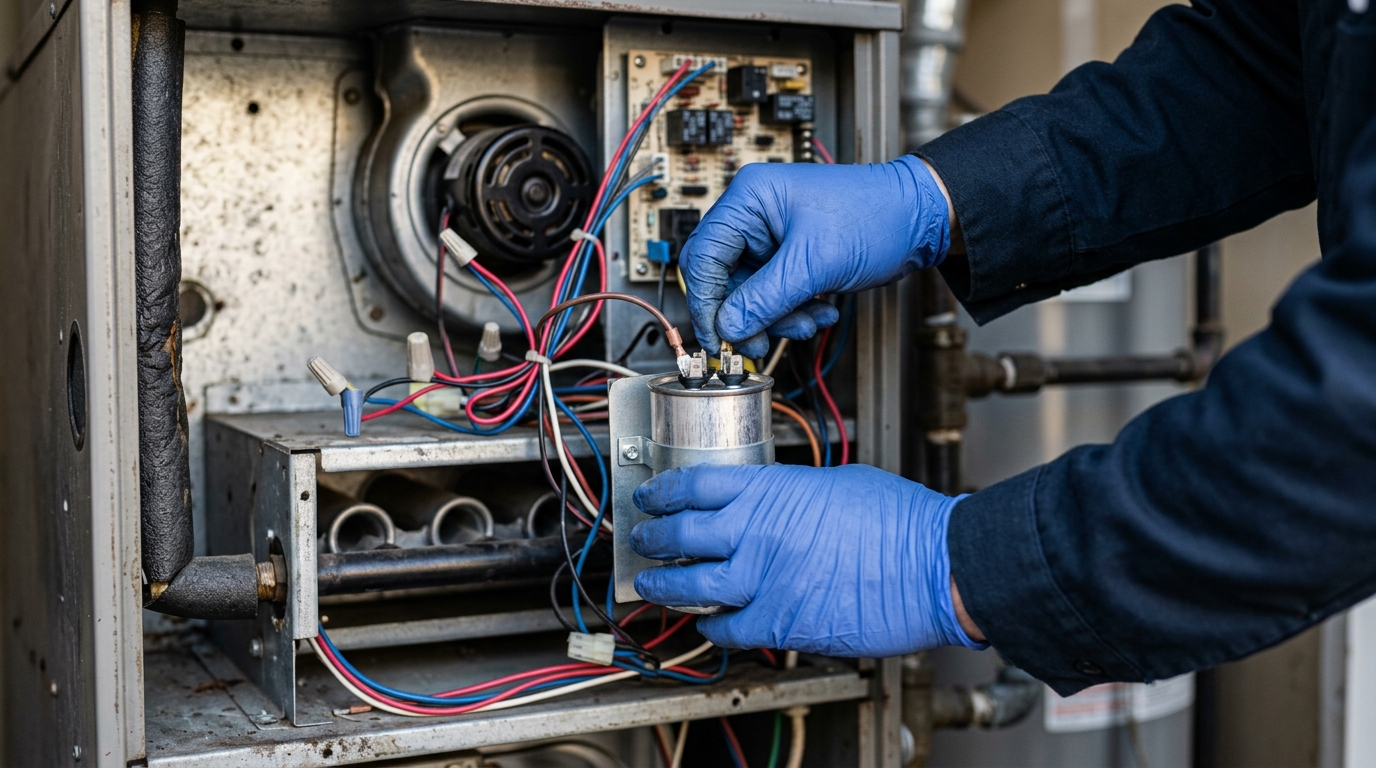
A furnace that clicks on and off, hums without starting, or blows cold air when winter demands warmth often points to a single, inexpensive component reaching the end of its life. Homeowners frequently assume the worst, a costly system replacement, before learning that furnace capacitor replacement is usually a quick, affordable repair for a licensed HVAC technician. Big Star Conservation INC. has put together this 2026 guide to help you recognize a failing capacitor, understand what the repair involves and costs, and know why this is a job for a pro rather than a do-it-yourself project.
Understanding Your Furnace’s Capacitor and Why It Matters
What a Capacitor Does Inside a Furnace
A capacitor stores electrical energy and releases it in a quick burst. That burst gives the blower motor the extra push it needs to start spinning. Without this jolt, the motor strains, overheats, or simply refuses to turn on.
Think of it like a small battery. It charges up, then dumps its energy the instant the furnace calls for heat. This happens every single cycle, sometimes dozens of times a day during cold snaps. A healthy capacitor keeps that startup smooth and fast.
Because the motor works harder when the capacitor weakens, energy use often creeps up. Homeowners curious about the cost of electricity in louisiana may notice this connection on monthly bills long before the furnace fails outright.
Run Capacitors vs. Start Capacitors vs. Dual Capacitors
A run capacitor stays in the circuit the whole time the motor operates, providing steady support. A start capacitor only works for a second or two, giving an initial power boost before dropping out. Most residential furnaces rely on run capacitors alone.
Some systems use a dual capacitor, combining two capacitor functions in one round canister. These show up often in furnaces paired with air conditioning, since one unit can serve both the blower and the outdoor fan motor. Knowing which type sits in your unit matters when it’s time for replacement.
Where the Capacitor Sits in Your Blower Motor Assembly
The capacitor usually mounts near the blower motor, often inside a small metal bracket or clipped to the furnace cabinet wall. It looks like a small cylindrical can, gray or black, with two or three wire terminals on top.
Getting to it usually means removing an access panel with a screwdriver. Homes with poor air sealing nearby can expose this compartment to dust and moisture, which speeds up wear on the component over time.
How Long a Furnace Capacitor Typically Lasts
Average Lifespan in Years
A furnace capacitor typically lasts 10 to 20 years under normal conditions. Many homeowners never think about this small part until the furnace starts acting up. Manufacturers rate capacitors for thousands of start cycles, and a well-built unit installed in a stable system can easily hit the upper end of that range.
That said, averages hide a lot of variation. Some capacitors fail in year six or seven. Others quietly do their job past year eighteen. Climate, furnace usage, and installation quality all shift the timeline. A capacitor in a system that cycles on and off dozens of times daily during Louisiana summers wears faster than one in a mildly used backup furnace.
Factors That Cause Premature Failure
Heat is the biggest enemy of a furnace capacitor. High temperatures inside the cabinet, poor airflow, and blocked vents all speed up internal breakdown. Electrical issues like voltage spikes or an undersized replacement part can also shorten lifespan dramatically, sometimes cutting it down to just a few years.
Dust, humidity, and poor attic conditions play a role too. A furnace working overtime because of heat loss runs longer cycles, straining the capacitor. This is one reason the benefits of insulating your attic extend beyond comfort. Better insulation means fewer, shorter heating cycles, which reduces wear on electrical components throughout the system.
How Capacitor Life Relates to Furnace Age
Capacitor failure often shows up as a furnace approaches middle age, roughly 10 to 15 years in. It’s rarely a sign the whole system is dying. But it does signal that other aging parts may need attention soon. Replacing the capacitor promptly keeps the furnace running efficiently without added strain.
Homes with proper attic insulation tend to see furnaces age more gracefully, since steady temperatures reduce mechanical and electrical stress. A capacitor lasting near its full expected range is often a good sign of a well-maintained, well-insulated home overall.
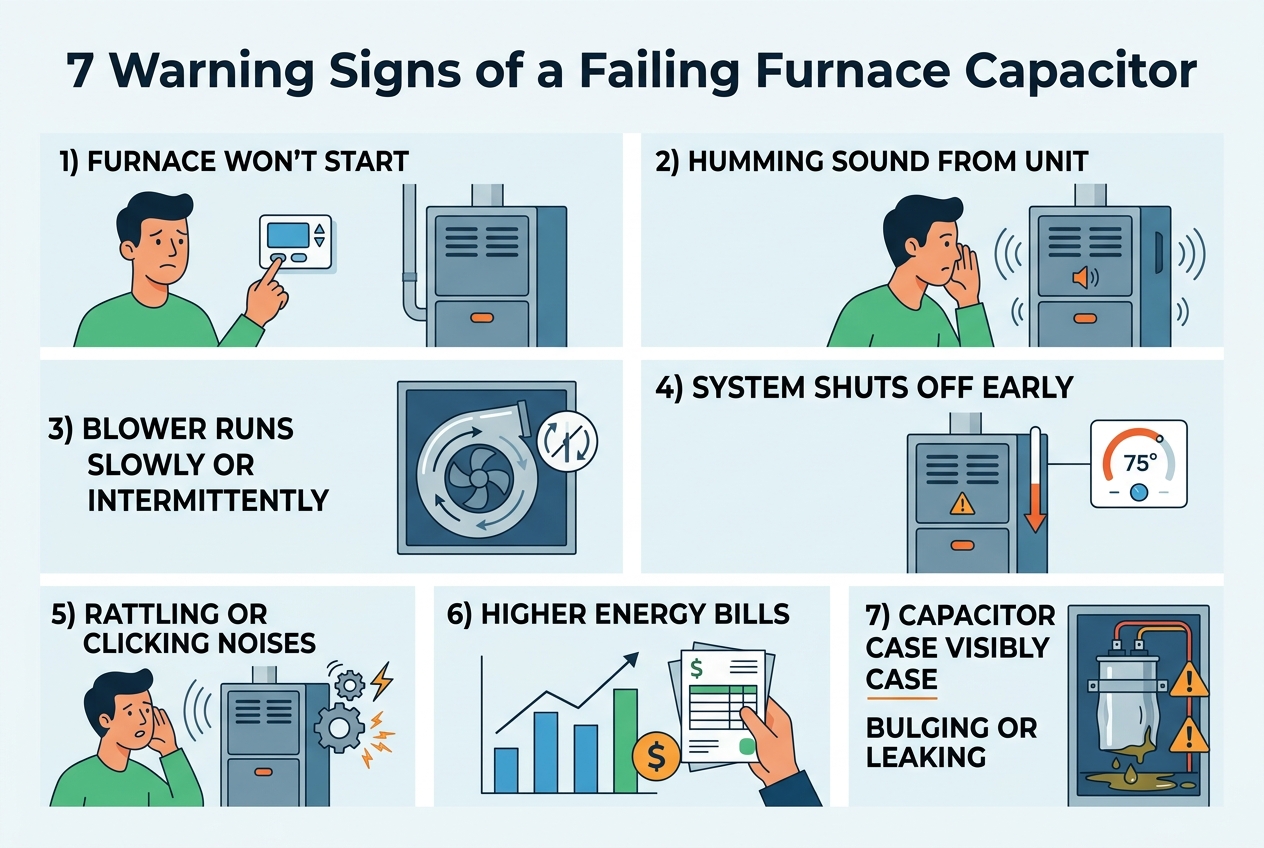
7 Warning Signs of a Failing Furnace Capacitor
Sounds and Smells That Signal Trouble
A weak or dying capacitor often announces itself before the furnace fully quits. Your ears and nose can catch problems early, long before a technician arrives. Learn more about our team and service area on our about us page.
- A loud humming or buzzing noise coming from the furnace cabinet when it tries to start.
- A burning smell near the unit, which can mean overheating parts. A rotten-egg smell is different: it can mean a gas leak, so leave the home and call 911 and your gas utility from outside.
- Rattling or clicking sounds that repeat every few seconds instead of settling into normal operation.
- A visible bulge, leak, or dark residue on the capacitor’s metal casing.
Performance Issues Like Short Cycling or No Start
Beyond noise, watch how the system actually behaves. These clues help you separate a capacitor problem from other furnace issues like a bad thermostat or clogged filter.
- The blower motor hums but never spins, suggesting it lacks the starting jolt a capacitor provides.
- The furnace short cycles, turning on and off every few minutes instead of running a full heating cycle.
- Rooms heat unevenly, with weak airflow even though the thermostat setting hasn’t changed.
If your unit shows two or more of these signs, a proper Furnace Capacitor inspection is worth scheduling soon.
Furnace Capacitor Replacement: Costs, Process, and What to Expect
What’s Included in a Professional Replacement
A proper furnace capacitor replacement covers more than swapping one part. A technician first shuts off power at the breaker and disconnect switch. They discharge the old capacitor safely, since it can hold a dangerous charge even when the furnace is off.
Next, they test the blower motor, contactor, and wiring to confirm the capacitor is the actual problem. They match the new part’s microfarad rating and voltage to the manufacturer’s specs, not just the old label. After installation, they run the system through a full cycle, checking amp draw and airflow.
Most visits also include a quick inspection of the furnace filter, blower wheel, and nearby connections. This catches small issues before they turn into bigger repairs. Many technicians share written notes or photos afterward, similar to tips you’d find on a home improvement blog.
DIY Replacement vs. Hiring an HVAC Technician
Some homeowners are tempted to do this repair themselves. It involves a charged capacitor, the correct capacitor rating, and wiring inside a furnace cabinet, and a capacitor can deliver a shock even after the power is off. That combination makes it a job for a licensed HVAC technician.
Mistakes carry real risk. A wrong rating can shorten motor life or cause overheating, and a mishandled capacitor can cause an electrical shock. A licensed technician carries the proper tools, insurance, and experience to avoid those errors.
Typical Timeline for the Repair Visit
Most replacement visits take between 30 and 60 minutes. Diagnosis takes the first 10 to 15 minutes. Ordering an uncommon capacitor size can add a day if it’s not in the truck stock.
Once the correct part is on hand, installation and testing usually finish within the hour, restoring heat the same day.
Average Cost Breakdown by Component and Labor
Knowing the exact cost breakdown helps you spot a fair quote. A capacitor replacement bill has two parts: the physical part and the technician’s labor. Prices shift based on capacitor size, brand, and where you live.
Capacitor Part Cost by Microfarad Rating
Capacitors are priced by microfarad (MFD) rating and voltage. Higher ratings, used on larger furnace blower motors, cost more. Dual-run capacitors, which power two components at once, also carry a slightly higher price.
| Capacitor Type | Typical MFD Rating | Part Cost Range |
|---|---|---|
| Single-run capacitor | 5-15 MFD | $8-$25 |
| Dual-run capacitor | 35/5-55/5 MFD | $15-$40 |
| High-capacity dual-run | 60/7.5 MFD+ | $25-$50 |
| Premium/name-brand unit | Varies | $30-$65 |
Labor and Service Call Fees
Labor usually costs more than the part itself. Most technicians charge a flat service call fee, often $75-$150, plus $50-$100 for the actual swap. Total labor typically runs $100-$250. Combined with parts, most homeowners pay $150-$350 for the full job.
Regional Price Differences Near You
Prices vary by state, city, and even season. In Louisiana and Mississippi, humid summers push demand higher, sometimes raising service call fees during peak months. Rural areas may see lower labor rates but longer wait times. If you’ve noticed your electricity bill too high alongside furnace trouble, a failing capacitor may be forcing the system to work harder. For more detail on cost factors and symptoms, see this guide on Blower Not Starting? Furnace Capacitor Cost & Warning …
How Technicians Test a Furnace Capacitor
Why Testing Is a Job for a Pro
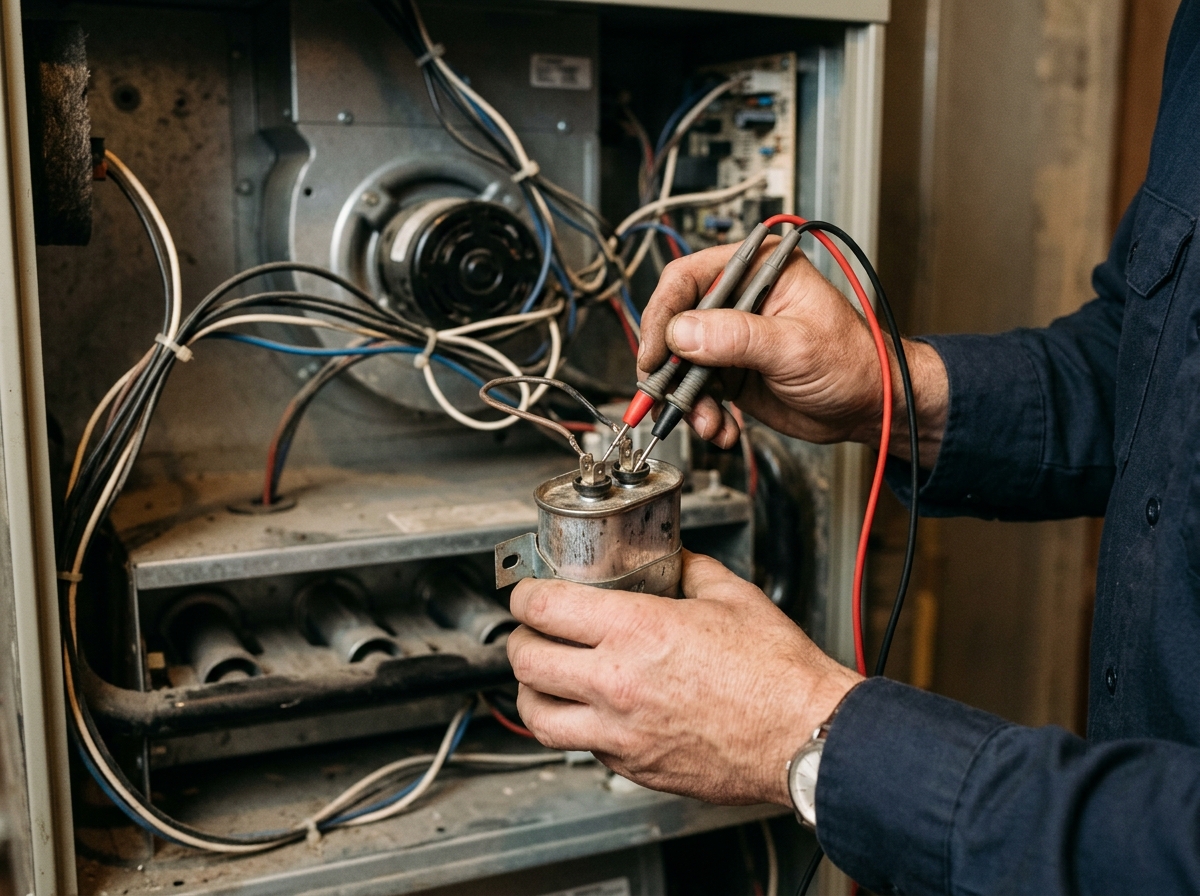
Testing a capacitor means working near electrical parts that can hold a dangerous charge even after the furnace is switched off. A technician shuts off power at the furnace switch and breaker, safely discharges the capacitor with the right tools, and only then touches the terminals. This is not a test to try at home.
What the Technician Checks
With the capacitor safely discharged and disconnected, the technician uses a meter with a capacitance (MFD) setting and follows a set sequence:
| Step | What the Technician Does | Purpose |
|---|---|---|
| 1 | Turns off power and safely discharges the capacitor | Prevent shock |
| 2 | Removes wires and notes terminal positions | Avoid rewiring errors |
| 3 | Sets the meter to capacitance mode | Read the correct unit |
| 4 | Takes a capacitance reading at the terminals | Measure the part’s condition |
| 5 | Compares the reading to the label rating | Confirm whether it needs replacing |
Reading and Interpreting the Results
The reading is compared to the rating printed on the capacitor’s label. A reading below the tolerance marked on the label signals weak or failed capacitance. That check confirms the diagnosis before you pay for a new part.
Choosing the Right Replacement Capacitor
Choosing the wrong capacitor is easy to do. The part must match the old one closely, or it can damage the motor, which is one more reason a technician should source and install it.
Matching Microfarad and Voltage Ratings
The microfarad (MFD) rating must match your old capacitor exactly, or stay within 6% tolerance. Voltage rating should equal or exceed the original. A 370V capacitor can replace a 370V or lower part, but never the reverse.
Single vs. Dual Capacitor Compatibility
Some furnaces use one capacitor for the blower motor. Others use a dual capacitor with two MFD values for separate components. Check terminal labels carefully before ordering a replacement.
| Brand | Type | MFD Range | Voltage | Terminal Style |
|---|---|---|---|---|
| Mars | Single | 5-80 | 370V/440V | Push-on |
| Titan Pro | Dual | 2.5-60 | 370V/440V | Push-on |
| Packard | Single | 3-100 | 370V | Push-on |
| GE | Dual | 5-70 | 440V | Screw |
Matching Part Numbers Across Brands
Manufacturer part numbers rarely match across brands, but specs often overlap. Compare MFD, voltage, and case size instead. Before finalizing any online order, review the retailer’s privacy policy to understand how your information gets handled.
What Happens If You Ignore a Bad Capacitor
Strain on the Blower Motor Over Time
A weak capacitor forces the blower motor to work harder every time it starts. Instead of a quick, clean start, the motor struggles and strains. This constant stress heats up motor windings and wears down internal bearings faster than normal.
Over weeks and months, this strain adds up. A motor rated to last 15-20 years can fail in half that time. Ignoring a failing capacitor often turns a small, affordable fix into a major repair bill involving a full motor replacement.
Increased Energy Bills from Reduced Efficiency
A struggling blower motor pulls more electricity to do the same job. This inefficiency shows up directly on monthly utility bills, sometimes adding 10-15% to heating costs. The furnace runs longer to reach the same temperature, burning more fuel and power.
Energy efficiency depends on every component working properly. When a capacitor falters, the whole system loses its balance, and homeowners pay the price without realizing why.
Risk of a Complete Furnace Breakdown
Eventually, a failing capacitor can cause total system failure. The blower motor may seize, or the furnace could shut down entirely during the coldest week of winter. This creates both discomfort and safety risks for households relying on steady heat.
Replacing a failing capacitor early prevents this cascade. Call a licensed HVAC technician for an inspection or repair before small issues become costly emergencies.
Preventive Maintenance to Extend Furnace Life
Seasonal Furnace Inspection Checklist
A capacitor is just one part of a healthy furnace. Regular inspections catch small issues before they become costly breakdowns. Set a seasonal routine using this checklist:
- Check the thermostat settings and battery to confirm accurate temperature readings throughout the season.
- Look for scorch marks or a burning smell around the furnace, and leave any wiring checks inside the cabinet to a technician.
- Listen for unusual rattling, humming, or clicking sounds during startup and shutdown cycles.
- Clear debris, dust, and pet hair from vents, registers, and the area around the furnace cabinet.
- Have a technician check the pilot or ignition system during the annual service to confirm a steady, consistent flame or spark.
- Review the article What is a Furnace Capacitor and How to Know if It’s Broken? to spot early warning patterns.
Filter Care and Airflow Maintenance
Dirty filters force your furnace to work harder, straining the capacitor and motor alike. Replace standard filters every 60 to 90 days, or monthly if you have pets. Good airflow keeps components cooler and reduces wear across the whole system.
When to Schedule a Professional Energy Assessment
Some problems hide behind walls or inside ductwork. A professional energy assessment checks insulation, air leaks, and duct efficiency alongside your furnace’s performance. Many local businesses offer this service seasonally, often paired with weatherization upgrades. Browse a sample portfolio of completed projects to see what thorough assessments typically include before booking one yourself.
Frequently Asked Questions About Furnace Capacitors
Can You Replace a Capacitor Yourself Safely
A capacitor can hold a strong electrical charge even after the power is off. This makes DIY replacement risky for anyone without HVAC training. Discharging a capacitor safely requires the right tools and training, and a mistake can cause a painful shock. Work by an unqualified person can also affect warranty coverage, so check your warranty terms before anyone opens the cabinet.
Even homeowners comfortable with basic electrical work should leave this one to a pro, because the margin for error is thin. Wiring a replacement backwards, choosing the wrong microfarad rating, or nicking a wire can damage the blower motor. A blower repair often costs far more than the capacitor itself, sometimes $300 to $600.
Calling a licensed technician typically costs $150 to $350 for parts and labor combined. That price includes proper testing before and after the swap, confirming the fix actually solved the problem. Many local businesses also check airflow and duct sealing during the same visit, since poor sealing can strain the same components that stress a capacitor. For most households, professional replacement is the safer, more cost-effective choice.
Is an HVAC Capacitor the Same as a Furnace Capacitor
The terms overlap but aren’t identical. HVAC capacitor is a broad label covering any capacitor used in heating, cooling, or ventilation equipment. A furnace capacitor is one specific type, typically powering the blower motor inside a gas or electric furnace.
Air conditioners and heat pumps use capacitors too, often larger dual-run units that support both the compressor and the outdoor fan motor. These usually carry higher microfarad ratings than a furnace blower capacitor. Confusing the two when shopping for a replacement is a common mistake, and it leads to premature failure or a system that won’t start.
Always match the replacement to the exact component it serves, checking voltage, microfarad rating, and terminal configuration listed on the old part’s label. A technician sources the correct match as part of the repair. It saves you costly guesswork.
If your furnace has been acting up and you suspect a failing capacitor might be part of a bigger efficiency issue, the team at Big Star Conservation Inc. can help you look at the full picture. Through their partnerships with regional utility companies, they offer expert energy assessments and weatherization services to homeowners and multi-family properties across Louisiana and Mississippi at little to no cost. Reach out today to schedule an assessment and find out how a few simple upgrades could keep your home comfortable all season long.
