


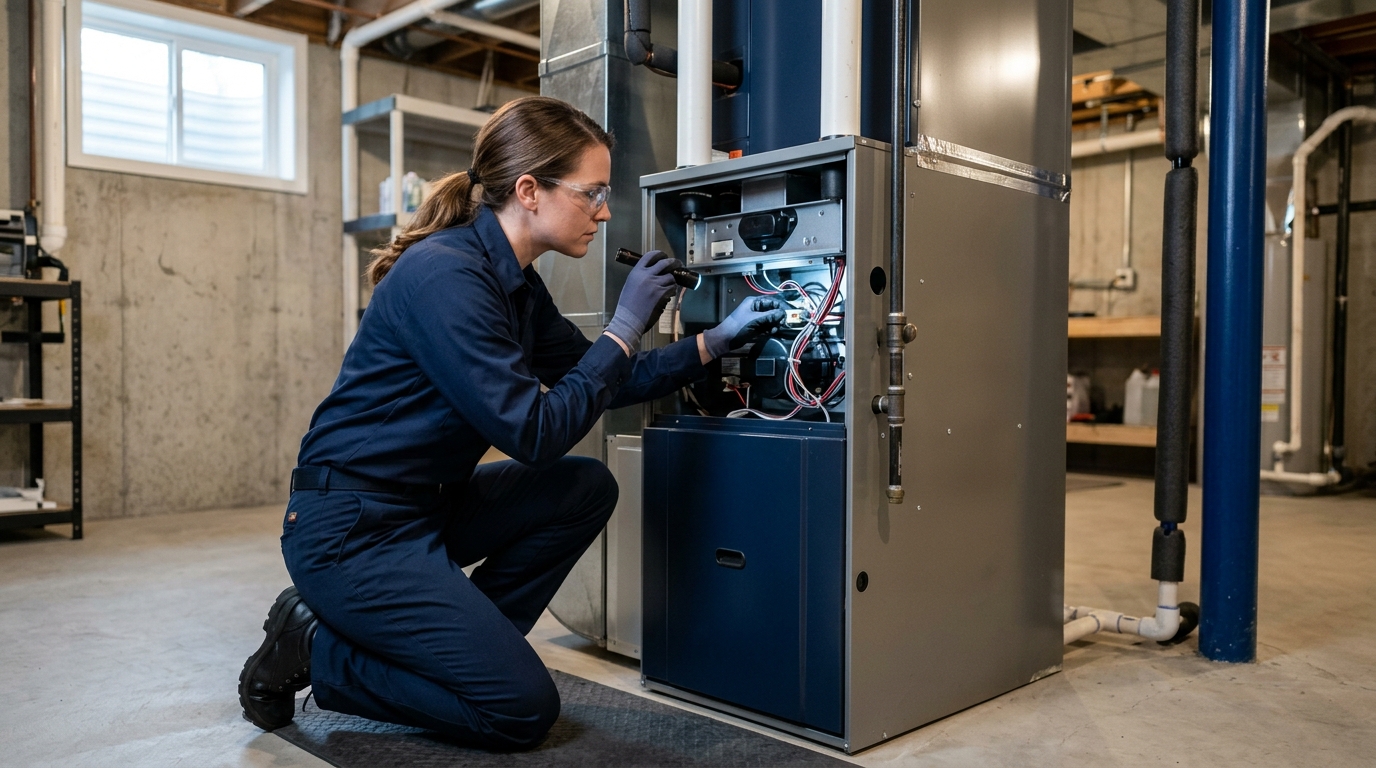
Louisiana winters may be short, but a struggling furnace can still send your energy bills climbing fast. If you’re weighing an upgrade, you’ve probably noticed the market is flooded with confusing claims about efficiency ratings and long-term savings. Here’s the truth: choosing an energy efficient furnace isn’t just about the sticker price. It’s about matching the right system to our region’s mild but humid climate. This guide breaks down exactly what Louisiana homeowners need to know before making that investment.
What Makes a Furnace Energy Efficient
AFUE Ratings Explained
AFUE stands for Annual Fuel Utilization Efficiency. It’s the number you’ll see plastered on every furnace spec sheet. It tells you what percentage of the fuel you burn actually turns into heat for your home, versus what escapes up the flue as exhaust. An 80% AFUE furnace turns 80 cents of every fuel dollar into usable warmth. The other 20 cents? Gone, straight out the vent.
Standard furnaces typically sit around 80% AFUE. That used to be the norm, and it’s still legal and common in older homes across Louisiana. High-efficiency models push into 90% to 98.5% territory, wringing nearly every bit of heat out of the fuel before it leaves the house. That gap matters more than it sounds like on paper. Over a full winter, it can mean a real difference in your gas bill, especially if your home already runs cold and your electricity bill too high each month has you searching for answers.
Condensing vs Non-Condensing Furnaces
The jump from 80% to 90%-plus efficiency isn’t magic. It’s a second heat exchanger. Non-condensing furnaces vent hot exhaust gas straight outside after one pass through the system. Condensing furnaces run that exhaust through a secondary coil first, pulling out extra heat until the gas cools enough to condense into water. That water drains out through a PVC pipe instead of a metal flue. It’s a simple idea. It just takes better engineering to pull off safely.
ENERGY STAR certification requires a minimum AFUE of 90% for gas furnaces, along with proper sizing and fan performance that meets efficiency benchmarks. That badge is a decent shortcut when comparing models, but it’s not the whole story. Reading up on is a high-efficiency furnace worth the cost question is worth doing before you commit, since condensing units cost more upfront and need proper venting to pay off.
Here’s the part manufacturers won’t put on the brochure: a 98% AFUE furnace in a leaky house still loses. Heated air escaping through attic gaps or uninsulated walls doesn’t care how efficient your equipment is. Pairing new equipment with the benefits of insulating your attic and sealing obvious air leaks is what actually locks in the savings a high AFUE rating promises on paper.
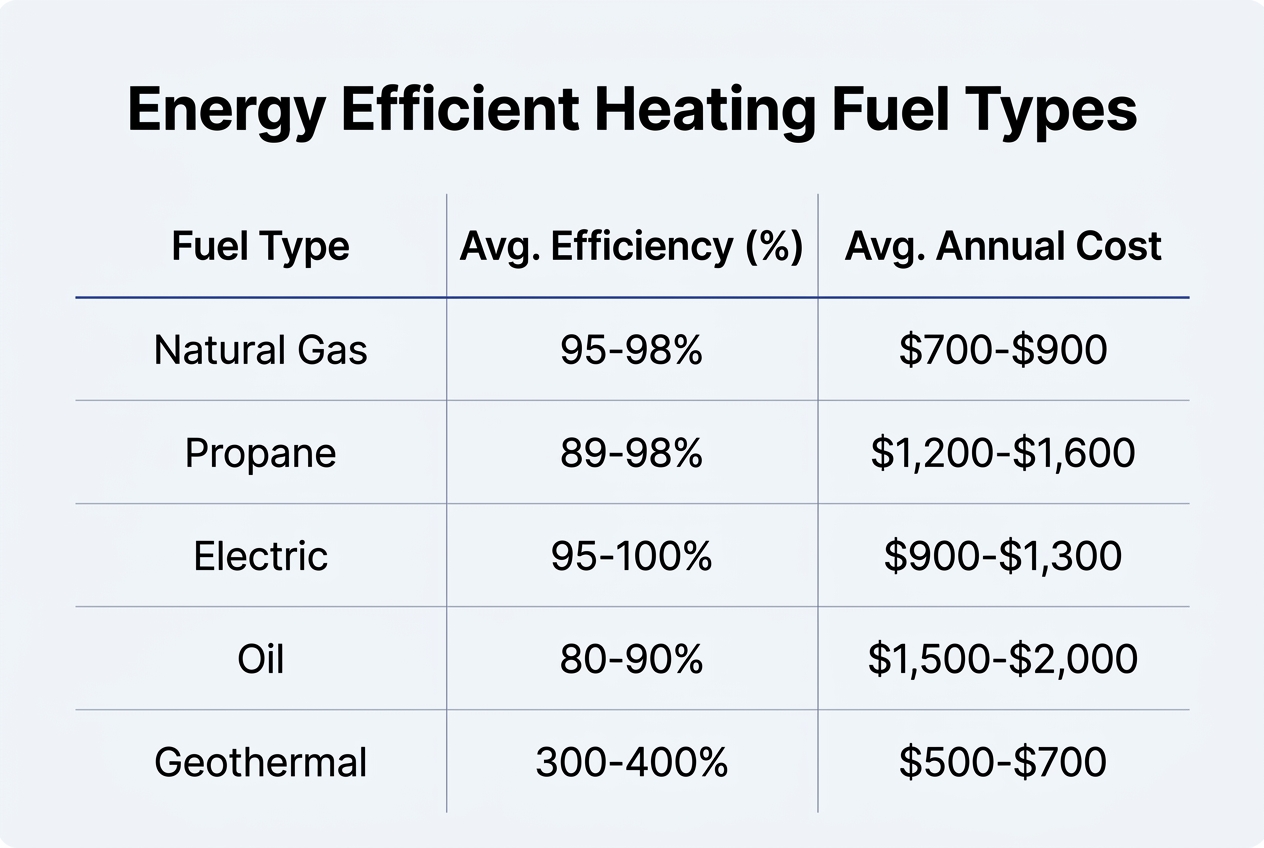
Comparing Energy Efficient Heating Fuel Types
Louisiana winters are short and mild, so the fuel you choose matters less here than it would up north. Still, the difference shows up on your bill every January. Here’s how the main options stack up for a typical Gulf South home.
| Fuel Type | Typical Efficiency (AFUE) | Availability in LA/MS | Best Fit |
|---|---|---|---|
| Natural Gas | 80% – 98.5% | Widely available in metro/suburban areas | Homes with existing gas lines, moderate heating needs |
| Electric | 95% – 100% | Available everywhere | Mild climates, all-electric homes, new construction |
| Propane | 80% – 98% | Delivered by tank, common in rural parishes | Rural homes without gas service |
| Fuel Oil | 80% – 90% | Rare, mostly legacy systems | Older homes never converted to gas or electric |
Natural Gas vs Electric vs Propane
Natural gas furnaces remain the most common choice where lines already run to the street, and modern condensing models hit efficiency numbers that were unthinkable a decade ago. Operating costs run low in Louisiana and Mississippi thanks to regional gas pricing, though your actual savings depend on insulation and duct condition, not just the furnace itself. Electric furnaces cost less upfront and skip combustion entirely, which simplifies safety checks, but they can get pricier to run month to month. Checking the current cost of electricity in louisiana before deciding is a smart move. They make the most sense in smaller homes or mild-winter areas where heating demand is low. Propane fills the gap for rural properties off the gas grid. It burns efficiently but costs more per therm than piped natural gas.
Fuel Oil
You’ll rarely find oil furnaces in this region anymore. It’s mostly a holdover fuel in older Northeast homes. Worth knowing for comparison, not worth chasing here.
Regional Climate Considerations
Given how short Southern winters are, chasing the highest AFUE number isn’t always worth the price jump. A well-sized 90% gas furnace paired with solid air sealing often beats an oversized 98% unit in a leaky house. Before buying anything, it’s worth reading a proper Best Gas Furnace Buying Guide to understand sizing and features relevant to warmer climates. And since heat loss isn’t only about the furnace, pairing your system with better window coverings and full weatherization, including a look at our services, rounds out the picture.
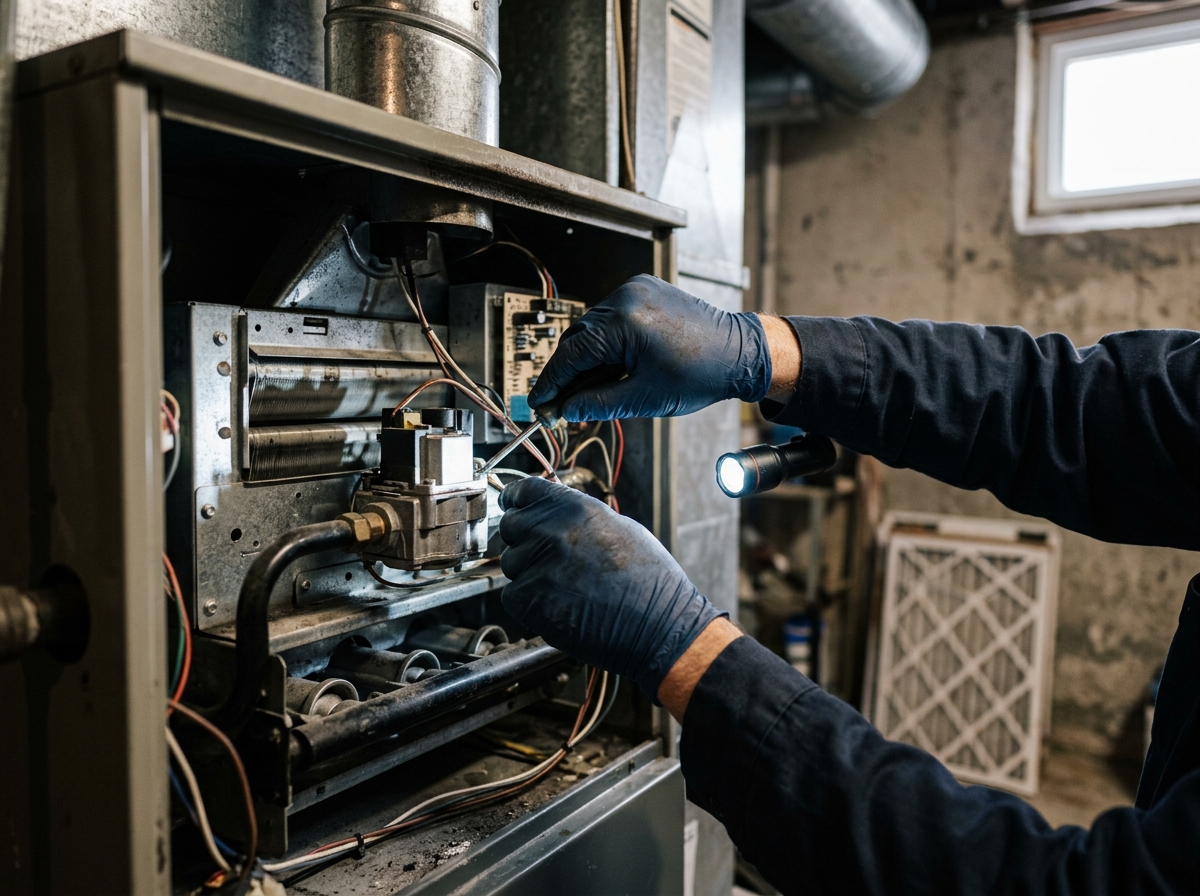
Is a High-Efficiency Furnace Worth the Investment
Calculating Your Payback Period
Let’s talk numbers. A standard 80% AFUE furnace typically runs $2,500 to $4,500 installed, while a 96-98% AFUE condensing unit lands closer to $4,500 to $8,000, once you factor in the extra venting and condensate drainage work those units require. That’s a gap of roughly $2,000 to $4,000 upfront. On paper, the higher-efficiency unit saves fuel every month you run it. In practice, whether that gap ever closes depends heavily on how much heating you actually need.
Here’s the tradeoff: you’re paying more now for lower bills later, but “later” can take a while in a mild climate. A homeowner in Minnesota running a furnace five months a year might recoup that price difference in five to seven years. In Louisiana, where furnaces cycle on for maybe six to ten weeks total, that same payback window stretches to fifteen years or more. Run the math before you buy, because the marketing pitch rarely mentions climate zone.
To calculate your own payback, divide the upfront cost difference by your estimated annual fuel savings, which you can get from your utility’s average therm usage and current rate. Many local businesses can help pull that data from past bills. Reading up on the benefits of high-efficiency natural gas furnaces is worth doing before committing, since the fuel type and your household’s actual runtime hours matter more than the AFUE sticker alone.
Diminishing Returns in Mild Southern Winters
Louisiana just doesn’t ask much of a furnace. Short heating seasons and moderate lows mean the efficiency gap between an 80% and a 98% unit translates into a modest dollar difference each year, not the dramatic savings you’d see in a colder state. A furnace is only efficient during the hours it’s actually working, and here, those hours are few.
That’s not an argument against high-efficiency units. It’s a reminder that the return shrinks fast once you’re south of a hard winter. If your existing 80% furnace still drafts safely and heats evenly, replacing it purely for efficiency’s sake may not pencil out for another decade.
Why Sealing and Insulation Often Win First
Here’s the blunt truth: a leaky attic and a duct system dumping air into a crawl space will outspend any furnace on your utility bill. Air sealing and insulation upgrades often pay back in three to five years, sometimes faster with utility incentives covering part of the cost. Verified duct sealing alone commonly cuts leakage 20-30%, which shows up immediately in comfort and cost, no new equipment required.
Before spending thousands on a furnace upgrade, it’s worth getting a blower-door test and a look at attic R-values first. Fixing the envelope means whatever furnace you already own, or eventually buy, has to work less to keep the house comfortable. That’s the faster payback, plain and simple.
Why a New Furnace Won’t Fix Everything on Its Own
Here’s the truth nobody at the appliance showroom will tell you: a shiny new furnace dropped into a leaky house is like pouring water into a cracked bucket. The equipment isn’t the whole story. Leaky ductwork alone can waste 20-30% of your heated air before it ever reaches a register. Add in air leaks around attics, rim joists, and top plates, and even the best furnace on the market is fighting a losing battle against a house that won’t hold its own heat.
The Diagnostic Testing Process
A proper diagnosis starts long before anyone talks about equipment. Many local businesses that do this work correctly begin with a full home energy assessment, not a sales pitch. That process typically includes:
- A blower door test that pressurizes the home to measure exactly how much air is escaping and from where;
- A duct blaster test that isolates the duct system to quantify leakage separate from the building envelope;
- Thermal imaging that shows cold spots, missing insulation, and gaps hiding behind walls and ceilings;
- An attic R-value check confirming whether insulation depth actually meets recommended levels;
- A combustion-safety check verifying that existing or new heating equipment drafts safely once the house is sealed tighter.
What a Blower Door and Duct Blaster Test Reveal
These tests turn guesswork into numbers. They’ll tell you whether that room that never quite hits the thermostat setting is a furnace problem or, far more likely, a duct and sealing problem. Reviewing detailed air sealing project examples helps homeowners see what real leakage reduction looks like in practice. An under-insulated attic can leak conditioned air straight through the roof, even paired with a top-tier high-efficiency unit. Before buying anything, get the diagnostics done. It’s the only way to know where your money and comfort are actually being lost.
What to Look for When Buying a High-Efficiency Furnace
Key Features to Compare
Not every furnace labeled “high-efficiency” actually performs the same in a real Louisiana home. Before you sign anything, dig into the specs sheet and compare a few things side by side. Some of these differences sound minor on paper but make a real difference in comfort and your power bill.
- Confirm the ENERGY STAR label is present, then check the actual AFUE percentage on the EnergyGuide sticker rather than trusting marketing copy alone.
- Favor two-stage or modulating burners, which ramp output up and down instead of blasting full heat and shutting off, giving you steadier indoor temperatures.
- Look for a variable-speed blower motor, since it adjusts airflow gradually and uses a fraction of the electricity a standard single-speed motor draws.
- Ask how loud the unit runs at full stage, because some modulating furnaces are noticeably quieter than older single-stage models.
- Review the manufacturer’s track record for parts availability, since a great warranty means little if your local tech can’t get replacement parts quickly.
Shopping around the official Furnaces | ENERGY STAR product list gives you a reliable baseline for comparing AFUE ratings across brands before you talk to any contractor.
Sizing and Ductwork Compatibility
Here’s where a lot of homeowners get burned. Swapping in a new furnace that matches the old one’s size feels safe, but it’s often the wrong call. Homes get insulation upgrades, window replacements, and additions over the years, so your heating load has probably changed. A proper Manual J load calculation, paired with a Manual D review of your existing ducts, tells an installer what size unit your house actually needs.
Oversized furnaces short-cycle, running in quick bursts that waste energy and leave humidity and temperature swings behind. That’s a comfort problem and a wear-and-tear problem. Undersized units run constantly and never quite catch up on the coldest nights. Getting energy assessments done first helps confirm whether your duct system can even support the new equipment’s airflow requirements before installation day arrives.
Furnace Efficiency Feature Comparison
Furnaces generally fall into three efficiency tiers, and the differences between them affect more than just your gas bill. Venting type, install complexity, and upfront cost all shift as you move up the AFUE scale. Here’s how the three tiers stack up side by side, with two-stage and modulating models slotted where they actually belong.
| Tier | AFUE Range | Venting Type | Relative Install Cost | Best-Use Scenario |
|---|---|---|---|---|
| Standard efficiency | 80-83% | Single-wall metal, atmospheric draft | Low | Mild climates, budget replacements, rental units |
| Mid-efficiency | 83-90% | Induced draft, metal or plastic vent | Moderate | Homeowners wanting savings without full re-piping |
| High-efficiency (condensing) | 90-98.5% | Sealed PVC intake/exhaust | Higher | Cold-climate homes, long-term owners, all-electric backup homes |
| Two-stage / modulating add-on | Usually paired with 90%+ AFUE units | Same as high-efficiency | Higher still | Homes with uneven room temps or frequent cycling complaints |
Notice that two-stage and modulating burners aren’t a separate tier exactly. They’re a performance upgrade layered onto a high-efficiency chassis, running at partial output most of the time instead of blasting full heat then shutting off. That smooths out temperature swings room to room. It also costs more upfront, and it won’t fix a duct system that’s leaking air into an unconditioned attic. Before you spend extra on a modulating furnace, it’s worth confirming your attic isn’t the real problem. Checking your home’s attic insulation levels first can save you from overpaying for equipment your envelope can’t support. If you’re still weighing tiers against price, plenty of homeowners have hashed out whether high efficiency gas furnaces are worth the cost in real-world Gulf South conditions.
Getting the Most From Your Furnace With Weatherization and Rebates
Combustion Safety After Sealing Work
Sealing up a leaky house changes how it breathes. Tighten the envelope too much without checking your furnace and water heater, and you risk backdrafting, where combustion gases get pulled back into the living space instead of venting outside. That’s not a small thing. A qualified technician should run a combustion-safety test after any air sealing project, confirming that flue gases still draft properly and carbon monoxide levels stay where they belong.
This step gets skipped more often than it should. Some crews seal a house tight, collect payment, and never look at the furnace at all. A proper post-sealing check uses a combustion analyzer to measure draft pressure and gas readings at the appliance, plus a worst-case depressurization test with exhaust fans running. It takes maybe twenty minutes. Skipping it isn’t worth the risk to your family’s air quality.
Utility Rebates and Income-Eligible Programs
Air sealing and duct sealing don’t just cut bills. They lighten the workload your furnace carries every single day. Less leakage means fewer on-off cycles, less strain on the blower motor, and a system that isn’t fighting outside air just to hold a steady temperature. Pair that with blown-in cellulose insulation reaching R-38 or higher in the attic, and you’ve built a home that keeps the heat a furnace produces instead of leaking it out through the roof deck.
Programs through Entergy, CLECO, Mississippi Power, Atmos Energy, and Energy Smart often cover assessments and weatherization work at little to no cost, and income-eligible households frequently qualify for the whole project free. If you’re already planning to upgrade to a high efficiency gas furnace, it makes sense to pair that purchase with weatherization funded through these same programs. A BPI-certified assessment, using blower door and duct blaster testing, builds a custom action plan that sequences the work correctly, whether that’s before or after the new furnace goes in.
Rebate paperwork trips people up constantly. Forms get lost, deadlines pass, submissions bounce back for missing details. Having someone handle that paperwork on your behalf means nothing falls through the cracks between the utility, the contractor, and you.
Furnace Efficiency FAQ
Louisiana homeowners ask a lot of the same questions when it’s time to replace an old unit. Here are straight answers, no fluff.
Standard vs. high-efficiency furnace: what’s actually different?
A regular furnace vents hot exhaust straight out and wastes 20% or more of the fuel you’re paying for. A high-efficiency furnace uses a second heat exchanger to squeeze extra warmth out of that exhaust before it leaves the house. That’s the whole trick, really. It’s not magic, just better engineering.
What does installation cost, and does it pay for itself?
Expect somewhere between $4,500 and $9,500 installed, depending on ductwork changes, venting needs, and unit size. Payback typically runs 7 to 12 years in Louisiana’s mild-winter climate, longer than colder states see. Before you buy, it helps to review guidance on Purchasing Energy-Efficient Residential Furnaces, which breaks down efficiency ratings and sizing in plain terms.
Gas furnaces aren’t perfect. A few tradeoffs worth knowing before you commit:
- Combustion appliances need proper venting, and a poorly sealed home can pull exhaust gases back indoors if the system isn’t checked.
- Natural gas prices fluctuate more than electricity in some parishes, which muddies long-term savings estimates.
- High-efficiency models require condensate drainage lines that can freeze or clog if installed carelessly.
- Annual maintenance is non-negotiable, skip it and efficiency drops fast along with safety margins.
- A new furnace does nothing for a leaky attic or uninsulated walls, so bills may stay stubbornly high anyway.
That last point matters most. A top-rated furnace paired with a drafty house is like a sports car stuck in traffic, all that capability, going nowhere. Air sealing and insulation determine how much of that furnace’s efficiency actually reaches your living room. For more real-world breakdowns on this pairing, the blog covers common scenarios Louisiana homeowners run into.
A new energy efficient furnace works best as part of a well-sealed, properly insulated home, and that’s where the BPI-certified team at Big Star Conservation, Inc. can help. Located at 1500 Edwards Ave Suite J in Elmwood, LA, they’ll perform a thorough energy assessment—complete with blower door testing and combustion-safety checks—to make sure your furnace and home are working together efficiently. Give them a call at (504) 305-3276 or book an appointment in under 5 minutes to see how affordable a warmer, more comfortable home can be.
