



Your home boiler is working harder than it should, and your heating bill knows it. Before you drop thousands on a replacement, it’s worth asking whether the real problem is the equipment at all. Often it’s heat slipping out through leaky ducts, thin attic insulation, and unsealed gaps that force your system to overcompensate. This guide walks through boiler types and efficiency ratings, then shows you how a proper energy assessment, air sealing, and insulation upgrade can cut your heating costs first — so you’re not replacing a boiler that didn’t need replacing.
How a home boiler fits into your whole-house heating picture
Why equipment alone doesn’t determine your heating bill
A boiler doesn’t heat air the way a furnace does. It heats water or steam and sends it through radiators, baseboards, or radiant floor loops, warming rooms from fixed points instead of blown air. That’s quieter, often more even heat. But the delivery method doesn’t change a basic fact: the house around it decides how much heat you actually keep.
Two identical boilers in two identical-looking houses can produce wildly different bills. The difference is almost always the building, not the burner. A tight, well-insulated home holds the heat a boiler produces. A leaky one just keeps asking for more. That’s why a 92% efficient boiler in a drafty house can cost more to run than an 80% unit in a tight one.
Air leakage around rim joists, attic hatches, and top plates lets warm air slip out and cold air pull in. That forces the system into longer cycles just to hold the thermostat setting. An under-insulated attic can let 40% or more of generated heat escape straight through the ceiling. None of that is the boiler’s fault. It’s the envelope’s.
Leaky ductwork compounds the problem for homes using hydronic-to-air setups or supplemental forced-air zones, since conditioned air can escape into attics or crawlspaces before it ever reaches a vent. Reviewing proven air sealing methods helps homeowners see where warm air actually goes missing. This is also why the rest of this guide spends less time comparing boiler models and more time on squeezing full value from the equipment already installed. A well-sealed, well-insulated home lets almost any functioning boiler perform closer to its rated efficiency. And for homeowners curious about seasonal maintenance habits or local rebate timing, the blog covers related topics worth reading before scheduling any upgrade.
Boiler basics: the main types explained
Not every boiler runs on the same fuel, and not every system moves heat the same way. Before you worry about efficiency ratings or replacement costs, it helps to know what you’re actually dealing with. The fuel type affects safety needs. The distribution method affects comfort room to room.
Gas, oil, and electric compared
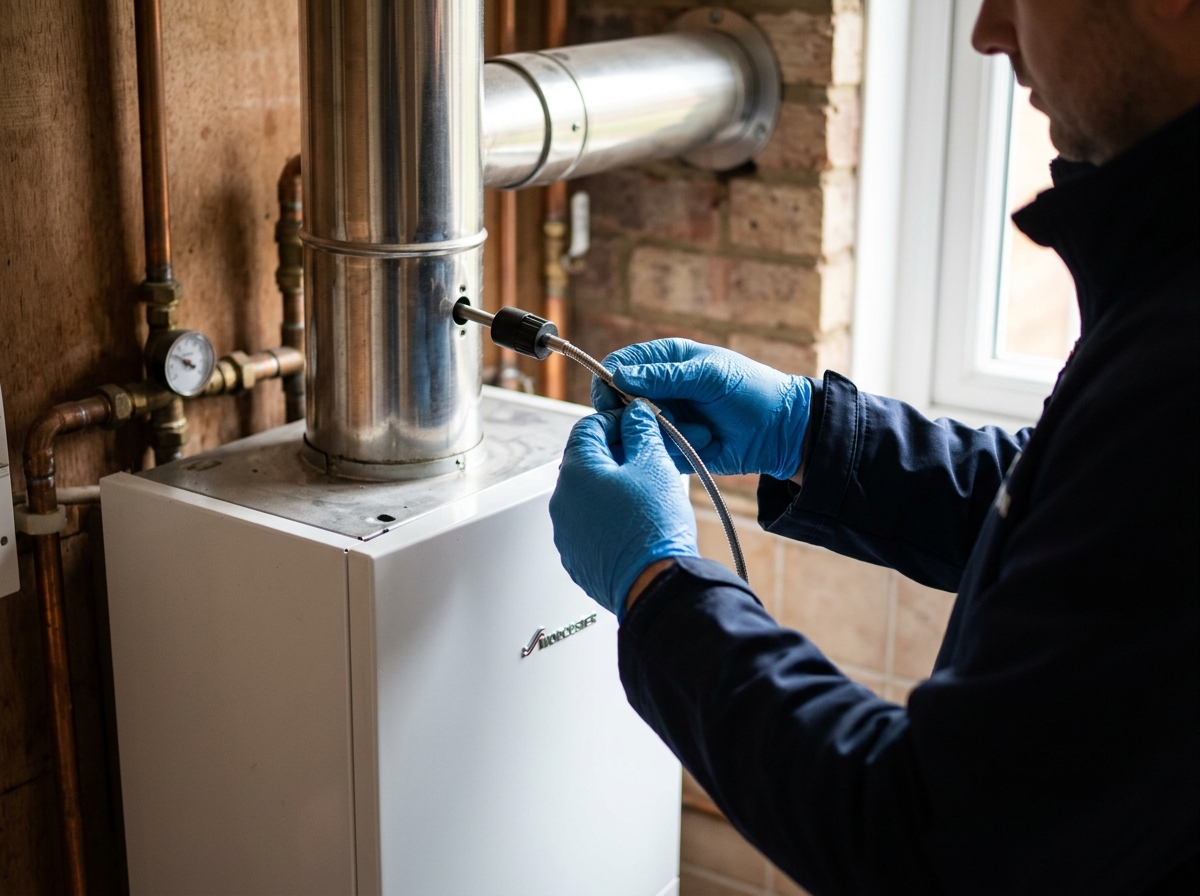
Gas-fired boilers are the most common choice in newer homes, and for good reason: they’re efficient and relatively low-maintenance. But they still need proper venting, and a combustion safety check matters more after any air sealing work tightens up the house. Oil-fired units show up often in older housing stock. They demand more upkeep and tend to be sensitive to draft problems, which can cause sooting or incomplete combustion. Electric boilers skip combustion altogether, so venting is simpler. The tradeoff is cost. Running one is usually pricier, especially given the cost of electricity in louisiana compared to natural gas.
| Type | Typical fuel cost | Venting needs | Maintenance level |
|---|---|---|---|
| Gas-fired | Low to moderate | Direct or power vent required | Moderate, annual checks recommended |
| Oil-fired | Moderate to high | Chimney draft, draft-sensitive | High, frequent servicing |
| Electric | Highest | Minimal, no combustion vent | Low |
| Residential steam | Varies by fuel source | Same as fuel type used | Moderate to high, pipe pitch matters |
Steam vs hot-water systems
Steam boilers show up mostly in older multi-family buildings and historic homes, running on either single-pipe or two-pipe layouts. Single-pipe systems use one line for both supply and return condensate, so pitch and venting really matter. Get it wrong and you’ll hear banging pipes. Two-pipe systems separate supply from return, giving more even heat but adding more parts that can fail. Hot-water systems, by contrast, circulate heated water through a closed loop and tend to hold steadier temperatures. Whichever setup you have, an energy assessment with thermal imaging can flag where that heat is actually escaping before it ever reaches the radiator.
Choosing or evaluating a home boiler: size, venting, efficiency
Bigger isn’t better. That’s the first thing to get straight before you size a boiler. An oversized unit fires up, blasts heat, and shuts off again in minutes — a pattern called short-cycling that wastes fuel and wears out parts faster. Correct sizing matters more than brand, full stop. A contractor should run a heat-loss calculation on your actual house, not just swap in whatever size was there before.
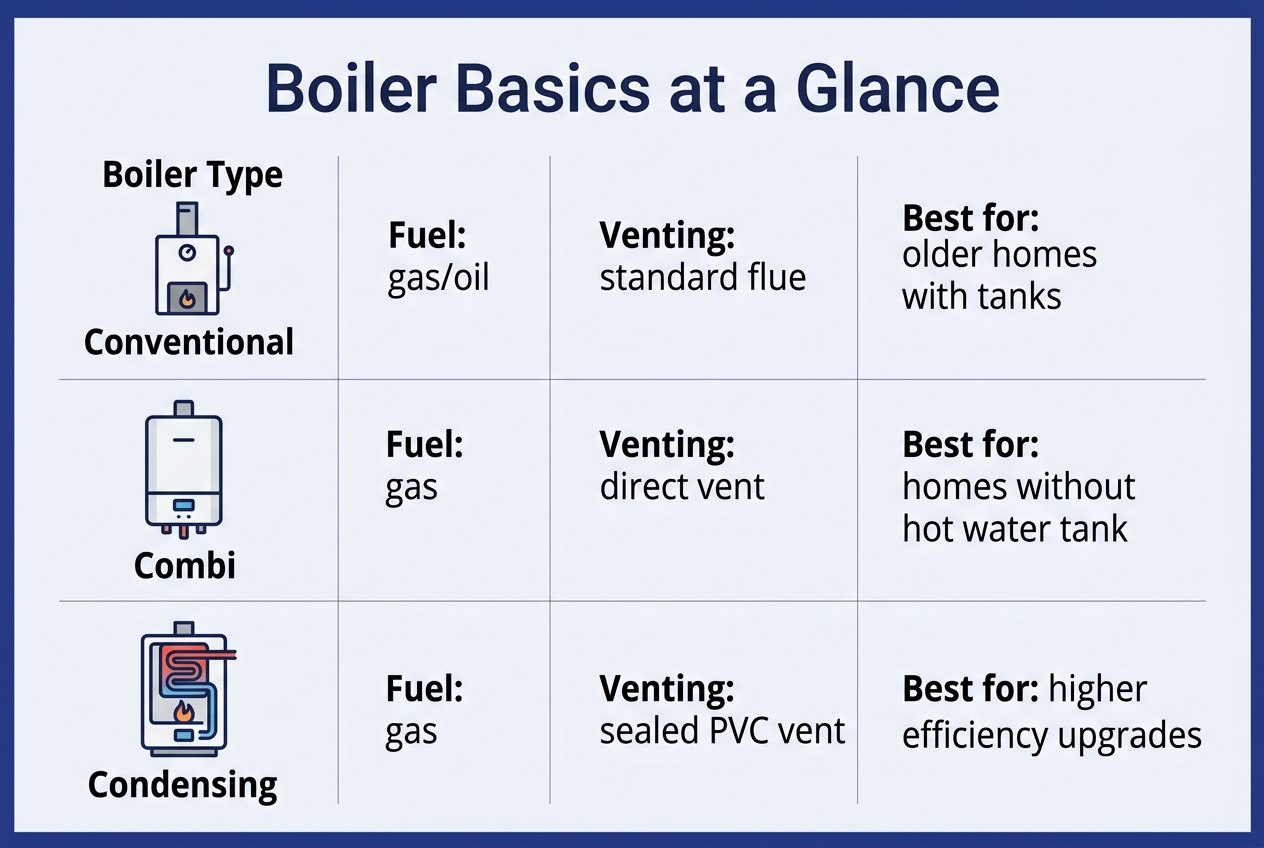
Venting type is the other big variable, and it changes both installation cost and safety margin. Atmospheric venting relies on natural draft up a chimney. Power-vent and direct-vent units use a fan to push exhaust out, which opens up more placement options but adds equipment cost. Then there’s AFUE, the efficiency rating that tells you how much fuel actually becomes heat in your rooms versus what goes up the flue. A few things worth weighing before you commit to anything:
- A load calculation (often called a Manual J) should drive the size decision, not the dimensions of the old boiler being replaced.
- Atmospheric venting is cheaper upfront but depends on a properly working chimney, which can be a problem in a tightened-up house.
- Power-vent and direct-vent systems cost more to install but give more flexibility on where the unit sits.
- A higher AFUE number means less wasted fuel, but it usually comes with a higher purchase price, so the payback period matters.
- Any sizing, replacement, or new installation decision should go through a licensed HVAC contractor, not a general contractor or guesswork.
Here’s the part homeowners miss. Air sealing a house changes how existing combustion equipment breathes. Tighten up the gaps without checking draft afterward, and you risk backdrafting, where exhaust gas doesn’t leave the house the way it should. That’s why a combustion-safety check matters anytime sealing work happens near a boiler or water heater. It’s a simple verification step. And it’s the difference between a tighter house and a dangerous one.
High-efficiency vs standard-efficiency boilers
What ‘high-efficiency’ actually measures
The number that matters here is AFUE — Annual Fuel Utilization Efficiency. It tells you what share of fuel actually becomes usable heat instead of escaping up the flue. Standard-efficiency boilers typically land at 80-85% AFUE. Condensing high-efficiency models push past 90%, with some hitting 95%+. That gap sounds small on paper. Over a heating season, it’s real money.
Here’s the catch nobody mentions at the showroom: a boiler’s rating is measured in a lab, not in your attic. A tight envelope is what lets you actually collect on that efficiency number. The table below breaks down the practical differences.
| Factor | Standard-efficiency (80-85% AFUE) | High-efficiency condensing (90-95%+ AFUE) |
|---|---|---|
| Upfront cost | Lower | Higher, often by thousands |
| Venting | Metal flue, draft-dependent | PVC venting, sealed combustion |
| Exhaust temperature | Hot, more heat lost | Cool, condenses out extra heat |
| Payback period | N/A | Shorter in a sealed, insulated home; much longer in a leaky one |
| Best paired with | Basic maintenance | Air sealing and attic insulation upgrades |
Getting full value out of an efficient boiler
Buy the most efficient boiler on the market, and it still can’t fix a house that leaks heat through attic gaps, top plates, and rim joists. That saved fuel just drifts right back out. Pairing the upgrade with air sealing and proper attic insulation is what actually locks the gains in, rather than letting them bleed out through the same old gaps. Skip that step and you’ve bought an expensive appliance to heat your yard.
One more thing people skip: combustion safety. Any time you tighten a home’s envelope, airflow around combustion appliances changes. A boiler or water heater that drafted fine in a leaky house can backdraft in a sealed one. A combustion-safety check after any sealing or insulation work confirms exhaust gases are still leaving the house instead of lingering near the equipment — not optional, honestly.
Why rooms still feel cold even with a good boiler
Finding the real source of cold rooms and drafts
If one bedroom never warms up no matter how high you crank the thermostat, don’t blame the boiler first. More often, the real culprit is air leaking through walls, attic penetrations, rim joists, and recessed lighting. These gaps let heated air slip out and cold outside air pour in, right past perfectly good radiators or ducts. The boiler keeps producing heat. It just can’t win against a house full of holes.
Drafts around baseboards, under flooring, and along top-plates are sneaky because they don’t feel dramatic. A thin stream of cold air near the floor can pull warmth out of a whole room faster than you’d think, overwhelming whatever radiant or forced heat is trying to keep up. Targeted air sealing closes those specific leak points instead of just adding more heat to compensate, which is really the only fix that holds up long-term.
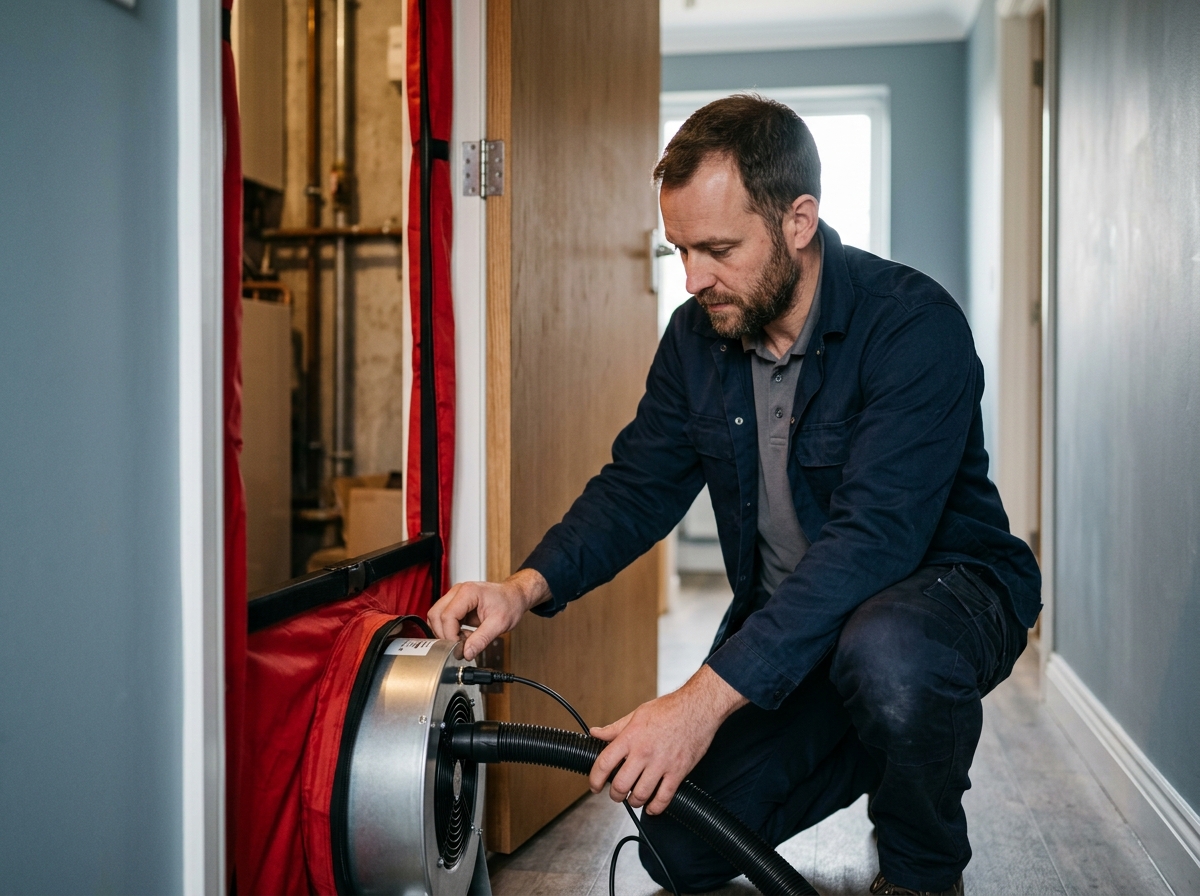
Attics are usually the biggest offender. An under-insulated attic can lose more than 40% of conditioned heat straight through the ceiling, and no boiler upgrade fixes that. Blown-in cellulose installed up to R-60, with depth and R-value verified after the fact, closes that gap for good — reviewing a provider’s portfolio of completed attic jobs gives a sense of what thorough coverage actually looks like. Before any insulation decision gets made, though, a proper home energy assessment with blower-door testing and thermal imaging should map exactly where heat is escaping, room by room, so money goes toward the leaks that matter instead of guesswork.
Lowering heating bills without replacing your boiler
A boiler can only be as efficient as the house around it. If heat is leaking out through the attic, the floors, and every crack near a pipe penetration, even a brand-new unit will run longer and cost more than it should. The good news: most of this is fixable without touching the boiler itself.
Weatherization steps that reduce heating demand
Think of your heating system like a bucket with holes in it. You can keep filling it, or you can patch the holes. Air sealing patches them. Closing gaps in attics, floors, top-plates, and around recessed lights cuts the heating load the boiler has to cover in the first place, so it cycles less and wears out slower.
A few upgrades do most of the heavy lifting here, and they work together rather than alone:
- Sealing cracks and gaps around attic penetrations, rim joists, and floor cavities closes the paths where heated air escapes unnoticed all winter;
- For homes with hybrid forced-air zones, duct sealing with brush-on mastic or aerosolized sealant stops conditioned air from leaking into the attic or crawl space before it reaches a single room;
- Pre- and post-test flow pressure measurements confirm exactly how much leakage got fixed, instead of leaving you guessing;
- Blown-in cellulose insulation, installed up to R-60 in attics and worked into wall and crawl space cavities, slows heat loss through surfaces that batts often leave gapped around framing and obstructions;
- Depth and R-value checks after installation verify the coverage actually hit target, not just that bags went in;
- Combustion-safety checks confirm your boiler and water heater still draft properly once the home is sealed tighter, since a tighter house changes airflow around combustion appliances.
That last point matters more than people realize. Seal a house without checking combustion safety, and you’ve traded one problem for a worse one.
Utility programs that offset the cost
Here’s the part homeowners are usually surprised by: many of these upgrades qualify for utility rebate programs that cover most or all project costs for income-eligible households. You don’t need to be fluent in rebate jargon, either. Paperwork for utility incentives can be handled on your behalf, start to finish, rather than something you chase down yourself between phone calls and forms.
Keeping a home boiler running reliably year after year
Combining equipment care with envelope upgrades
A warranty is a nice safety net. It’ll cover a cracked heat exchanger or a failed circulator pump. But here’s what it won’t cover: the heat quietly leaking out through an attic hatch, a gap behind the rim joist, or an uninsulated knee wall. A boiler under warranty can still run you into the ground on fuel costs if the house around it is sieve-like. Mechanical coverage and building envelope performance are two separate problems, and only one of them gets fixed by a service contract.
Once you start air sealing or adding insulation, you’ve changed how air moves through the house. That’s good for comfort, but it can affect draft patterns around combustion appliances. A combustion-safety check after any sealing or insulation work confirms the boiler and water heater are still venting correctly and not backdrafting into living space. Skipping this step is the one real risk of tightening up a home, and it’s an easily avoidable one.
Before winter hits, a home energy assessment with blower-door testing and thermal imaging shows exactly where heat is escaping fastest, so you’re not guessing which upgrade pays off first. Reviewing attic insulation levels is usually part of that picture, since attics are where a huge share of winter heat loss happens. The assessment turns vague suspicion about high bills into a ranked list, worst offenders first.
None of this replaces a licensed HVAC contractor’s maintenance visit. That’s still where you get the boiler itself inspected, bled, and tuned. But maintenance alone won’t stop warm air from leaking past the envelope, and air sealing alone won’t fix a failing ignitor. Pair the two, and the system runs leaner, cycles less, and lasts longer. Skip one half, and you’re just patching a leaky bucket.
In the end, the choice often comes down to what’s actually driving the discomfort or high bills — a quick blower-door and attic check can tell you whether gaps around doors and framing are the real culprit before you spend money chasing the wrong fix. Ask about job quality, how settled numbers are verified after the work, and whether the crew is easy to reach by talk or text when questions come up later. Weighing efficiency gains against the scope of work proposed, and making sure any rebate paperwork is handled along the way, will help you judge if the plan matches the problem you’re actually trying to solve.
