


Your old refrigerator is quietly costing you hundreds of dollars a year, running around the clock whether you notice it or not. Replacing it is a big investment. And the sea of labels and specs out there doesn’t make the decision any easier. That’s where an energy star certified refrigerator comes in. We’ll walk you through exactly what to look for, why it matters for your wallet and the planet, and how to choose a model that actually delivers on its promises.
What Is an Energy Star Certified Refrigerator
How the certification differs from a generic ‘energy efficient’ marketing claim
Plenty of appliances get slapped with vague words like “eco” or “efficient” on a sticker. That’s marketing, not proof. Energy Star is a federal program run by the EPA. It sets hard efficiency thresholds a refrigerator has to beat compared to the federal minimum standard set by the Department of Energy. We’re talking a specific percentage improvement, not a feel-good label someone in a marketing department decided to add.
Here’s the part most shoppers don’t realize: manufacturers don’t just claim the savings and call it done. Every certified model gets tested and verified by accredited, independent labs before it ever earns the badge. If a fridge doesn’t hit the number, it doesn’t get the label. Simple as that. That third-party check is exactly why the label carries weight that a “green” tagline on a box never will.
The certification isn’t reserved for expensive, top-tier models either. It applies broadly across full-size refrigerators, standalone freezers, and combo fridge-freezer units, spanning budget and premium lines alike. Given how much power a kitchen appliance running nonstop can pull, and how that shows up on your bill, it’s worth understanding the cost of electricity in Louisiana before assuming any one model is automatically the cheap option. Certification just means it cleared a bar. It doesn’t mean it’s the right size or style for your kitchen.
What to look for on the appliance itself
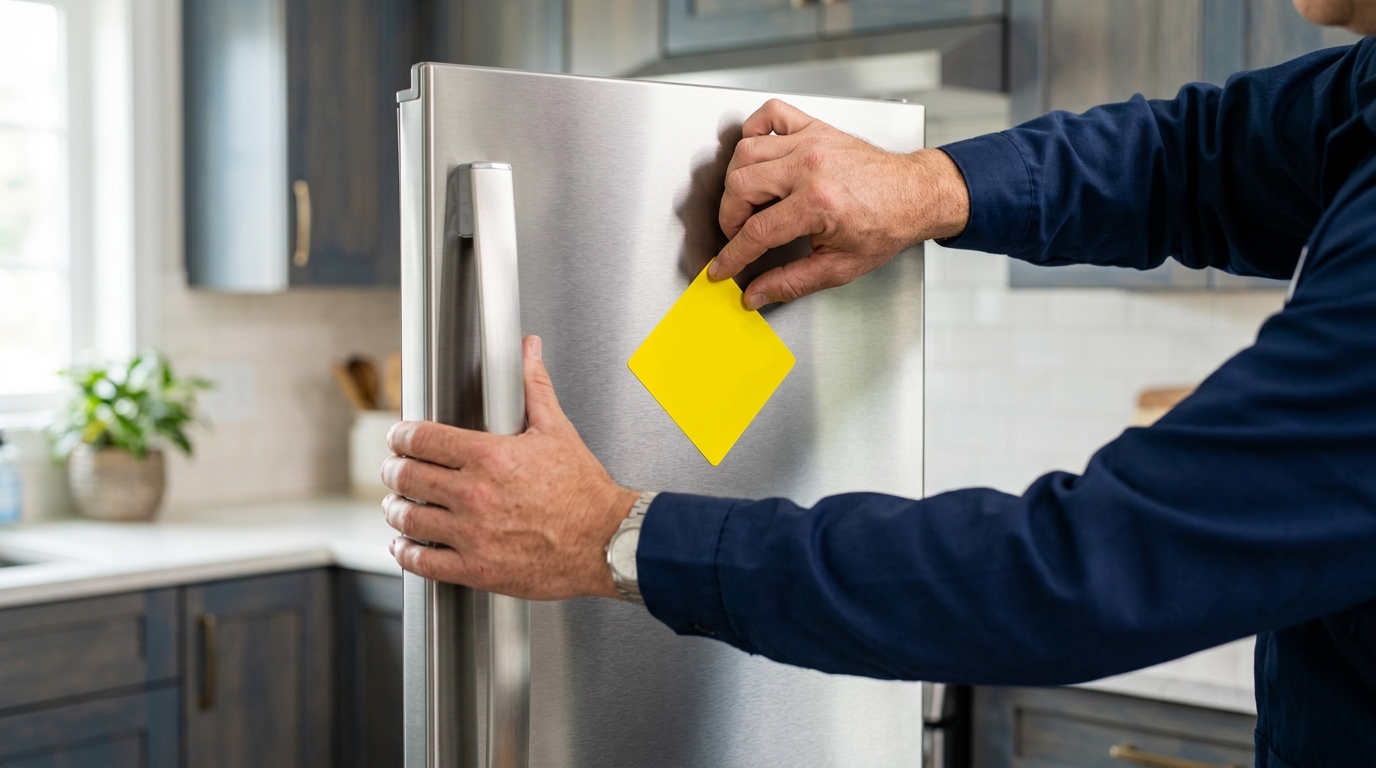
Before you buy, check for two things, not one. First, the blue Energy Star label, usually on the door or spec sheet, confirming the model passed certification testing. Second, the yellow EnergyGuide tag, a separate federal requirement that estimates annual kWh use and yearly operating cost based on national averages. Together they tell you both “it’s certified” and “here’s roughly what it’ll cost to run.”
Don’t skip the yellow tag. Two certified models can still have noticeably different annual energy costs depending on size, features, and ice-maker setup. For a deeper breakdown of what those numbers actually mean for your household, the federal guide on Purchasing Energy-Efficient Residential Refrigerators walks through how to compare models apples-to-apples. And if you want more practical breakdowns like this one, our blog covers plenty of related home-efficiency topics worth reading before you shop.
Why Choosing a Certified Model Pays Off Long-Term
The math here is simple, and it’s in your favor. A certified refrigerator typically runs 9 to 15% more efficiently than one that just squeaks by on federal minimums. That gap doesn’t sound huge on paper. Over ten or fifteen years of round-the-clock operation, though, it adds up to real money leaving your pocket every single month, whether you notice it or not. If your current fridge dates back before 2001, the picture gets worse fast: those units can cost two to three times more to run annually than a new Energy Star model, mostly because older compressors and thinner insulation never had to meet today’s standards.
Swapping out an inefficient fridge does more than trim one line on your bill. It lowers your home’s year-round baseline electric load — the constant hum of energy use that never turns off, unlike seasonal heating or cooling spikes. That baseline reduction compounds nicely with other upgrades, like sealing leaky ductwork or adding insulation where it’s been skimped on. Fix one source of waste and the next one becomes easier to see, and often cheaper to fix, too.
A new fridge alone won’t solve a house that’s bleeding energy elsewhere. Appliances don’t patch leaky ducts or thin attic coverage; those need their own fixes, and reading up on the benefits of insulating your attic is a reasonable place to start. Even window treatments play a role: pairing efficient glass coverings with an efficient kitchen cuts unwanted heat gain in summer, and understanding energy efficient window coverings rounds out the picture. Treat the fridge as one piece of a bigger puzzle, not the whole solution.

Certified vs. Standard Refrigerator: Cost and Savings Comparison
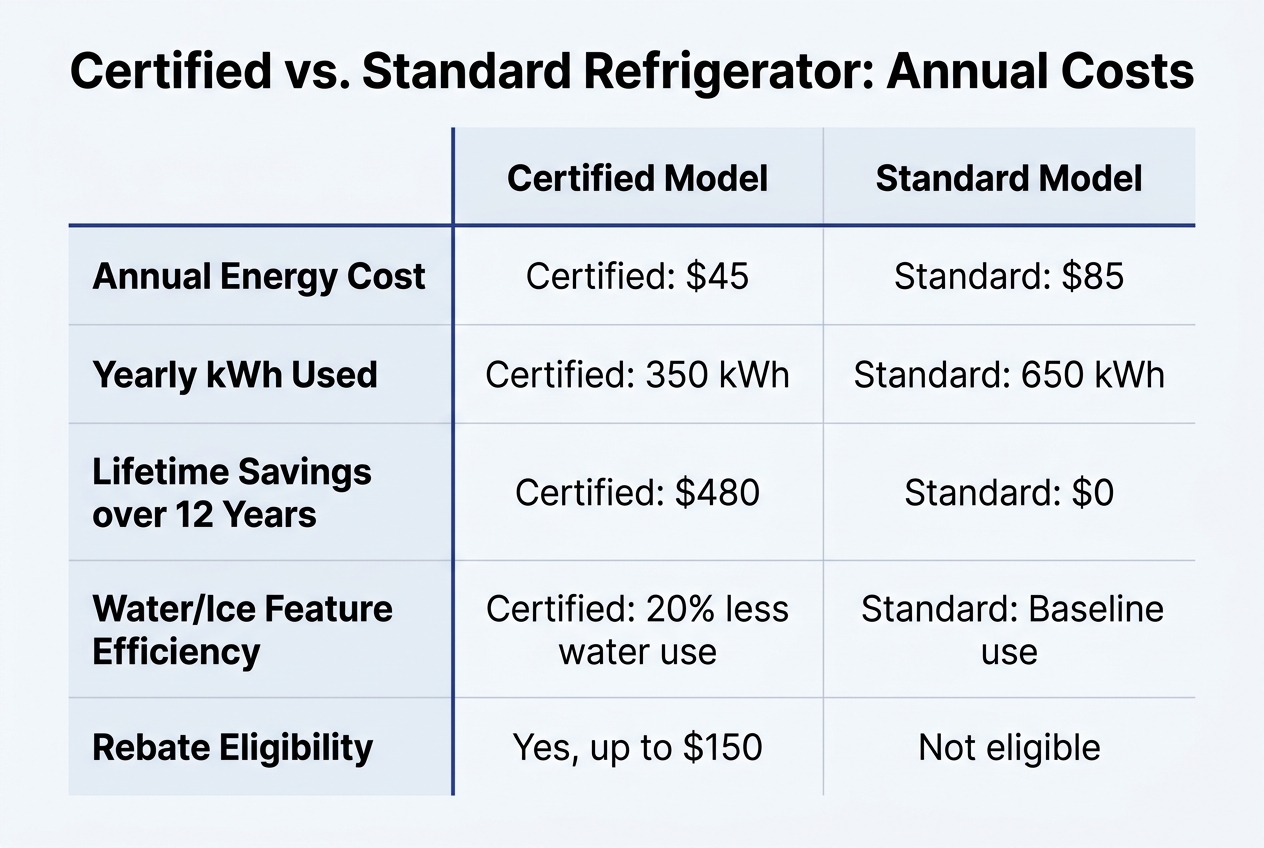
Numbers settle arguments faster than marketing claims do. Below is a realistic snapshot of what you’d pay upfront, what you’d pay each year to run the fridge, and what that adds up to over a decade. Prices and energy use vary by brand, but these figures reflect typical 2026 retail averages for each size class.
Sample side-by-side comparison across three refrigerator sizes
| Model Type | Avg. Purchase Price | Est. Annual kWh | Annual Operating Cost | 10-Year Lifetime Cost |
|---|---|---|---|---|
| 18 cu.ft. compact, certified | $780 | 350 kWh | $49 | $1,270 |
| 18 cu.ft. compact, standard | $650 | 480 kWh | $67 | $1,320 |
| 20-22 cu.ft. French door, certified | $1,450 | 460 kWh | $64 | $2,090 |
| 20-22 cu.ft. French door, standard | $1,250 | 620 kWh | $87 | $2,120 |
| Side-by-side, certified | $1,600 | 530 kWh | $74 | $2,340 |
Look at that French door row again. The certified version costs $200 more to buy, but it saves roughly $23 a year — enough to close the gap in about nine years on its own. Pair it with a rebate, though, and the math changes fast. Many utility programs knock $50 to $150 off the sticker price of qualifying models, often enough to erase the upfront difference entirely on day one. If your current bill already seems out of line, it’s worth learning whether an electricity bill too high for your household size points to the fridge or somewhere else. And if you’re shopping brands rather than just specs, comparing options through a guide to Best Energy-Efficient Refrigerators in 2026: Top Brands will narrow the field quickly. Bottom line: certified pays for itself. It just takes patience, or a rebate, to get there faster.
How to Find and Compare Certified Models
Shopping in a showroom is fine, but the real comparison work happens online. A few tools do most of the heavy lifting. Once you know where to look, narrowing down a shortlist takes minutes, not hours.
- Start with the official Energy Star Product Finder database, where you can filter by size, style, and estimated yearly operating cost to see only models that fit your kitchen and your budget.
- Check the annual “Most Efficient” list, which highlights the top-performing refrigerators in each category and is updated every year, so last year’s list won’t always match this year’s winners.
- Look for the actual UL or Energy Star verification mark on the unit or spec sheet, not just a manufacturer sticker claiming efficiency — those claims aren’t always independently tested.
- Compare the estimated annual kWh number printed on the EnergyGuide label rather than trusting a vague “efficient” badge; two “certified” models can still differ by 100+ kWh a year.
- Because the certification terminology itself trips people up, it’s worth taking a minute to learn how What do ENERGY STAR® and ENERGY STAR® Most … actually differ before you assume every labeled fridge performs the same.
- Note the estimated yearly cost in dollars, not just kWh, since utility rates vary and that figure translates efficiency into something your wallet actually feels.
None of this matters much if the fridge sits in a hot, leaky kitchen working overtime. A poorly sealed home strains every appliance in it, which is a big reason many local businesses now bundle appliance advice with broader home energy work; if you’re curious what that looks like in practice, browsing our services gives a sense of the full picture. It’s also worth remembering that a new fridge won’t fix an old, failing thermostat — knowing typical thermostat replacement cost figures helps you budget for the whole system, not just one box in the kitchen. Compare labels, then compare your house.
What Else to Check Before You Buy
Features that quietly increase energy use
Certification tells you a model passed the test, but the label doesn’t capture everything that affects your bill once the fridge is running in your kitchen. Size, shape, and a handful of “convenience” extras can quietly push energy use higher, even on a certified unit. Worth slowing down and checking these before you commit.
- Top-freezer and bottom-freezer configurations generally sip less power than side-by-side models, since the narrower doors and simpler compressor layout lose less cold air per opening.
- Through-door ice and water dispensers are handy, but they add a heating element to prevent frost buildup, which means near-constant, small energy draws you won’t notice on the bill until you compare models.
- Temperature-controlled drawers and built-in Wi-Fi displays run their own sensors and screens around the clock, adding a small but steady load on top of normal cooling.
- Placement matters more than most buyers assume: keep the unit out of direct sunlight and away from ovens or dishwashers, and leave a few inches of clearance so the coils can breathe.
- Door seals that are cracked, loose, or simply worn let cold air leak out constantly, forcing the compressor to work overtime just to hold temperature.
- Adjustable shelving that lets air circulate freely around food helps the unit cool evenly, instead of running longer to compensate for blocked vents.
A few of these seem small on their own. Stacked together, they can erase a good chunk of the savings certification promised. It’s also worth checking whether your utility offers a rebate on top of the purchase price, since many programs list qualifying models straight from public sources like ENERGY STAR Certified Residential Refrigerators data. That’s free money most shoppers never bother to claim.
Getting the Most Savings Once It’s Installed
Simple habits that stretch your efficiency gains further.
Buying a certified model is only half the story. How you run it day to day decides whether you actually see those savings show up on your bill. The good news is none of this takes much effort, just a little attention a few times a year.
- Set the fridge to 37-40°F and the freezer to 0-5°F; colder settings waste energy without making food any safer.
- Vacuum or brush the condenser coils twice a year, since dust buildup forces the compressor to run longer and harder to hit target temps.
- Don’t overpack shelves or leave the fridge nearly empty; both states make the unit work harder to maintain even cooling.
- Inspect door gaskets for cracks or looseness, and replace them once they stop holding a piece of paper snugly when the door’s shut.
- Place the unit against an insulated interior wall rather than an uninsulated garage or exterior wall, where swinging outdoor temperatures make the compressor cycle constantly.
That last point trips up more homeowners than you’d think. A garage fridge in July might sit in 95-degree heat all day, and the compressor pays for it with hours of extra runtime. If your home has drafty walls or gaps near the kitchen, the same problem shows up indoors too; working through air sealing around exterior walls keeps ambient temperatures steadier near the appliance. Small stuff, but it adds up. Pair good habits with a model that’s actually earned its rating, and for that, browsing Refrigerators | ENERGY STAR listings is a solid way to confirm a unit’s certified before you commit to it.
Maximize Refrigerator Savings by Fixing the Rest of Your Home’s Energy Loss
Where whole-home weatherization fits alongside appliance upgrades
A certified fridge is a smart buy. But it’s still just one appliance sitting inside a house that might be bleeding energy everywhere else. Leaky ducts, gaps around windows and top plates, and attics with half the insulation they need can waste 40% or more of your conditioned air, regardless of how efficient your kitchen appliances are. That’s air you paid to heat or cool, gone before it ever does its job.
This is why professional home energy assessments matter so much. Blower door tests and duct blaster testing don’t guess — they measure exactly how much air is escaping and where, giving you a real map instead of a hunch. Thermal imaging often reveals cold spots behind outlets, around recessed lighting, or along rim joists that homeowners never would have suspected on their own.
Once you know where the losses are, the fix usually involves two things: sealing the gaps and adding insulation where it’s thin. Blown-in cellulose, brought up to R-38 or higher, keeps conditioned air where it belongs instead of drifting into the attic. Pair that with air sealing, and your HVAC system — which typically draws far more electricity than any single appliance, refrigerator included — stops working overtime just to hold a steady temperature.
Cost is usually the first objection, and it’s a fair one. Utility-sponsored weatherization programs across Louisiana and Mississippi often cover most or all of these upgrades for qualifying homeowners, sometimes at no out-of-pocket cost at all. A dedicated provider can typically handle the rebate paperwork too, so you’re not stuck decoding utility forms on top of everything else.
Here’s the real payoff: pair an efficient fridge with proper weatherization and the savings compound. Shopping smart matters, and browsing Energy Star Refrigerators is a reasonable place to start that search. But a new fridge in a leaky house is like patching one hole in a boat with three others still open. Fix the envelope, and every appliance inside it works less to do the same job — including the one keeping your groceries cold.
A new energy star certified refrigerator works even better as part of a well-sealed, properly insulated home, and that’s where Big Star Conservation, Inc. can help. Their BPI-certified Building Analyst Professionals will assess your whole home’s energy performance, often at little to no cost through utility partners like Entergy and CLECO, so every appliance upgrade you make actually pays off. Stop by their office at 1500 Edwards Ave Suite J in Elmwood, LA, or call +1 (504) 305-3276 to book an appointment in under five minutes.
