


Your heat pump is getting old, your energy bills keep climbing, and you’re stuck wondering whether repair or full replacement makes more financial sense. Here’s the truth: heat pump replacement cost varies dramatically based on system size, efficiency ratings, and installation complexity. That leaves many homeowners unsure what a fair price actually looks like. Big Star Conservation INC. breaks down every factor that shapes your final quote in 2026, from equipment tiers to labor rates, so you can budget accurately and avoid overpaying for your next installation.
Understanding Heat Pump Replacement Cost in Louisiana and Mississippi
Average Price Range for a Full System Swap
Most homeowners across the country pay between $5,000 and $12,000 for a full heat pump replacement. In Louisiana and Mississippi, prices often land near the middle or higher end of that range. Larger homes, older ductwork, and humidity control needs push costs up. A typical Gulf South replacement falls between $6,500 and $11,000, depending on home size and equipment tier.
National pricing tools, like this breakdown of the Cost to Install Heat Pump, offer a helpful starting point. But local labor rates, permit fees, and climate demands shift the final number. Replacement costs also differ from new installation costs. Replacing an existing system often means removing old equipment, patching refrigerant lines, and updating electrical connections — extra work a brand-new install wouldn’t need.
Homeowners should budget for equipment, labor, disposal fees, and possible ductwork repairs. Many contractors bundle these into one quote, but it’s smart to ask for an itemized breakdown before signing anything.
Why Humid, Hot Climates Affect Pricing
Gulf South summers push heat pumps harder than milder regions. Longer cooling seasons mean systems run more hours per year, causing faster wear. This added strain often leads contractors to recommend higher-capacity units or enhanced dehumidification features. Both raise upfront costs.
Humidity also affects long-term value. A poorly sized system struggles to control moisture, leading to mold risk and higher bills. Understanding the cost of electricity in louisiana helps homeowners see why efficient equipment matters here more than in drier climates.
Asking a contractor for examples of completed regional projects can offer useful context. Seeing similar homes and climates helps homeowners set realistic expectations before requesting quotes.
What Drives the Price of a New Heat Pump
Home Size and Load Calculations
A home’s square footage sets the starting point for pricing. Larger homes need bigger systems, and bigger systems cost more. But size alone doesn’t tell the whole story. A proper load calculation measures how much heating and cooling a home actually needs, based on insulation, window count, ceiling height, and layout.
Skipping this step often leads to an oversized or undersized unit. An oversized heat pump cycles on and off too often, wasting energy and wearing out parts faster. An undersized one struggles during Louisiana summers or Mississippi cold snaps. A correct calculation keeps costs predictable and performance steady for years.
Efficiency Ratings and Long-Term Value
Every heat pump carries efficiency ratings, listed as SEER2 for cooling and HSPF2 for heating. Higher-rated units cost more upfront but lower monthly utility bills. A homeowner choosing a mid-tier SEER2 rating over a base model might pay a few hundred dollars more, then recover that difference within several years of energy savings.
Long-term value matters more than sticker price alone. A slightly pricier, high-efficiency unit often outperforms a cheaper one over a 12- to 15-year lifespan, especially in regions with long cooling seasons.
Labor, Permits, and Existing Ductwork
Installation labor varies by region and contractor experience, and permit fees add a smaller but necessary cost. Ductwork condition plays a bigger role than many homeowners expect. Leaky or damaged ducts force a new system to work harder, so duct sealing is sometimes recommended before installation begins.
Gaps around windows, doors, and attic spaces also affect performance. Pairing air sealing with a new system helps it run efficiently from day one. Brand and equipment tier round out the final cost, with premium brands offering longer warranties and quieter operation.
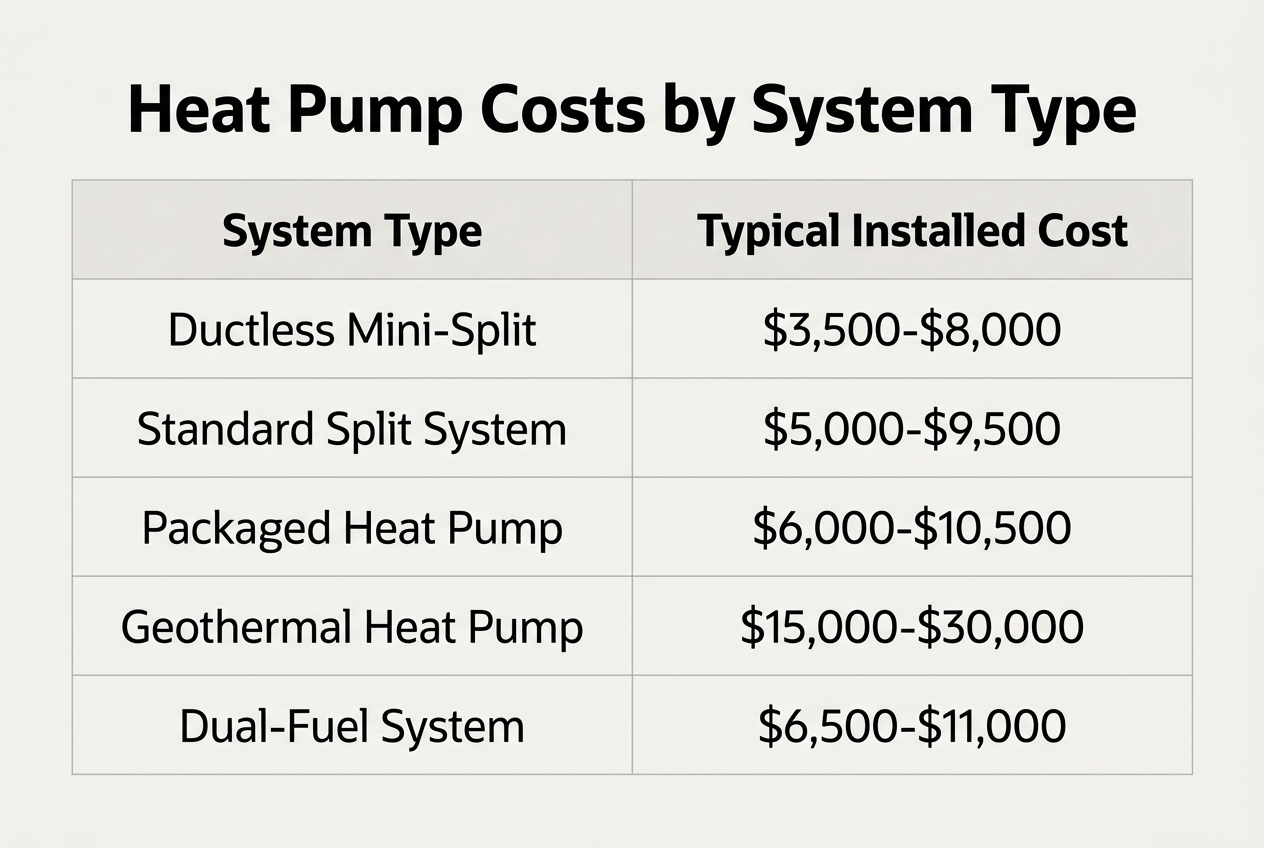
Heat Pump Costs by System Type
Not all heat pumps cost the same. The right system depends on your home’s layout, existing ductwork, and long-term goals. The table below breaks down the three main options homeowners in Louisiana and Mississippi typically consider.
| System Type | Typical Cost Range | Best For | Installation Time |
|---|---|---|---|
| Ducted central heat pump | $6,000–$25,000 | Homes with existing ductwork | 1–3 days |
| Ductless mini-split | $2,000–$7,000 per zone | Additions, no ductwork, room-by-room control | 1 day per zone |
| Geothermal system | $18,000–$45,000+ | Long-term homeowners seeking low operating costs | 3–7 days |
Ducted Heat Pumps: $6,000–$25,000
Ducted systems work well if your home already has functional ductwork. Costs climb with tonnage, brand, and efficiency ratings. A larger home needing a high-SEER unit sits near the top of this range.
Ductless Mini-Splits: $2,000–$7,000 Per Zone
Mini-splits price out per zone, not per whole house. A single-zone install for a bonus room costs far less than a whole-home, multi-zone setup with four or five indoor units.
Geothermal Systems: Higher Upfront, Lower Operating Cost
Geothermal systems carry the highest upfront price but the lowest monthly bills. Ground loops add cost but pay back over 10–15 years. Pairing any system with proper attic insulation reduces the load your heat pump must handle. Understanding the benefits of insulating your attic helps homeowners choose a smaller, cheaper system size.
What a Heat Pump Quote Should Include
A written quote should spell out exactly what you’re paying for. If your electricity bill too high concern started this search, you already know surprise costs are frustrating. A clear quote helps you avoid more surprises down the road.
Typically Included Items
Every honest quote should list these core items in detail:
- Equipment cost, including the specific brand, model number, and rated efficiency (SEER2 and HSPF2).
- Full labor charges for removing the old system and installing the new one.
- Manufacturer’s warranty terms, including parts coverage length and any registration steps required.
- Permit fees and any required inspections by local building authorities.
- Basic electrical or ductwork adjustments needed to connect the new unit safely.
Common Exclusions to Ask About
Some costs get left off the first page. Ask specifically about disposal fees for the old unit, extra refrigerant line work, and electrical panel upgrades if your home’s wiring is outdated. Also ask whether a maintenance plan is included or sold separately.
To compare quotes fairly, request the same equipment tier from each contractor. Prices vary widely by region, so reading a thread like Cost of heat pump on your area : r/heatpumps can offer useful, real-world context before you decide.
Cost Comparison: Heat Pumps vs Other HVAC Replacement Options
Heat Pump vs Central Air Conditioner Costs
Homeowners often compare a heat pump to a standard central air conditioner. Central AC only cools. A heat pump heats and cools, so it replaces two systems with one. That changes the math on total value, not just sticker price. Here’s how much heat pumps cost to install compared with other equipment types.
| System | Typical Installed Cost | Heating Included? | Cooling Included? |
|---|---|---|---|
| Central AC only | $4,500–$8,000 | No | Yes |
| Air handler replacement | $2,000–$4,500 | No | Supports existing system |
| Standard heat pump | $6,000–$12,000 | Yes | Yes |
| Ductless mini-split heat pump | $3,500–$9,000 | Yes | Yes |
Heat Pump vs Furnace Replacement Costs
A gas furnace often costs less upfront than a heat pump. But a furnace still needs a separate AC unit for summer. That means two installations, two repair schedules, and two lifespans to track. A heat pump combines both jobs into one system.
Monthly operating costs matter too. Furnaces burn fuel year-round. Heat pumps use electricity efficiently, especially in mild Gulf South winters. Our blog breaks down regional utility rate impacts in more detail.
How to Lower Your Out-of-Pocket Costs
Local and Utility Rebate Programs
Homeowners in Louisiana and Mississippi often qualify for rebates through regional utility companies. These programs reward customers who upgrade to high-efficiency systems. Many local businesses partner with utilities to help residents access these funds at little to no cost. Checking our services is a good first step to see what programs apply to your home.
- Utility-sponsored rebates that reduce the upfront price of a qualifying heat pump installation.
- Manufacturer rebates offered when you choose certain high-efficiency models.
- Federal tax credits no longer apply to systems placed in service after December 31, 2025, so leave them out of your budget.
- State weatherization assistance programs that pair with rebate offers for added savings.
- Seasonal promotions from installers that lower labor or installation fees.
Energy Savings and Financing Options
A new heat pump often cuts monthly energy bills within the first year. Older systems work harder and waste more power, driving up costs over time. Newer models also need less repair, which lowers long-term maintenance expenses. For a detailed breakdown of national pricing trends, see this guide on Heat Pump Cost (2026) | Prices, Installation & Savings.
Financing can also ease the upfront burden. Many providers offer payment plans that spread costs over months or years. Some plans include low or zero-interest options for qualifying homeowners. Combining financing with rebates can significantly shrink your total out-of-pocket expense.
How a Free Energy Assessment Can Reduce Replacement Costs
Why Weatherization Comes Before Equipment Sizing
Sizing a heat pump before fixing a leaky home wastes money. Contractors often size equipment based on a home’s current condition. But if that home loses heat through gaps, cracks, and thin insulation, the estimate will be too high. Weatherization should always come first, not after.
Sealing air leaks and upgrading insulation lowers the total heating and cooling load a home produces. A tighter home needs less equipment to stay comfortable. This single step can shift a homeowner from needing a large, expensive system to a smaller, more affordable one.
Skipping this step is one of the most common ways homeowners overspend. A smart provider will always check the building envelope before recommending equipment size.
What an Energy Assessment Evaluates
An energy assessment looks at insulation levels, duct condition, window performance, and air leakage throughout the home. Technicians often use a blower door test to measure how much outside air enters a house. These findings shape smarter, more accurate equipment recommendations.
Many of these assessments are funded through utility partnerships, meaning homeowners pay little to no cost for the visit. This makes it easier to catch expensive issues early. For homeowners comparing options, resources like the Heat Pump Cost Calculator: A Complete Guide can help clarify how sizing affects price.
Before scheduling a visit, homeowners should review a provider’s privacy policy to understand how their information is used.
Steps to Planning Your Heat Pump Replacement
Step 1: Schedule a Home Energy Assessment
Start with a home energy assessment. A trained technician checks your insulation, ductwork, and current system performance. This step helps you learn what size unit your home actually needs. Many local businesses skip this step and end up with oversized or undersized equipment. You can read more about the process on our about us page.
Step 2: Get Multiple Contractor Quotes
Request at least three quotes before deciding. Compare pricing, warranty terms, and installation timelines side by side. A good contractor explains equipment specs clearly and answers questions without pressure. The HVAC Replacement Cost Guide is a useful reference for comparing typical price ranges by region.
The table below outlines a general timeline for planning your project.
| Step | Typical Timeframe | What Happens |
|---|---|---|
| Energy assessment | 1-2 hours | Technician inspects home and system needs |
| Contractor quotes | 1-2 weeks | Compare three or more written estimates |
| Permit approval | 3-10 business days | Local permitting office reviews plans |
| Installation day | 1 day | Crew removes old unit, installs new system |
| Final inspection | 1-3 days after install | Inspector confirms code compliance |
Step 3: Schedule Installation and Inspection
Once you choose a contractor, schedule the install date. Confirm the crew will pull required permits. After installation, a final inspection ensures the heat pump meets local code and runs safely.
Heat Pump Replacement Cost FAQs
Lifespan, Sizing, and Timeline Questions
Most homeowners ask the same core questions before they commit to a project. A heat pump typically lasts between 12 and 15 years in Louisiana and Mississippi’s humid climate. Salt air near the coast can shorten that range slightly, while inland systems with good maintenance may last longer.
For a 3-bedroom or 2,000-square-foot home, expect a mid-range system to run higher than smaller homes need. Sizing, ductwork condition, and insulation levels all affect the final number. For a detailed cost breakdown, this video explains it well: How Much Does a Heat Pump Cost? Between $8K and $23K ….
Installation timeline matters too. A standard swap usually takes one to two days. Jobs requiring ductwork repairs or electrical upgrades can stretch to three or four days.
Rebates, DIY, and Efficiency Questions
DIY installation is not recommended. Heat pumps require refrigerant handling, electrical work, and precise calibration that demand licensed technicians. Attempting it alone can void warranties and create safety risks.
High-efficiency rebates remain available in many areas. Homeowners should check these options before finalizing a purchase:
- Utility-sponsored rebates often reduce upfront costs for ENERGY STAR-certified units.
- The federal home improvement tax credit ended for equipment placed in service after December 31, 2025, according to the IRS.
- State-level weatherization programs sometimes pair with heat pump upgrades for added savings.
- Manufacturer rebates occasionally stack with local utility incentives during promotional periods.
To confirm which programs apply to a specific property, reach out through contacts for personalized guidance.
If you’re weighing the cost of a heat pump replacement, it’s worth talking to Big Star Conservation Inc. before making a decision. Through partnerships with regional utility companies, they provide expert energy assessments and weatherization services to homeowners and multi-family property owners across Louisiana and Mississippi at little to no cost, helping you understand where your money is best spent. Visit their website or book an assessment today to get personalized guidance for your home.
