


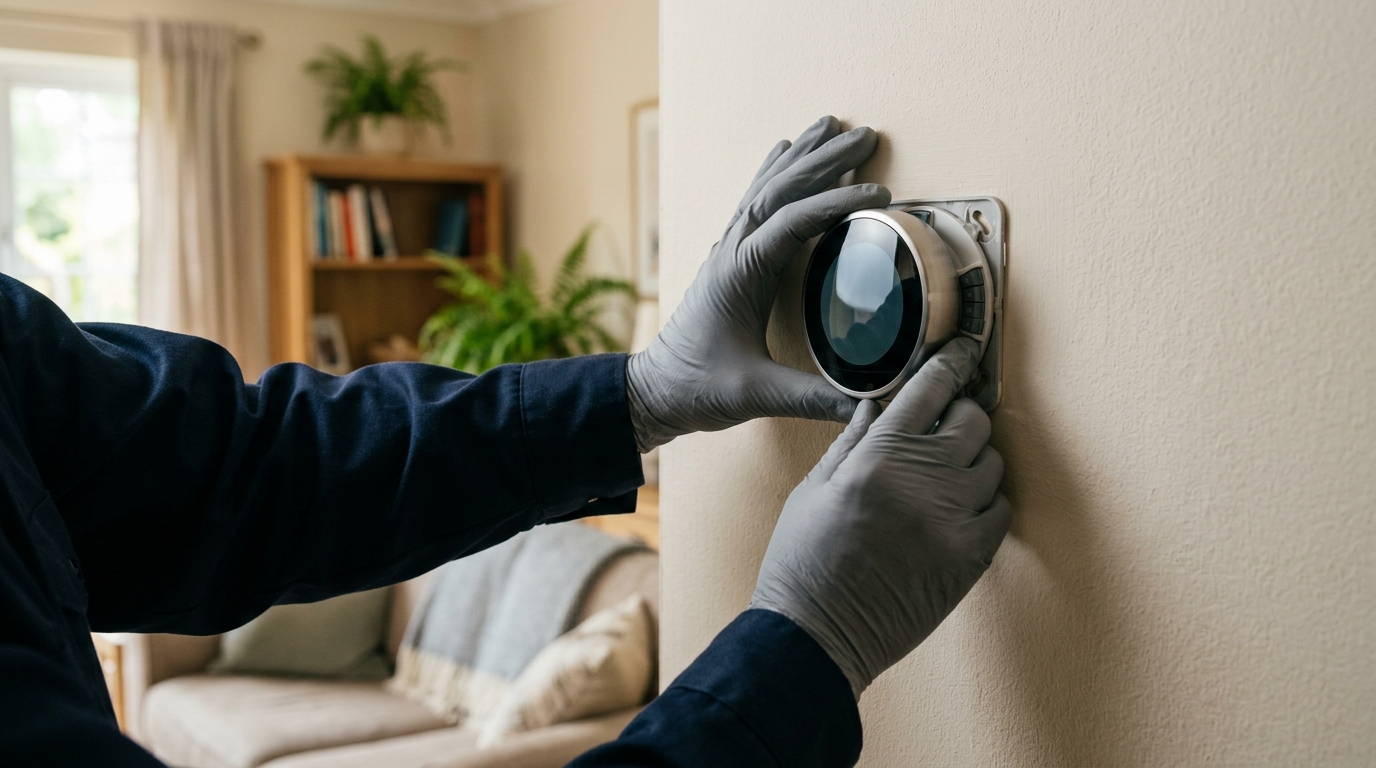
Your old thermostat is struggling to keep up, your energy bills keep climbing, and you’re stuck deciding between a simple swap or a full smart-home upgrade. Understanding thermostat replacement cost in 2026 means looking past the price tag on the box. Labor rates, wiring compatibility, and system type all shape your final bill. Big Star Conservation INC. breaks down every variable so you can budget accurately and pick an option that lowers your energy usage for years to come.
What Is the Average Thermostat Replacement Cost in 2026
Average Cost Range Nationwide
Most homeowners pay between $150 and $500 for a single thermostat swap, unit and labor included. Basic models with simple installs sit near the low end. Smart thermostats with wiring changes push costs higher. If your electricity bill too high has you searching for fixes, a new thermostat is often the smart first step.
Low-End vs High-End Estimates
A basic manual thermostat replacement can cost as little as $100. A high-end smart system with professional setup can run $600 or more. The table below breaks down typical price bands by project type.
| Project Type | Unit Cost | Labor Cost | Total Range |
|---|---|---|---|
| Basic manual swap | $20–$50 | $75–$100 | $95–$150 |
| Programmable model | $50–$150 | $75–$150 | $125–$300 |
| Smart thermostat | $150–$300 | $100–$200 | $250–$500 |
| New wiring required | $150–$300 | $200–$350 | $350–$650 |
Cost Per Room or Zone
Homes with multi-zone heating and cooling need one thermostat per zone. Expect $150 to $400 per unit, depending on type. A three-zone home could total $450 to $1,200. Larger homes also lose more energy through gaps, so pairing this upgrade with better attic insulation often boosts savings further.
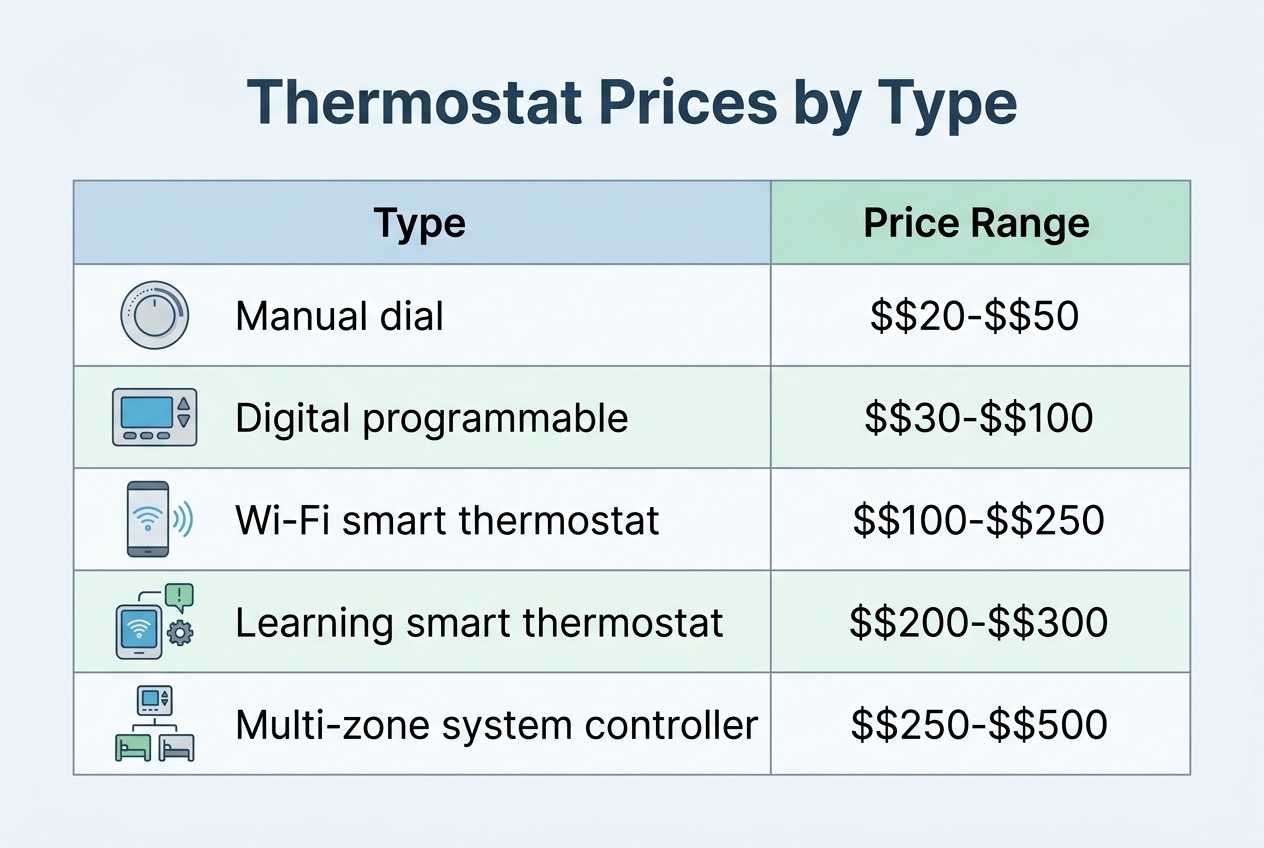
Thermostat Prices by Type
Thermostat prices vary widely by technology. The table below compares typical unit costs and features across three main categories.
| Type | Average Unit Cost | Key Feature | Best For |
|---|---|---|---|
| Manual/Mechanical | $15–$40 | Simple dial or slide control | Budget-conscious homeowners |
| Digital Non-Programmable | $25–$50 | Precise digital readout | Small upgrade without scheduling |
| Programmable | $50–$120 | Custom weekly schedules | Consistent daily routines |
| Wi-Fi Smart | $100–$250 | Remote app control | Tech-savvy households |
| Smart Learning | $200–$280 | Adaptive usage patterns | Long-term energy savings |
Manual and Mechanical Thermostats
Manual thermostats stay the cheapest option on the market. They use a basic dial or slider, with no digital display at all. They work fine for simple heating and cooling needs.
Programmable and Wi-Fi Thermostats
Digital non-programmable models offer a modest step up from manual units. Programmable and Wi-Fi versions cost more upfront, but they adjust temperatures automatically. Given the cost of electricity in louisiana, scheduling features can meaningfully cut monthly bills over time.
Smart Learning Thermostats
Smart learning thermostats carry the highest price tag of the bunch. They study household habits and adjust settings on their own, no input needed. Many local businesses report faster payback periods for these units. For comparison, drivers researching Car Thermostat Replacement Cost notice a similar pattern: higher-tech parts cost more but often prevent bigger expenses later.
Key Factors That Affect Your Total Cost
Labor and Installation Complexity
Labor rates change from contractor to contractor. Some charge a flat fee for a basic swap. Others bill by the hour, especially when a job runs longer than expected. Your final price depends heavily on who you hire, not just on the thermostat itself.
Region matters too. A technician in a big city may charge more than one out in a rural area. Louisiana and Mississippi homeowners often see different quotes depending on local demand and travel distance. For a broader breakdown of typical price ranges, this Thermostat Replacement Cost Guide offers useful context.
Installation complexity also drives labor time. A simple wall-mounted unit takes less effort than a smart thermostat tied into a home network. More steps mean more billable hours.
Number of Units and Zoned Systems
Homes with multiple heating and cooling zones need more than one thermostat. Each unit adds its own equipment and labor cost. A three-zone home, for instance, may need three separate installations instead of just one.
Zoned systems show up often in larger houses or multi-family properties. These setups tend to use dampers and control panels that must sync with each new thermostat. That extra coordination raises both time and price.
Wiring Repairs and System Compatibility
Older homes sometimes have outdated or damaged wiring. A technician may need to replace wires before the new thermostat can work safely. That adds parts and labor beyond the base installation fee.
Compatibility issues come up a lot too. Not every thermostat works with every heating or cooling system. Smart models especially need careful matching to avoid short cycling or system errors.
Homeowners focused on year-round efficiency should also look at related upgrades. Learning about the benefits of insulating your attic can ease strain on your system, which may lower long-term repair needs.
New Installation vs Simple Replacement
Straight-Swap Replacement Costs
A straight-swap replacement means the new thermostat uses the same wiring and location as the old one. This is the cheapest route. Labor usually runs $65 to $150, since the technician just connects existing wires to new terminals.
Most homes built in the last 30 years handle a simple swap without any trouble. There’s no drywall work, no new wiring runs, and no need to relocate the thermostat. For homeowners comparing quotes, this Reddit thread on How much should a thermostat replacement cost? offers useful real-world pricing examples from other homeowners.
New Thermostat Installation Costs
A new installation costs more, often $200 to $400 including labor. This applies when a thermostat goes in a new location, or when old wiring is damaged or missing entirely.
Extra costs come from cutting into drywall, running new low-voltage wire, and patching the wall afterward. Some technicians charge $50 to $100 extra just for patch-and-paint work. If you want to learn more about the standards behind these installation estimates, our about us page explains our approach to energy assessments.
When Extra Wiring or Adapters Are Needed
Older HVAC systems often lack a common wire, or C-wire, needed to power smart thermostats. Adding one costs $100 to $200, depending on wall access and furnace location.
Some technicians use a C-wire adapter instead, sidestepping new wiring for $20 to $50. Systems older than 15 years may also need compatibility adapters, tacking on another $30 to $75 to the final bill.
Popular Thermostat Brands and Price Points
Budget-Friendly Brands
Basic brands like Honeywell Home and Emerson offer simple, reliable models. These units focus on core heating and cooling controls. No fancy screens, no app features. Many homeowners find these brands cover their needs without overspending.
Mid-Range Popular Brands
Mid-range brands add programmable schedules and better displays. Honeywell’s T5 series and Emerson’s Sensi line fit this tier. They balance features and cost well.
Premium Smart Thermostat Brands
Premium brands like Nest and Ecobee lead the smart thermostat market. Their higher prices reflect added technology and design. Consider these differences before choosing a premium model:
- Learning algorithms that adjust temperature automatically based on your habits and schedule
- Advanced sensors that detect occupancy in specific rooms for zoned comfort control
- Longer warranty periods, often three years compared to one year on budget models
- Robust app ecosystems that sync with smart home systems like Alexa or Google Home
- Detailed energy reports that show usage trends and potential savings over time
Warranty length and app support often justify the price gap. For more background, see What is the average cost to repair/replace a thermostat? This helps clarify long-term value across brands.
Additional Accessories and Add-On Costs
Room Sensors and Add-On Modules
Many homeowners add extra hardware to improve comfort in tricky rooms. These add-ons raise your upfront cost but can boost accuracy across the whole house. Room sensors rank among the most popular upgrades.
- Remote temperature sensors, priced around $40 to $80 each, track hot or cold rooms far from the main unit.
- Humidity sensors, often $30 to $60, help control moisture levels tied to comfort and mold prevention.
- Occupancy sensors, typically $25 to $50, detect when a room is empty and adjust heating or cooling automatically.
- Additional wiring or C-wire adapters, usually $15 to $50, are sometimes needed to power extra modules.
- Multi-room sensor kits, ranging from $100 to $250, bundle several sensors for whole-house monitoring.
Smart Home Integration Costs
Connecting a thermostat to a broader smart home system adds convenience, but it adds expense too. Compatibility issues sometimes call for a professional setup, which raises labor costs. Learn more details in How Much Does Thermostat Replacement Cost? [2026 Data]. Hub integration, voice assistant pairing, and app configuration can add $50 to $150 to your total project.
Optional Warranty and Support Plans
Extended coverage offers peace of mind after installation. Many local businesses sell plans separately from the manufacturer’s base warranty. Extended warranties typically run $20 to $75 per year, while professional monitoring plans range from $10 to $30 monthly. Ask the installer to put any plan’s terms in writing before you sign up.
DIY Installation vs Hiring a Professional
When DIY Installation Makes Sense
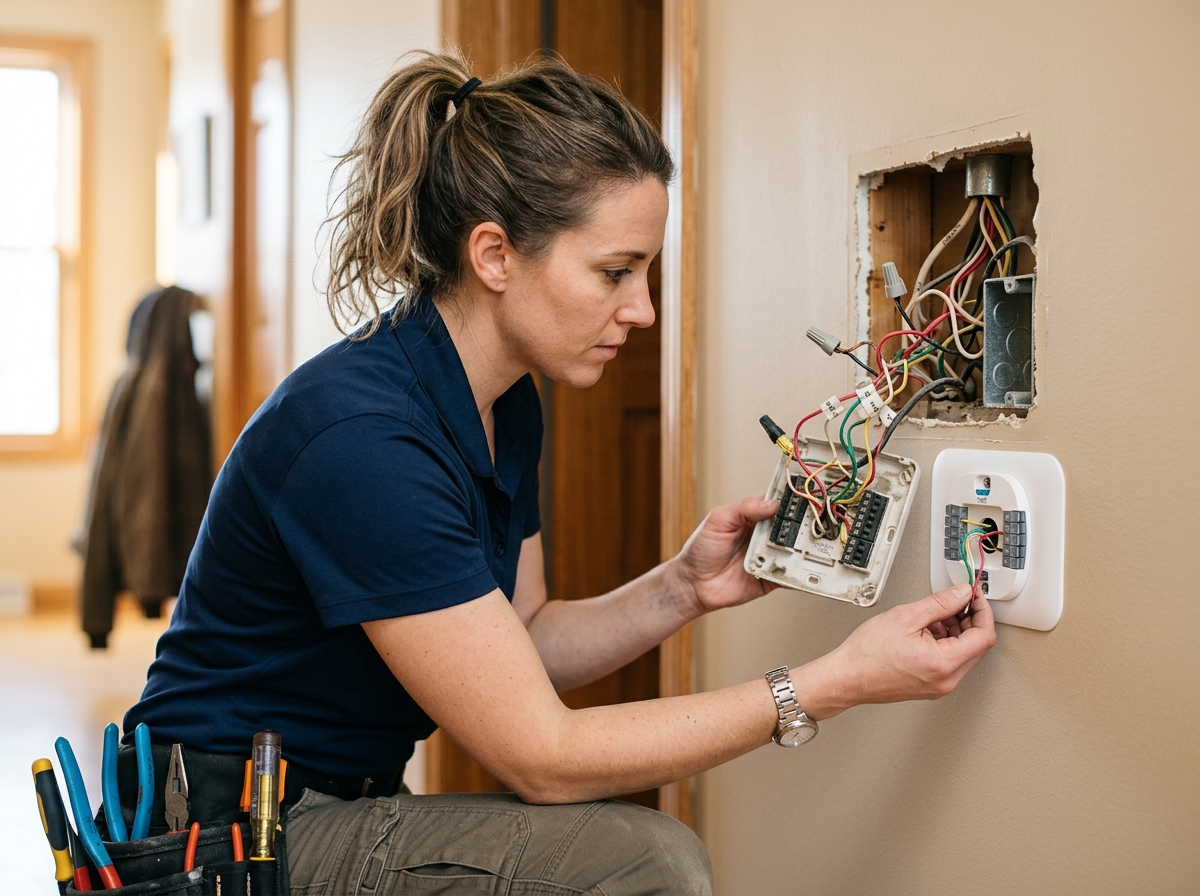
Swapping a basic thermostat can be a reasonable weekend project. If you’re replacing an old unit with a similar model, and your HVAC system uses standard wiring, DIY installation can save $65 to $150 in labor costs. Many homeowners feel confident tackling this after watching a few tutorials. That applies to low-voltage thermostats for central heating and cooling. Thermostats that control electric baseboard or wall heaters usually run on 120 or 240 volts, so have a licensed electrician replace those.
Some people even branch into unrelated fixes, like the guide My DIY Car Thermostat Replacement: Save Big on Wild …, which shows the same do-it-yourself mindset applied elsewhere. That confidence works fine for simple swaps. But multi-stage systems, heat pumps, or unfamiliar wiring raise the risk of miswiring, blown fuses, or a damaged control board.
Benefits of Hiring a Licensed Technician
A licensed technician brings tools and training most homeowners lack. They test voltage, confirm compatibility, and calibrate the new thermostat so temperature readings stay accurate within a degree or two. Poor calibration can waste 5% to 10% more energy every month.
Technicians also carry liability insurance, so any accidental damage gets covered. Many local businesses include a short system checkup with installation, catching loose wires or worn contacts before they turn into bigger repair bills later.
Permits, Codes, and Safety Concerns
Some municipalities require permits for electrical or HVAC-related work, even something as small as a thermostat swap. Skipping this step can create issues during a home sale or insurance claim. Always check local codes first, and review any provider’s privacy policy before sharing home details online.
Safety matters too. Shutting off breakers, avoiding live wires, and following manufacturer specs prevents shocks or system damage during installation.
How a New Thermostat Impacts Energy Bills
Estimated Monthly Savings
A new thermostat can lower monthly bills by 8% to 15% on heating and cooling costs. For a household spending $150 a month on energy, that’s roughly $12 to $22 back in your pocket. Programmable schedules cut runtime waste by adjusting temperatures while you sleep or work, so the system isn’t running for an empty house.
Smart thermostats take this further. They learn habits over the first few weeks, then optimize automatically. Some models track weather patterns and humidity too, fine-tuning performance without manual input. Over a full year, these small daily adjustments add up to noticeable savings on utility statements.
Payback Period for Smart Models
Most smart thermostats cost between $130 and $280 installed. With average monthly savings of $15 to $20, homeowners typically recover that cost within 12 to 18 months. After that window, every dollar saved is pure benefit.
Comparing purchase price against long-term savings helps homeowners decide which model fits their budget. A Thermostat Replacement Cost Estimate can clarify expected pricing before committing to a purchase, making the payback math easier to plan around.
Pairing Thermostats With Weatherization Upgrades
A thermostat works best alongside sealed ducts, added insulation, and weatherstripped doors. Without these upgrades, conditioned air escapes, and even the smartest schedule can’t fully offset the loss.
Many local businesses and homeowners combine both improvements for maximum savings. Reaching out through contacts can connect you with assessment resources to identify which upgrades pair best with your new thermostat.
Repair or Replace: Making the Right Decision
Common Thermostat Repair Costs
Small thermostat problems often cost less than a full swap. A loose wire fix might run $50 to $90. A sensor recalibration or battery replacement can cost even less. But repeated repairs add up fast, especially on units older than ten years.
Warning Signs You Need a Replacement
- Temperatures swing more than 3 degrees from the setting
- The display stays blank even with fresh batteries
- Your HVAC system short-cycles or runs constantly
- The unit predates smart, programmable models by a decade or more
These signs usually point to a failing thermostat, not a minor glitch.
Cost-Benefit of Repair vs Replacement
Compare the numbers before deciding. Many local businesses use a simple table like this to guide clients toward the smarter long-term choice.
| Scenario | Typical Cost | Lifespan Gained |
|---|---|---|
| Wiring repair | $50–$90 | 1–2 years |
| Sensor or relay fix | $80–$150 | 2–3 years |
| Basic replacement | $120–$250 | 10+ years |
| Smart thermostat replacement | $200–$500 | 10–15 years |
Replacement often wins once repair costs pass the $150 mark.
Other Household Thermostats Worth Knowing About
Oven and Range Thermostats
Your kitchen range has its own thermostat, and it works nothing like the one on your wall. Oven thermostats regulate internal heat using a sensor bulb or electronic control board. Replacement parts typically run $20 to $100, but labor can push total repair costs to $150 or $250, since technicians often need to remove the oven’s back panel.
Signs of trouble include uneven baking, long preheat times, or temperatures that drift 25 degrees or more from the dial setting. A simple recalibration sometimes fixes minor drift without replacing anything. Older gas ranges may use a mechanical thermostat, while newer electric models rely on digital sensors that fail differently and cost more to diagnose.
Dryer Thermostat Costs
Dryers use multiple thermostats, and they’re a frequent cause of no-heat or overheating complaints. A cycling thermostat or high-limit thermostat usually costs between $10 and $40 for the part itself. Professional repair, including diagnosis and labor, often lands between $100 and $200 depending on the brand and access difficulty.
The part is inexpensive and sits behind a removable panel, but the dryer must be unplugged before anyone opens it, and a gas dryer repair is best left to a qualified technician. Lint buildup is a common culprit behind premature thermostat failure, so regular vent cleaning extends component life. Poor airflow around the dryer, similar to issues addressed through duct sealing, can also strain these small but essential parts.
Water Heater Thermostat Costs
A water heater’s thermostat directly affects monthly energy use. Electric models typically use one or two thermostats, priced around $15 to $60 each, with professional replacement totaling $150 to $300 including labor. Gas water heaters use a gas control valve with a built-in thermostat, which costs more, often $150 to $300 for the part alone.
A faulty thermostat can cause scalding water, insufficient hot water, or spiked utility bills from constant reheating. Setting the thermostat to 120 degrees balances comfort and efficiency for most households.
Ways to Reduce Your Thermostat Replacement Cost
Utility Rebates and Incentive Programs
Many utility companies offer rebates for upgrading to a smart or programmable thermostat. These programs often cover $25 to $100 of the total cost. Some regional providers also run seasonal promotions that stack with manufacturer rebates, lowering your out-of-pocket price even further. Checking your utility’s website before buying can save real money.
Bundling With Home Energy Assessments
A whole-home energy assessment often uncovers more savings than a thermostat swap alone. Many programs pair thermostat upgrades with broader weatherization work, including air sealing, insulation checks, and duct inspections. Bundling these services can reduce labor costs and qualify homeowners for larger combined incentives than a standalone installation would.
Getting Competitive Contractor Quotes
Labor rates vary widely between contractors, so comparing quotes matters. A dedicated provider should offer a clear, itemized estimate before starting work.
- Request at least three written quotes to compare labor and equipment charges side by side.
- Ask whether the price includes wiring upgrades, wall patching, or disposal of the old unit.
- Confirm if warranty coverage applies to both parts and labor for at least one year.
- Check for licensing and insurance to avoid liability if something goes wrong during installation.
- Ask about bundled discounts if you’re also scheduling other energy efficiency upgrades.
If you’re weighing thermostat replacement costs alongside other home energy upgrades, it’s worth talking to the team at Big Star Conservation Inc. first. They provide expert energy assessments and weatherization services to homeowners and multi-family property owners across Louisiana and Mississippi at little to no cost, thanks to partnerships with regional utility companies. Reach out today to book an assessment and see how much you could save.
