


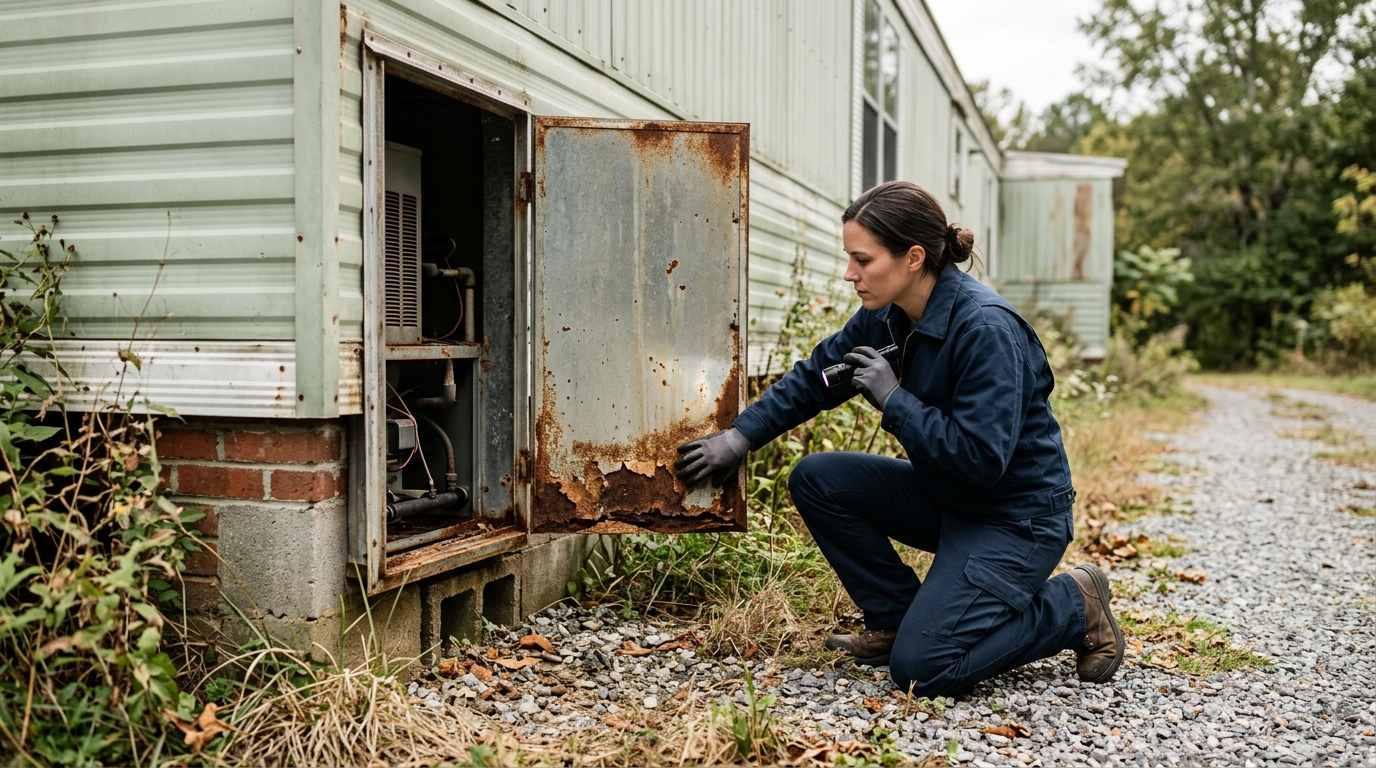
When your mobile home’s furnace starts short-cycling, rattling, or blowing cold air on the coldest night of the year, you need answers, not a sales pitch. Manufactured homes rely on specially sized, ducted equipment that standard HVAC contractors often misunderstand. Because of this, mobile home furnace replacement comes with its own rules, permitting requirements, and efficiency considerations. Get these wrong, and your comfort and your budget both suffer. This guide from Big Star Conservation INC. covers what you need to know in 2026, from spotting true replacement signs to picking the right unit and squeezing out energy savings for years to come.
Understanding When Mobile Home Furnace Replacement Becomes Necessary
Average Lifespan of Mobile Home Furnaces
Most furnaces built for manufactured housing last between 15 and 20 years. That’s shorter than furnaces in site-built homes. Mobile home units run in tighter spaces with less airflow, and heavier daily cycling wears parts out faster.
Once a furnace passes the 15-year mark, efficiency starts dropping noticeably. Older models may run at 60 to 70 percent efficiency, while modern units hit 90 percent or higher. That gap shows up directly on your monthly energy bill.
Start budgeting for replacement around year 12 or 13. Wait until total failure, and you’re stuck with an emergency purchase instead of a planned, well-researched decision.
Common Signs Your Furnace Is Failing
Watch for uneven heating, rooms that stay cold, or a furnace that runs constantly without reaching the thermostat setting. Rising utility bills, despite normal weather, often signal declining performance. Strange noises, like banging or grinding, usually mean mechanical parts are wearing down.
Frequent repairs are another red flag. If a technician visits more than twice in one winter, replacement usually costs less over time than continued fixes. Watch too for yellow burner flames instead of blue, which points to improper combustion.
Poor duct connections can mimic furnace failure. Checking duct sealing quality first helps rule out an easy fix before you assume the unit itself is dying.
Safety Hazards of an Aging Unit
An aging furnace can develop cracked heat exchangers, which let carbon monoxide leak into living spaces. This gas is odorless and can cause serious illness or death. Older wiring and worn electrical connections also raise fire risk inside tight mobile home cavities.
Gas leaks become more likely as valves and connections corrode over time. Exhaust problems usually come from a cracked heat exchanger or a blocked or disconnected flue. A tighter home can make venting problems worse, so after any air sealing work, get a combustion safety check to confirm the furnace still vents properly outside.
Delaying replacement past clear warning signs raises these dangers every season. A working carbon monoxide detector helps, but it can’t replace a furnace nearing the end of its safe operating life.
How Mobile Home Furnaces Differ From Standard Residential Units
Downflow vs Upflow Configurations
Mobile home furnaces almost always use a downflow design. Air enters the top of the unit and exits through the bottom into ducts running under the floor. Standard site-built homes usually use upflow furnaces instead, pulling air from the bottom and pushing it up through ceiling or wall registers.
This difference matters during replacement. A contractor can’t simply install a standard upflow furnace in a manufactured home. The unit has to match the existing airflow direction, or the ductwork and supply registers need major rework. This is one reason generic furnaces sold at big box stores often won’t fit without modification.
HUD Code and Furnace Listing Requirements
Manufactured homes are built to the federal HUD code, not local residential building codes. Under that code, heat-producing appliances must be listed or certified for residential use by a nationally recognized testing agency. In practice, that means choosing a replacement furnace that is listed for use in manufactured homes, and state and local permit rules still apply to the replacement work.
Installing a furnace that isn’t listed for manufactured homes can create safety hazards and cause problems during resale inspections. Many local businesses that install HVAC equipment in conventional homes aren’t familiar with these rules. Confirm the furnace’s listing before signing any contract.
Sizing and Ductwork Considerations
Space constraints shape everything in a manufactured home. Furnace closets are narrow, duct runs are shallow, and clearances around the unit are tighter than in a typical basement or attic installation. Correct sizing prevents short-cycling and keeps utility bills manageable, which matters given the rising cost of electricity in louisiana.
Undersized belly ducts restrict airflow and strain the new furnace. Pairing replacement with upgrades like attic insulation helps the whole system perform better and takes pressure off undersized ductwork.
Fuel Types and Furnace Options Compared
Electric vs Gas vs Propane Furnaces
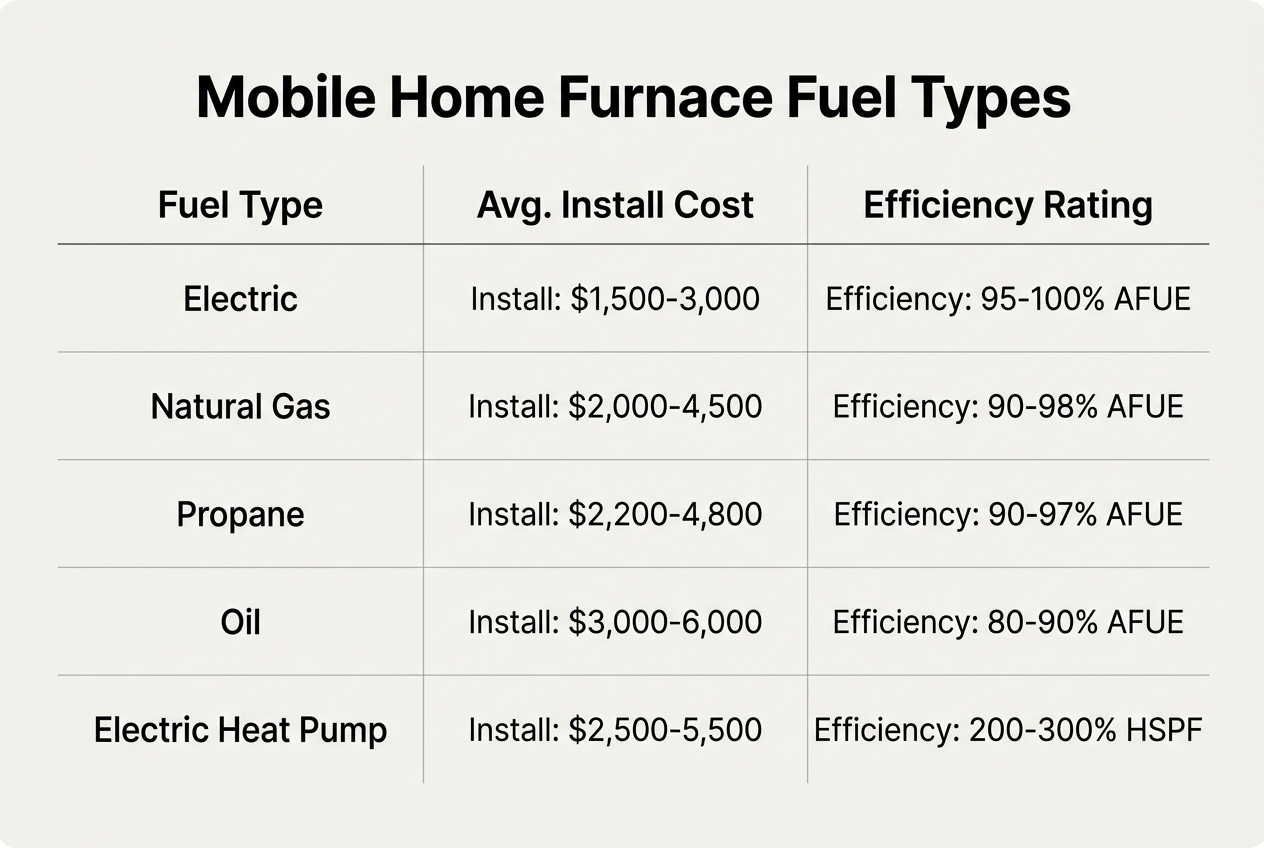
Mobile homes can run on electric, natural gas, propane, or oil furnaces. Each fuel type has different upfront costs, running costs, and availability. Rural areas across Louisiana and Mississippi often rely on propane, since natural gas lines don’t reach every neighborhood. Electric furnaces are the easiest to install in almost any home, but they usually cost more to run month to month. Many local businesses that install manufactured housing systems, including Coleman® Manufactured Housing Products, build units designed to fit the tighter space and ductwork of a mobile home.
| Fuel Type | Typical AFUE Range | Avg. Monthly Cost | Regional Availability |
|---|---|---|---|
| Natural Gas | 80%–98% | $60–$100 | Limited to gas-line areas |
| Propane | 80%–96% | $90–$150 | Widely available, tank delivery |
| Electric | 95%–100% | $100–$180 | Available everywhere |
| Oil | 80%–90% | $120–$200 | Rare in the Gulf South |
Efficiency Ratings Explained (AFUE)
AFUE stands for Annual Fuel Utilization Efficiency. It shows how much fuel actually becomes heat, versus waste. A 90% AFUE furnace turns 90 cents of every dollar into warmth. Higher AFUE units cost more upfront but lower monthly bills over time. Pair a high-efficiency furnace with better insulation, and the savings multiply. Learning the benefits of insulating your attic helps explain why heat loss, not just furnace choice, drives higher bills.
Step-by-Step Process for Replacing a Furnace
Initial Inspection and Sizing Calculation
A qualified technician starts with a full inspection of the ductwork, combustion air supply, and electrical connections. This step determines the correct furnace size using a heat-load calculation, not just a guess based on the old unit. Most areas also require a permit before work begins, along with a final inspection once installation wraps up. Skip this paperwork, and you risk voided warranties and problems during a home sale.
Removal of the Old Unit
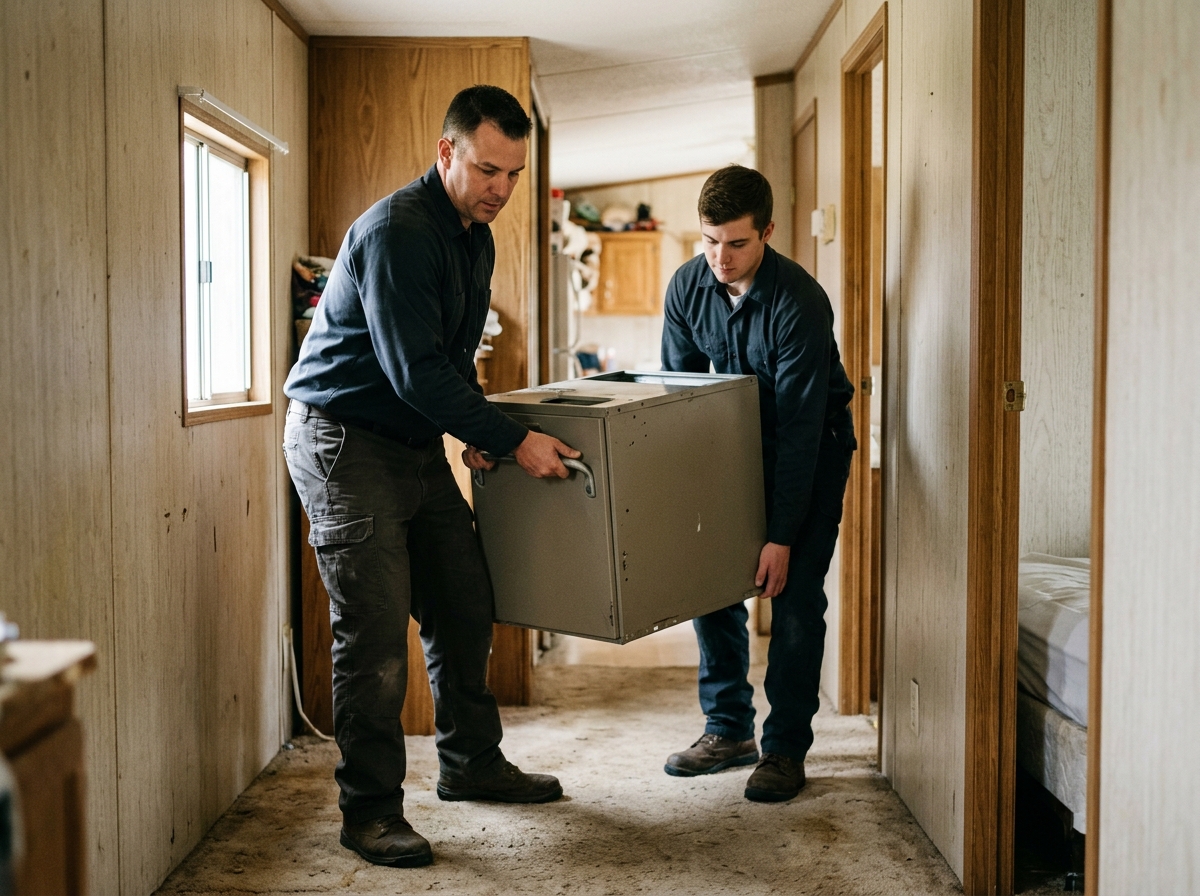
Once permits are approved, the crew shuts off gas, electric, and airflow connections. The old furnace gets disconnected from the ductwork, unbolted from its platform, and carried out. Technicians check the surrounding area for damage, mold, or unsafe wiring left behind.
Installing and Testing the New Furnace
The new unit is set in place, connected to ducts and utilities, then tested for airflow, ignition, and safety shutoffs. Many homeowners research options like Furnaces beforehand to understand sizing and features. The table below outlines the typical workflow.
| Stage | Key Task | Typical Duration |
|---|---|---|
| 1. Inspection | Sizing calculation, duct check | 1–2 hours |
| 2. Permitting | Submit paperwork, await approval | 1–5 days |
| 3. Removal | Disconnect and remove old furnace | 1–2 hours |
| 4. Installation | Set, connect, and seal new unit | 2–4 hours |
| 5. Testing | Airflow, ignition, safety checks | 30–60 minutes |
Ask the installer for a written schedule covering each phase, so you know when heat will be off and how to prepare.
What Mobile Home Furnace Replacement Typically Costs
Average Price Ranges by Furnace Type
Costs depend on fuel type, unit size, and home square footage. Equipment and labor together usually land between $2,500 and $7,500. Labor alone typically runs $500 to $1,500, depending on how accessible the unit is under the home. The table below shows typical ranges for common setups.
| Furnace Type | Home Size | Equipment Cost | Total Installed Cost |
|---|---|---|---|
| Electric Furnace | Single-wide | $1,200–$2,000 | $2,500–$4,000 |
| Gas Furnace | Single-wide | $1,800–$3,000 | $3,500–$5,500 |
| Gas Furnace | Double-wide | $2,500–$4,000 | $4,500–$7,500 |
| Heat Pump System | Single or double-wide | $3,000–$5,000 | $5,000–$8,500 |
Additional Costs to Budget For
Hidden expenses often surprise homeowners. Ductwork repair can add $300 to $1,200 if crawlspace ducts are crushed or leaking. Older homes may need new electrical wiring, a permit fee, or a return-air upgrade. If your electricity bill too high pattern started before the breakdown, leaky ducts are a likely culprit worth checking first.
Emergency situations raise costs further. One homeowner’s account, I’m handling my mom’s mobile home emergency furnace …, shows how fast repairs can snowball into full replacement decisions. Planning ahead avoids that rushed, costlier scenario.
Signs You Need Repair Instead of Full Replacement
Common Repairable Furnace Problems
Not every furnace issue means you need a new system. Many problems are small and fixable with a simple repair visit. A qualified technician can often solve these quickly and affordably.
- A dirty or clogged filter that restricts airflow and makes the furnace work harder than it should.
- A faulty thermostat that miscommunicates with the furnace, causing uneven heating or short cycling.
- A worn igniter or pilot light that fails to start the heating cycle reliably.
- A malfunctioning blower motor or belt that creates loud noises but still runs.
- Minor duct leaks that reduce efficiency without threatening the furnace itself.
- A tripped limit switch or blown fuse causing occasional shutdowns.
If your furnace is under ten years old, repairs like these usually make more financial sense than replacement.
The 50% Rule for Repair vs Replace
Contractors often use a simple guideline called the 50% rule. If a repair costs more than half the price of a new furnace, replacement is the smarter choice. This keeps homeowners from pouring money into an aging unit. Age matters too. A furnace older than 15 years with a major repair bill is usually a strong replacement candidate. Getting written quotes from licensed HVAC contractors who work on manufactured homes can help you weigh costs before deciding.
Choosing the Right Furnace Size and Efficiency Level
Calculating BTU Needs for Your Home
Getting the size right starts with a proper BTU calculation. Most manufactured homes need between 20,000 and 60,000 BTUs, depending on square footage, ceiling height, and insulation quality. A 1,000-square-foot single-wide typically needs less heating power than a double-wide with drafty additions or poor duct sealing.
A trained technician measures floor area, window count, insulation levels, and duct condition before recommending a unit. This process, often called a Manual J load calculation, gives a far more accurate number than simply matching the old furnace’s rating. Homes built before 1990 often have thinner walls and less attic insulation, which changes the math significantly.
If you’re comparing models, browsing options like Mobile Home Gas Furnaces can help you understand typical BTU ranges before committing to a purchase.
Matching Efficiency to Your Climate
Climate zone matters as much as square footage. Homes in the Gulf South rarely need furnaces built for extreme northern winters. An 80% AFUE furnace often performs well here, while colder regions may justify a 95% or higher rating to offset heavier heating loads.
Oversizing causes short cycling, uneven temperatures, and premature wear. Undersizing leaves the furnace running constantly, driving up bills and shortening its lifespan. Getting the size and efficiency rating right protects comfort and your budget for years. Before scheduling any assessment, many homeowners review a provider’s privacy policy to understand how their home details are handled.
Rebates, Utility Programs, and Weatherization Assistance
Free and Low-Cost Energy Assessments
A home energy assessment is often the first smart step. A trained assessor checks your ductwork, insulation, and current furnace performance. This helps you understand why costs run high before you replace anything. Many local businesses partner with utility companies to offer these assessments at little to no cost. The result is a clear picture of waste, plus guidance on the right furnace size for your space. You can read more in the about us section of a typical provider’s site to see how this process usually works.
Utility Rebate Programs in Louisiana and Mississippi
Utility companies across both states offer rebates tied to efficiency upgrades. These programs can shrink your out-of-pocket cost significantly.
- Entergy Louisiana offers rebates for qualifying high-efficiency furnace installations completed by approved contractors.
- Mississippi Power provides incentives for homeowners who upgrade older heating systems to ENERGY STAR-rated models.
- CenterPoint Energy runs seasonal rebate campaigns that reduce upfront installation costs for gas furnaces.
- Cooperative Energy in Mississippi offers weatherization-linked rebates for customers who combine furnace work with insulation upgrades.
- Some programs offer free assessments as a first step, which then unlock rebate eligibility for larger projects.
Costs vary by region, so check current pricing through resources like How Much Does a Mobile Home HVAC System Cost? (2026) before applying.
Bundling Replacement With Weatherization Upgrades
Pairing a new furnace with weatherization work boosts savings further. Adding underbelly insulation, sealing skirting gaps, and upgrading duct sealing all cut heat loss. A bundled upgrade often qualifies for larger combined rebates than a furnace alone.
Hiring a Qualified Installer for the Job
A quality furnace deserves a qualified installer. Look for a state HVAC license, manufacturer certification, and proof of liability insurance. Mobile homes fall under HUD code, so ask if the contractor has specific experience with manufactured housing. Not every technician does. For a breakdown of typical pricing, review this Mobile Home Furnace Replacement Cost: A Guide before requesting quotes.
Questions to Ask Potential Contractors
Come prepared with clear questions. Good answers reveal a contractor’s true experience level.
- Ask how many mobile home furnace installations they have completed in the past year.
- Ask which brands they install and why they recommend one over another.
- Ask for a written estimate that lists labor, materials, and permit costs separately.
- Ask how they will seal and connect the ductwork to the home’s existing system.
- Ask what warranty covers both the equipment and their installation work.
Red Flags to Avoid When Hiring
Some warning signs signal trouble ahead. Walk away if a contractor refuses to put estimates in writing, pressures you into same-day decisions, or asks for full payment upfront. Avoid anyone who can’t provide local references or dodges questions about permits.
Maintaining Your New Furnace for Maximum Lifespan
Seasonal Maintenance Checklist
A new furnace still needs regular care. Filter changes matter most. Check filters monthly during heavy use and swap them every one to three months, depending on type. Dirty filters strain the blower and raise your energy bills. Before each heating season, schedule a professional inspection to check the burner, ignition system, and heat exchanger for cracks or corrosion.
A basic seasonal checklist includes: testing the thermostat, vacuuming dust from vents, checking the flue for blockages, and listening for odd noises like rattling or grinding. Test carbon monoxide detectors every month, and replace batteries twice a year. These simple steps catch small problems before they become costly repairs, and they keep warranties valid, since many manufacturers require documented annual service.
Homeowners who follow this routine typically see furnaces last well beyond their expected lifespan of 15 to 20 years, with fewer emergency breakdowns during cold snaps.
How Skirting and Insulation Protect Your Investment
Ductwork often runs beneath mobile homes, exposed to moisture, pests, and temperature swings. Damaged or disconnected ducts force furnaces to work harder, wasting heated air before it reaches your rooms. Sealing duct joints and insulating exposed sections improves airflow and protects the efficiency gains from your new system.
Skirting plays an equally important role. It blocks wind from chilling the underbelly, keeps pipes and ducts warmer, and keeps pests from nesting near equipment. Combined with proper belly insulation, skirting can noticeably cut heat loss and lower monthly costs. Asking a contractor for photos of skirting and belly insulation jobs they have completed can help you judge the quality of their work. Together, these measures extend equipment life and maximize the return on your furnace replacement.
If your mobile home’s furnace is due for replacement, it’s worth pairing that upgrade with a broader look at your home’s energy efficiency. Big Star Conservation Inc. offers expert energy assessments and weatherization services to homeowners and multi-family property owners across Louisiana and Mississippi, often at little to no cost thanks to partnerships with regional utility companies. Reach out to book an assessment and see how much more comfortable and efficient your home can be.
