


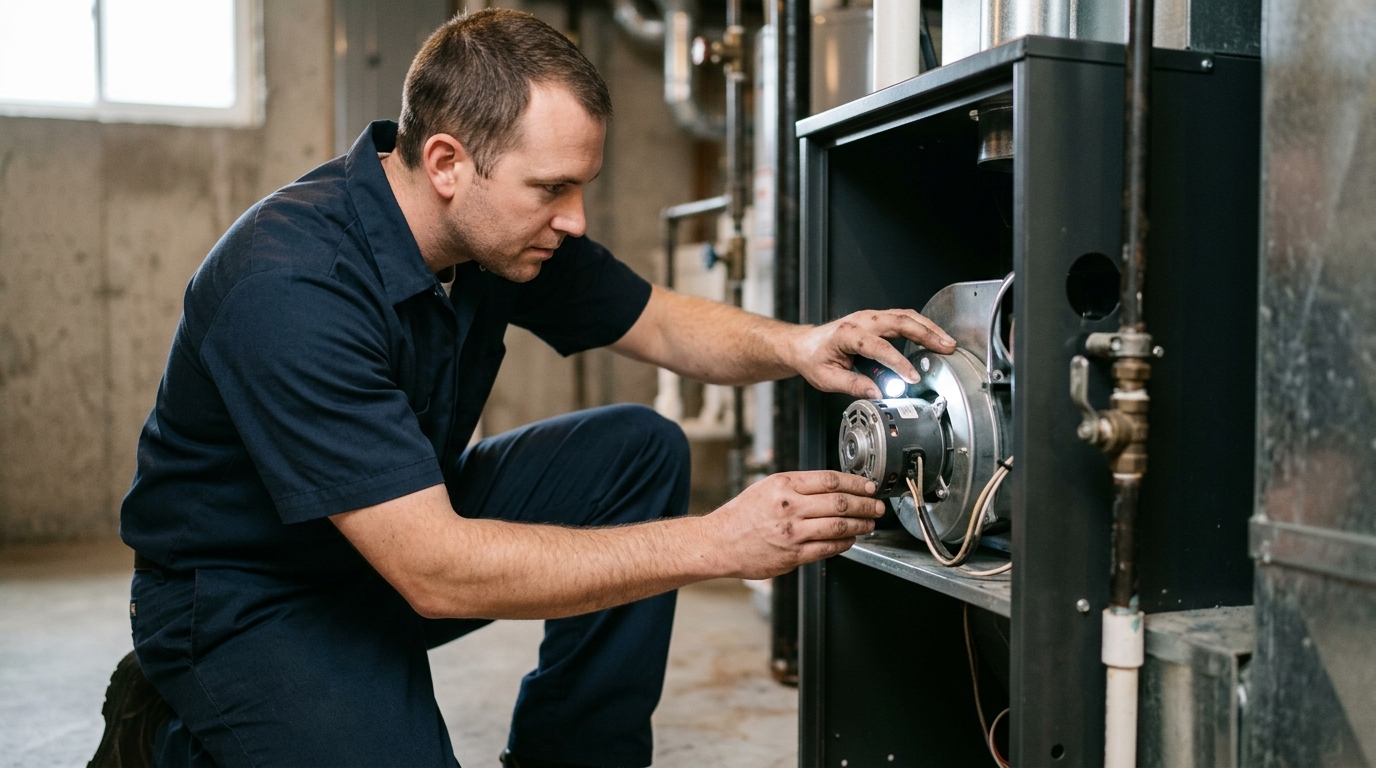
That rattling hum from your furnace, followed by a system that won’t fire up, isn’t just an inconvenience. It’s often the telltale sign of a failing inducer motor — a small component that can bring your entire heating system to a halt. Before you panic about a full furnace replacement or pay for an emergency service call you don’t need, it helps to understand what’s actually happening inside your unit. This guide from Big Star Conservation walks homeowners through everything related to furnace inducer motor replacement, from diagnosing the problem correctly to understanding costs, efficiency impacts, and how to decide between a repair and a larger system upgrade. By the end, you’ll know exactly what steps make sense for your home, your budget, and your energy goals heading into 2026.
How a Furnace Draft Inducer Motor Works
Where the Inducer Motor Sits in the Furnace System
The inducer motor sits near the heat exchanger, just before the flue pipe. It connects to a small metal wheel called an inducer wheel, or squirrel cage. This part spins fast, pulling air through the combustion chamber and pushing exhaust gases out through the vent pipe.
You’ll usually find it tucked inside the furnace cabinet, often hidden behind a panel near the burners. Homeowners rarely see it unless a technician removes the access cover during service. Its location matters, since it must connect directly to both the heat exchanger and the exhaust vent to do its job properly.
Why It’s Required Before the Burners Ignite
Before any flame appears, the draft inducer motor has to run first. It clears leftover gases and pulls in fresh air, creating a safe path for exhaust. This step keeps dangerous fumes, including carbon monoxide, from building up inside the home.
As the motor spins, it creates negative pressure inside the exhaust system. A pressure switch detects this change and sends a signal to the control board. Without that signal, the burners simply won’t light. This safety check protects your home and keeps your electricity bill too high concerns from turning into bigger safety problems.
How It Differs from the Blower Motor
The inducer motor and blower motor serve very different roles. The inducer moves exhaust gases before ignition. The blower motor, by contrast, pushes heated air through your ductwork after the burners light.
Only one small motor handles combustion safety, while the larger blower manages comfort. Both must work correctly for efficient heating. Poor air sealing around ducts can strain the blower, but it has no effect on the inducer’s combustion role. Knowing this difference helps homeowners describe problems accurately to a technician.
Warning Signs Your Inducer Motor Is Failing
Unusual Noises During Startup
A healthy inducer motor should hum quietly, then settle into a steady whir. Listen closely each time your furnace kicks on. Strange sounds often mean the motor bearings or wheel are wearing out.
- Grinding noises usually point to worn bearings that are losing lubrication and rubbing metal on metal.
- Rattling sounds can mean a loose inducer wheel, a cracked housing, or debris trapped inside the assembly.
- High-pitched squealing often signals a failing bearing or a motor shaft that’s misaligned and struggling to spin freely.
- Loud humming without airflow may mean the motor is trying to start but can’t build enough speed.
Furnace Cycling On and Off (Short Cycling)
A failing inducer motor often can’t reach the speed needed to trigger the pressure switch. This causes short cycling, where the furnace starts, then shuts off within seconds. Some units won’t start at all. This pattern usually gets worse over days or weeks, not better, so don’t ignore it.
Error Codes and Ignition Lockouts
Most modern furnaces flash a diagnostic code through the control board when the inducer motor underperforms. A weak or dying motor also forces the whole system to work harder, which can quietly raise your utility bill. Given the cost of electricity in louisiana, that extra strain adds up fast over a winter season.
- Repeated ignition lockouts, where the furnace tries to fire but stops mid-cycle every time.
- A blinking error code visible through the furnace’s small diagnostic window near the control board.
- Noticeably higher energy bills, even though home comfort hasn’t improved, often tied to inefficient attic insulation combined with a struggling motor.
What Causes Inducer Motors to Fail
Age and Mechanical Wear
Most inducer motors run for years before trouble starts. Inside each motor, small bearings and bushings spin thousands of times per heating cycle. Over time, that constant friction wears down the metal. The motor starts to sound rough or loud. Mechanical wear is the most common reason these motors eventually quit.
A furnace that runs 10 to 15 years will likely put its inducer motor through tens of thousands of start-and-stop cycles. Each cycle adds a little stress to the bearings. Eventually, the shaft wobbles, the bushings grind, and the motor seizes up entirely. This kind of failure is gradual, not sudden — which is exactly why early noise or slow starts are worth catching.
Moisture, Rust, and Condensation Damage
High-efficiency furnaces produce condensation as part of normal operation. That moisture should drain away safely. But when a drain line clogs, or a furnace is installed poorly, water can pool near the inducer motor housing. Corrosion then builds on the motor’s metal parts and wiring connections.
Rust weakens the motor housing and can jam the fan wheel over time. Technicians often trace these failures back to moisture exposure. Keeping your home properly sealed, including the benefits of insulating your attic, helps cut excess humidity throughout the system.
Electrical Faults and Capacitor Failure
Inducer motors rely on capacitors to start and maintain steady speed. A weak or failed capacitor forces the motor to strain, overheat, and eventually burn out. This is one of the most preventable causes of failure.
Voltage surges from storms or unstable power can also damage motor windings instantly. Louisiana and Mississippi homeowners see this often during summer storm season, when sudden spikes overwhelm sensitive furnace components.
Furnace Inducer Motor Replacement: Costs, Process, and What to Expect
Typical Replacement Cost Range
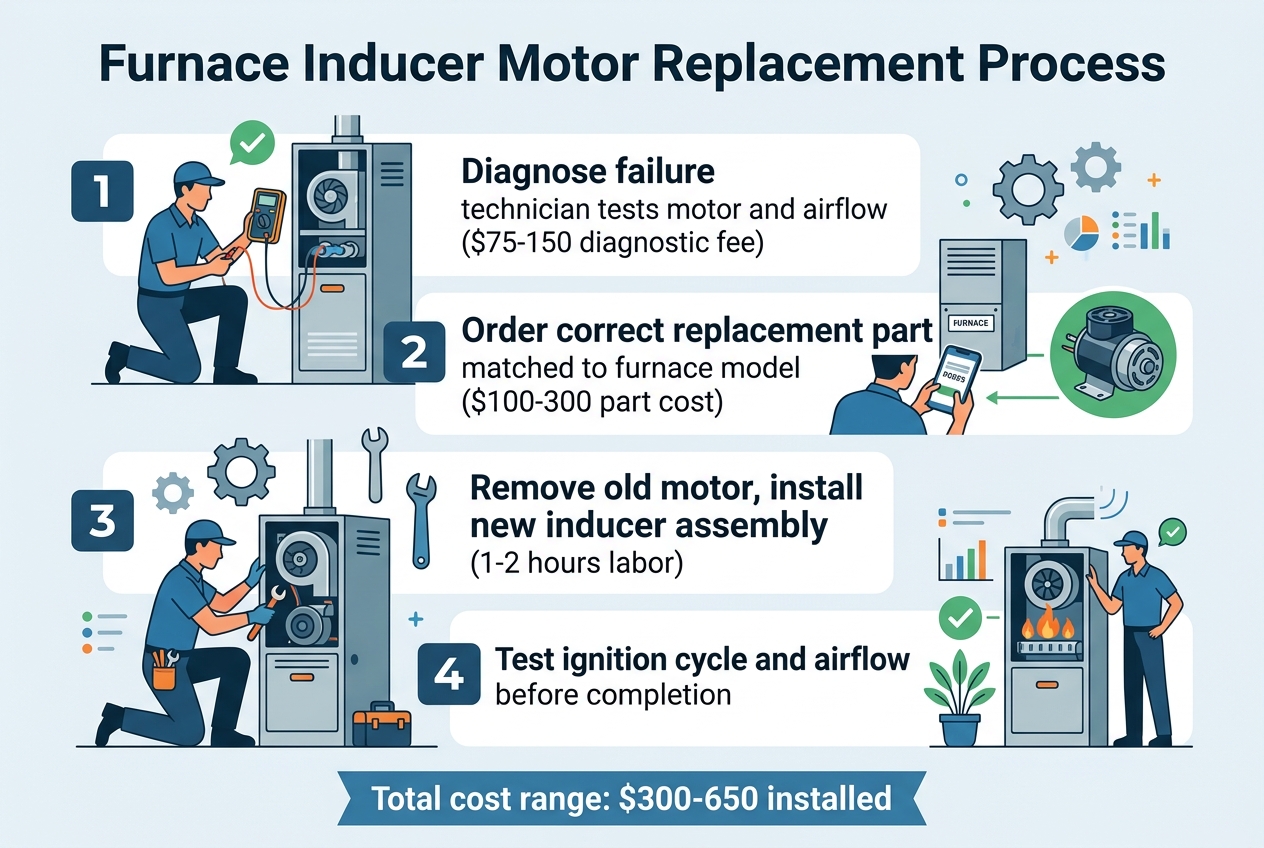
Most homeowners pay between $300 and $600 for a complete inducer motor replacement, including parts and labor. Budget furnaces or older units may run cheaper, closer to $250, while premium brands with proprietary parts can push costs above $700. The motor itself typically costs $100 to $300, depending on the manufacturer and design.
Labor usually adds $150 to $350, based on how accessible the motor is and how long diagnosis takes. Some technicians charge a flat diagnostic fee of $75 to $150, which often gets credited toward the final bill if you approve the repair. Homeowners who want to price parts on their own can compare options through suppliers like Draft Inducer Motor Replacement Parts | Repair Furnace … to get a sense of realistic pricing before calling a technician.
How Long the Repair Takes
A straightforward inducer motor swap takes one to two hours from diagnosis to final testing. The technician confirms the failure, removes the old motor, installs the replacement, and checks airflow and ignition sequence before leaving.
Harder-to-reach motors, rusted mounting bolts, or wiring issues can stretch the job to three or four hours. Same-day service is common if the part is in stock locally.
When Replacement Makes More Sense Than Repair
Repair rarely applies here, since inducer motors are sealed units. If your furnace is over 12 years old, or the motor has already failed twice, full replacement is the smarter investment. Learn more about us and how weatherization support can pair with furnace upgrades.
Cost Factors That Affect Your Final Bill
Brand and OEM Part Pricing
Your furnace brand plays a big role in final cost. Some manufacturers use proprietary motors that only fit their own models. Others share parts across several product lines, which keeps prices lower. Availability matters too — a motor sitting in a local warehouse costs less to install than one shipped from out of state. You can browse options like Inducer Motor Furnace listings to see how prices shift by brand and specification.
Labor Rates by Region and Contractor
Labor charges vary widely across Louisiana and Mississippi. Rural technicians often charge less than crews in busy metro areas. Emergency or after-hours calls usually add a flat fee on top of the base rate. The table below shows typical ranges homeowners report.
| Service Type | Typical Labor Cost | Notes |
|---|---|---|
| Standard weekday visit | $120–$220 | Includes diagnostic time |
| Evening or weekend call | $180–$300 | Adds after-hours premium |
| Emergency same-day service | $250–$400 | Highest demand, fastest response |
| Rural service area | $100–$180 | Lower overhead, longer wait times |
Additional Repairs Found During Service
A failing motor sometimes damages nearby parts. Technicians often check the pressure switch and housing during replacement. A cracked housing or worn switch adds parts and labor.
Comparing Inducer Motor Costs by Furnace Brand
Budget and Mid-Range Brand Pricing
Furnace brand plays a big role in what homeowners pay. Common brands like Goodman, Payne, and Rheem often use widely stocked motors, which keeps prices lower. The table below shows typical part costs, not including labor.
| Brand | Tier | OEM Part Cost | Universal Part Cost | Parts Availability |
|---|---|---|---|---|
| Goodman | Budget | $120–$180 | $70–$110 | Widely available |
| Payne | Budget | $130–$190 | $75–$115 | Widely available |
| Carrier | Mid-range | $180–$260 | $90–$140 | Common |
| Trane | Mid-range | $200–$290 | $100–$150 | Common |
Premium and Less Common Brand Pricing
Premium and older brands cost more, and parts take longer to source. Lennox and less common brands often require OEM parts, since universal options may not fit properly. This raises both price and wait time. A written quote that lists the part and labor separately makes it easier to judge whether the price is fair before committing to repairs.
| Brand | Tier | OEM Part Cost | Universal Part Cost | Parts Availability |
|---|---|---|---|---|
| Lennox | Premium | $250–$350 | Rarely available | Limited |
| Amana | Premium | $220–$310 | $110–$160 | Moderate |
| Older/Discontinued Models | Rare | $300+ | Often unavailable | Very limited |
Part prices vary widely by model, which is why a technician quotes from your furnace’s model number rather than a generic listing.
DIY Replacement vs. Hiring a Professional
Why DIY Replacement Is Not Recommended
Doing the job yourself can look like a way to save on labor, but the inducer motor is part of the furnace’s combustion safety system. The job involves wiring, gas-adjacent components, and the venting that carries exhaust, including carbon monoxide, out of the home. A mistake can damage the control board, create a gas leak risk, or let exhaust escape. The U.S. Consumer Product Safety Commission advises never servicing fuel-burning appliances without the proper knowledge, skill, and tools, and having heating systems professionally inspected and serviced every year. Leave this repair to a licensed HVAC technician. Work by an unqualified person can also affect warranty coverage.
Pros and Cons of Professional Installation
A licensed technician brings tools, testing equipment, and manufacturer training to the job. This guide, “How Much Does a Furnace Inducer Motor Replacement …” breaks down typical price ranges homeowners can expect. The table below compares both paths.
| Factor | DIY (Not Recommended) | Professional |
|---|---|---|
| Upfront cost | Parts only, plus the risks below | $300–$700 (parts + labor) |
| Warranty protection | Often voided | Usually preserved |
| Safety testing | Rare or skipped | Standard practice |
| Time to complete | 3–6 hours (with troubleshooting) | 1–2 hours |
| Gas leak risk | Higher without training | Minimal, checked before startup |
Safety Risks Homeowners Often Overlook
Many homeowners underestimate how gas and electrical systems interact near the inducer motor. A loose wire can spark. A misaligned gasket can allow carbon monoxide to escape. Leave the work to a licensed technician whenever gas connections, venting, pressure switches, or control boards are involved. Reviewing a company’s privacy policy before scheduling a home visit is also a smart step for protecting your personal information.
Step-by-Step Overview of a Professional Replacement
Diagnosing the Faulty Motor
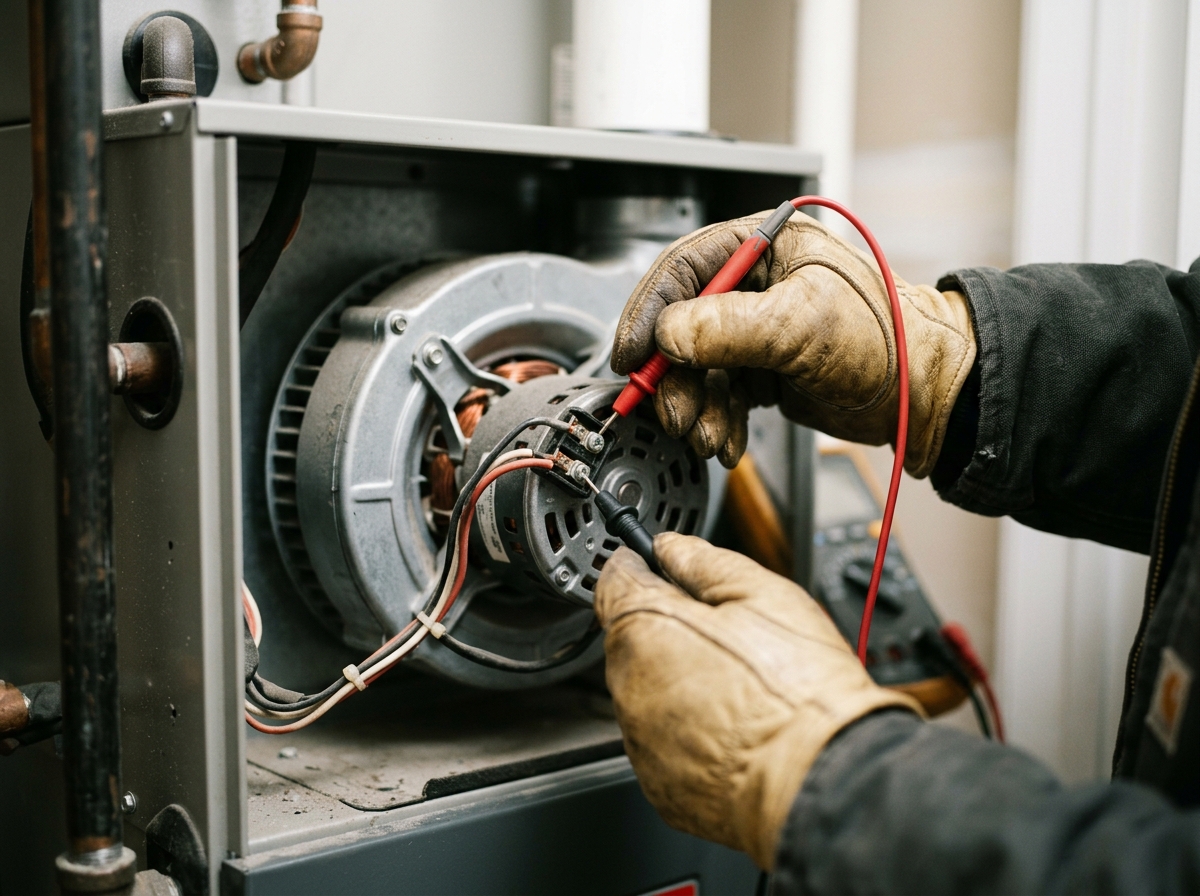
A technician starts by listening to the furnace and checking for error codes on the control board. They test the motor’s amp draw and inspect the wheel for cracks or rust. This step confirms the inducer motor is truly the problem before any parts get ordered.
Removing and Replacing the Unit
Once diagnosis is complete, the real work begins. Understanding this stage helps homeowners see exactly what a service charge covers.
- The technician shuts off power and gas to the furnace before touching any wiring or panels.
- They disconnect the wire harness, exhaust venting, and mounting screws holding the old motor in place.
- A matching replacement part, often sourced through suppliers like Furnace Draft Inducer Motor Replacement listings, gets ordered by model number.
- The new motor is bolted in, gaskets are checked, and all connections are re-sealed tightly.
- Wiring is reattached and tested for correct polarity and secure connections.
Testing and Verifying Proper Airflow
After installation, the technician restores power and runs a full cycle test. They measure airflow, listen for unusual noise, and confirm the pressure switch closes properly. This final check makes sure everything runs safely and efficiently before the job is closed out.
Practical Ways to Reduce Repair Costs
Preventive Maintenance and Filter Care
Most inducer motor failures don’t happen overnight. Regular maintenance can catch early warning signs before a total breakdown occurs. A yearly furnace tune-up lets a technician check the motor bearings, clean dust from the housing, and inspect the wiring for wear.
Dirty filters restrict airflow through the furnace. That mostly strains the blower motor rather than the inducer, but it also makes the furnace run hotter and cycle more often. Changing filters every 60 to 90 days is a simple habit that protects the whole system.
Neglect makes this repair more likely. Buildup and moisture inside the housing often lead to bigger repairs down the road, which is what the yearly tune-up is meant to catch.
Getting Multiple Quotes and Checking Warranties
Prices for inducer motor replacement vary widely between contractors. Getting three quotes before hiring anyone helps prevent overpaying for parts or labor. Ask each provider for a written estimate that breaks down parts, labor, and any service fees.
Always check the furnace’s warranty status first. Many manufacturers cover motor parts for five to ten years. Skipping this step can mean paying full price for something that should have been free.
Exploring Local Energy Efficiency Programs
Energy assessment programs often uncover issues connected to the failing motor. A technician may find duct leaks, poor insulation, or airflow problems adding stress to the system. Fixing these issues can cut future repair bills significantly.
Many regional programs offer free or low-cost home energy assessments. Reviewing a company’s portfolio of completed projects can help homeowners understand what services are typically included.
Frequently Asked Questions About Inducer Motor Replacement
How Long Do Inducer Motors Usually Last?
Most inducer motors last 10 to 15 years, roughly matching the lifespan of the furnace itself. Heavy use, dust buildup, and poor airflow can shorten that timeline significantly.
- A furnace that runs constantly during long winters will wear out its inducer motor faster than one used only a few months a year.
- Loud grinding or rattling noises usually mean the bearings are failing, not that the whole motor needs replacing right away.
- A high-pitched squeal often points to a worn bushing or bearing, which a technician should check before the motor fails.
- Rattling that comes and goes with temperature changes may signal a cracked mount or loose housing screws.
- Motors exposed to excess moisture or rust tend to fail years earlier than average.
Is It Worth Replacing on an Older Furnace?
If the furnace is under 15 years old, replacing the inducer motor almost always makes financial sense. Beyond that age, weigh the repair cost against a full system upgrade. A technician can check overall furnace health before you commit. It also helps to pair repairs with efficiency upgrades like duct sealing, which cuts wasted heat so the heating system does not have to run as long.
If your furnace inducer motor issues have you wondering whether it’s time for a broader energy efficiency check on your home, the team at Big Star Conservation Inc. can help. They provide expert energy assessments and weatherization services to homeowners and multi-family property owners across Louisiana and Mississippi, often at little to no cost thanks to partnerships with regional utility companies. Visit their website or book an assessment today to see how a well-maintained, energy-efficient home can save you money for years to come.
