


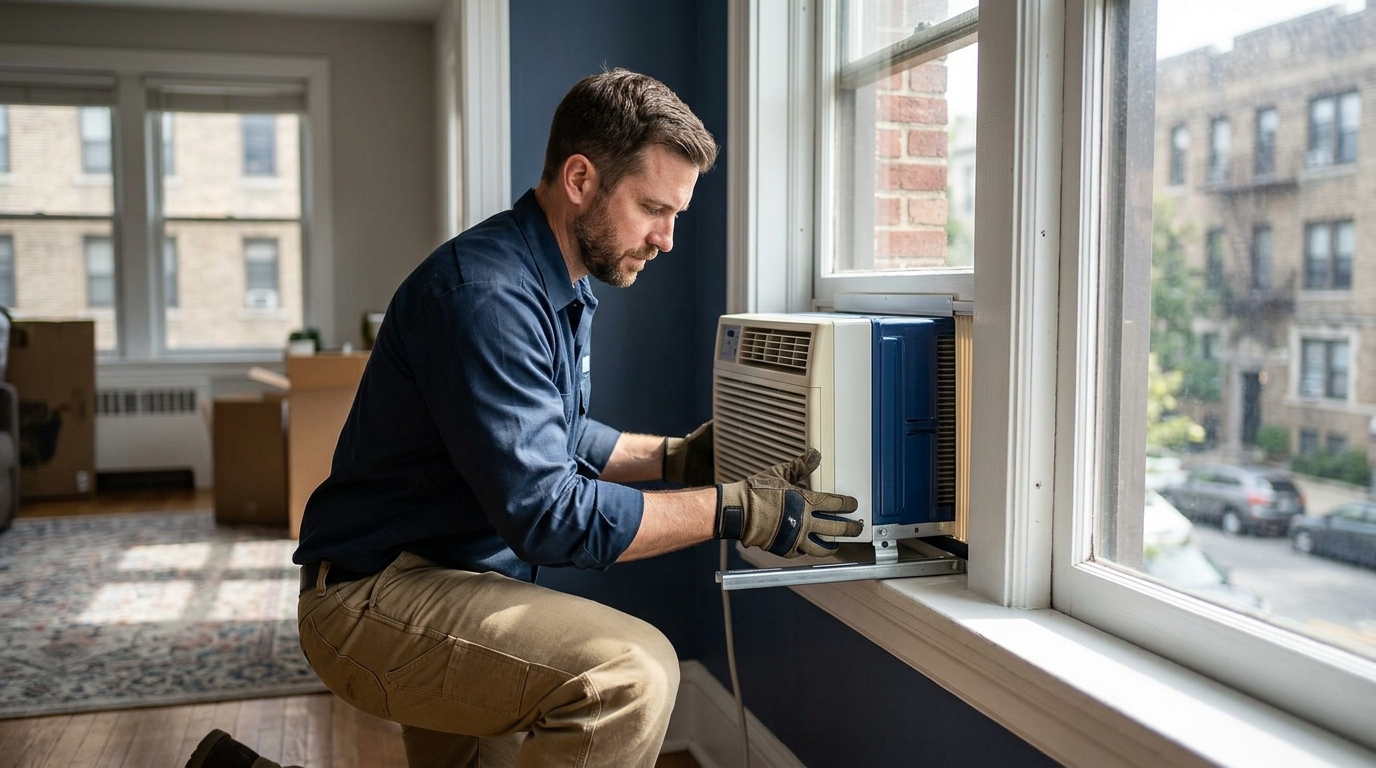
You’re eyeing a new energy star window air conditioner, hoping it’ll finally tame both the summer heat and your electric bill. But here’s the catch nobody mentions at the store: even the best-rated unit can’t overcome a leaky, poorly insulated home. It’ll just work harder and cost you more. This guide breaks down what those efficiency ratings actually mean, what you’ll really save, and why sealing your home might matter more than the sticker on the box.
What Makes an Energy Star Window Air Conditioner Different
CEER Ratings Explained
Every certified unit carries a Combined Energy Efficiency Ratio, or CEER. That number tells you how much cooling you get per watt of electricity. ENERGY STAR certification isn’t self-reported, either. It requires third-party lab testing showing the unit beats federal minimum efficiency standards, not just meets them. A higher CEER means the unit squeezes more BTUs of cooling out of every kilowatt-hour it draws.
Think of CEER like miles per gallon for your air conditioner. A window unit with a CEER of 12 is doing noticeably less work per watt than one rated at 15. That gap adds up fast over a Louisiana summer. If your bills already run high, comparing CEER numbers before you buy is a smarter first move than just grabbing whatever’s cheapest. And if you’re unsure why your electricity bill too high each month, the AC in your window could be part of the answer.
How Certification Testing Works
Labs run certified units through standardized load and temperature conditions, measuring exactly how much power they pull to hit a set cooling output. Newer models pass these tests more easily because of variable-speed compressors, which ramp up and down instead of slamming on and off, plus refrigerants engineered to move heat with less energy waste. The result: lower kWh per BTU than older fixed-speed designs.
That efficiency isn’t just a lab number. Certified models typically save 10 to 20 percent on cooling costs compared to standard units doing the same job. Given the cost of electricity in louisiana, that percentage translates into real dollars over a full cooling season, especially in homes running units for months at a stretch.
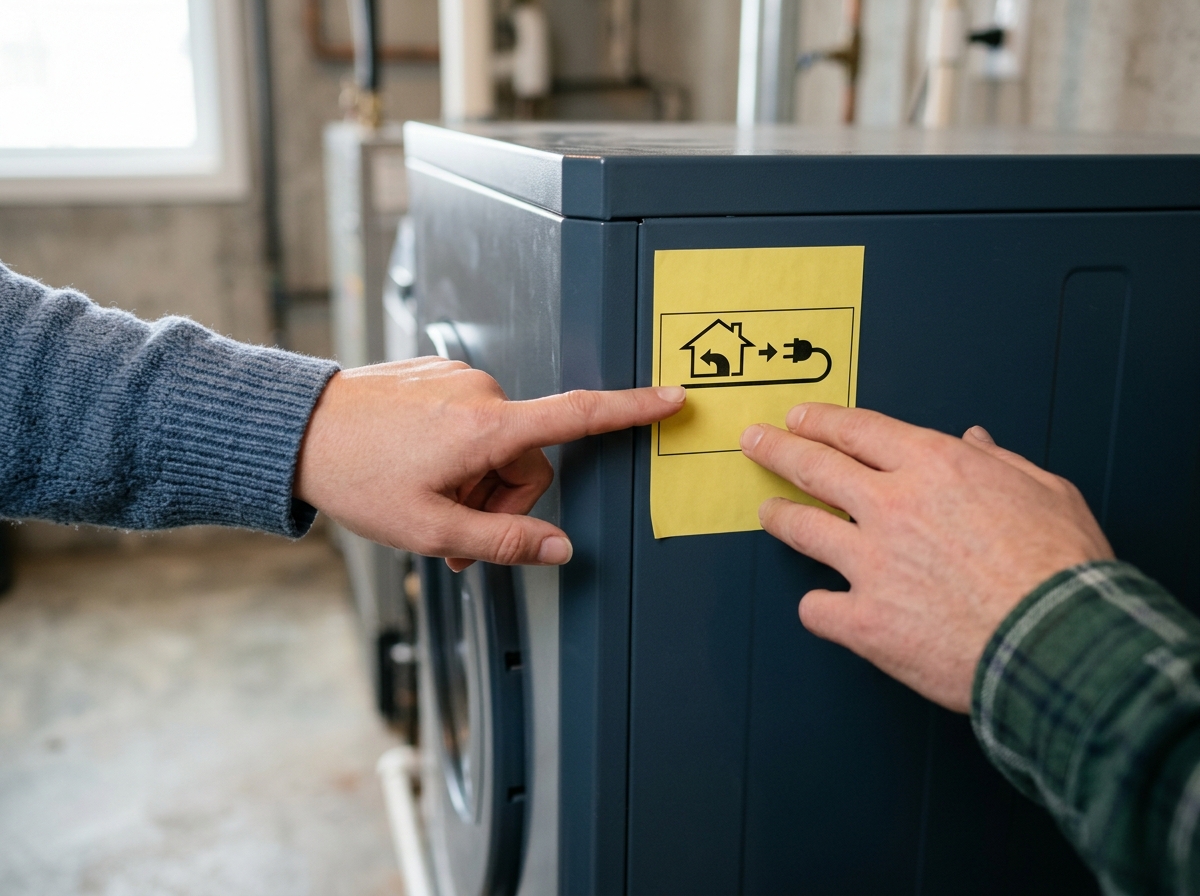
When you’re shopping, skip the guesswork. Look for the blue ENERGY STAR label and check the CEER value printed right on the yellow EnergyGuide sticker. It’s required, it’s standardized, and it’s the fastest way to compare models side by side. Browsing Energy Star Window Air Conditioners makes this easy since certified listings display that sticker data upfront. One quick gut check: if a listing buries the CEER number or skips the label entirely, that’s a red flag, not a bargain.
Choosing the Right Size and Features
Bigger isn’t better when it comes to window units. An oversized unit blasts cold air, hits the thermostat setting, and shuts off before it’s had time to pull humidity out of the room. The result is a space that feels cold and clammy at the same time. Go too small, and the unit runs nonstop, straining to keep up and racking up your bill without ever getting comfortable. The right BTU count depends on square footage, ceiling height, how much sun the room gets, and how many people typically use it.
Here’s a rough starting point for sizing, though a home energy assessment can pinpoint exact numbers for tricky rooms:
| Room Size (sq ft) | Baseline BTUs | Add for High Sun/Ceilings | Add per Extra Occupant |
|---|---|---|---|
| 150–250 | 6,000 | +10% | +600 BTU |
| 250–350 | 8,000 | +10% | +600 BTU |
| 350–450 | 10,000 | +10% | +600 BTU |
| 450–600 | 12,000 | +10% | +600 BTU |
| 600–700 | 14,000 | +10% | +600 BTU |
Once size is settled, features matter. Smart or WiFi controls, programmable timers, and sleep modes won’t replace correct sizing, but they trim run time in small, steady ways. Browsing ENERGY STAR Certified Window Air Conditioners at Lowe’s shows how common these features have become across price points. If you’re considering a portable unit instead, dual-hose designs pull outside air for exhaust rather than depressurizing the room, which single-hose models tend to do. Inverter-driven window units ramp speed up and down instead of just switching on and off, so they land closer to true efficiency than fixed-speed units ever will.

Comparing Window AC Types and Efficiency Levels
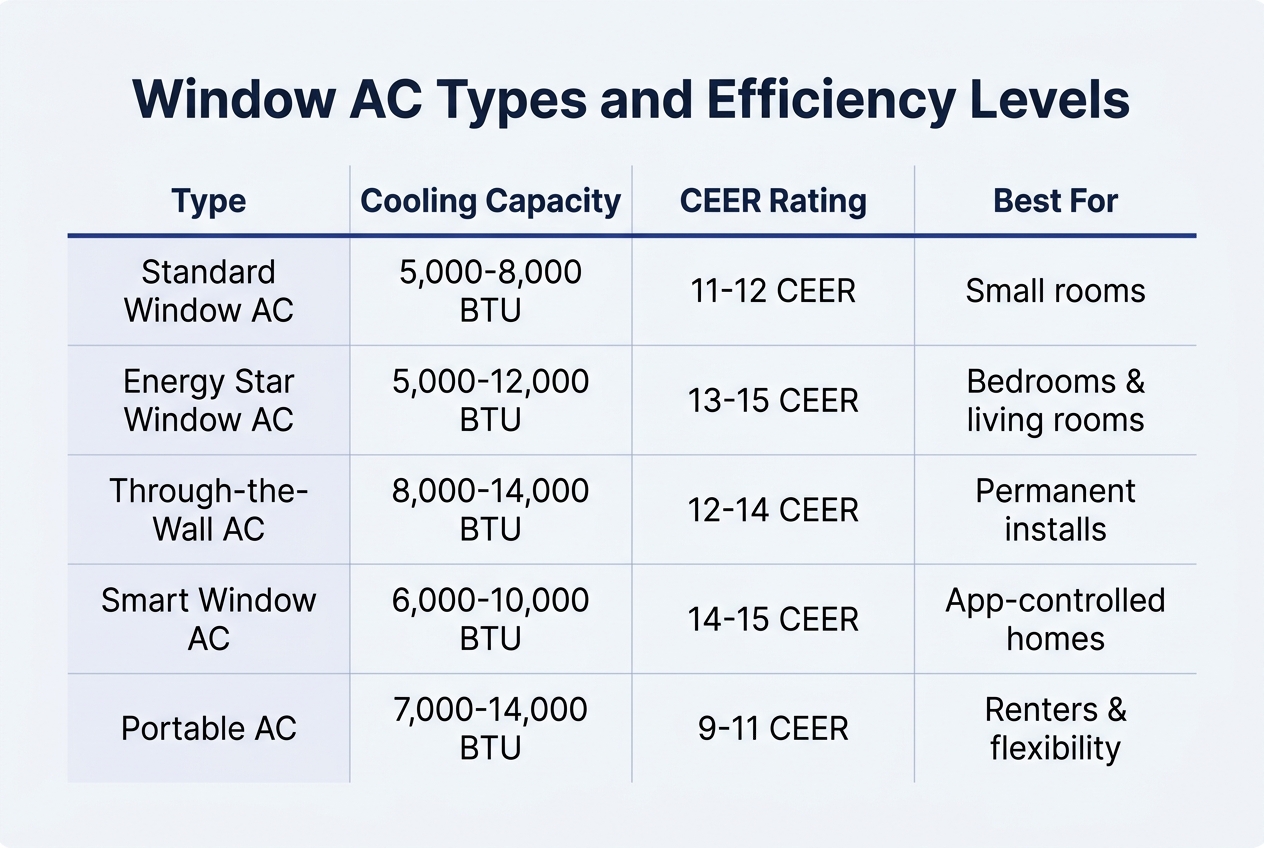
Not all cooling units are built the same. The differences matter more than most shoppers realize. Some cost more upfront but pay you back fast. Others look convenient but quietly waste power every hour they run.
Pros and Cons by Unit Type
Standard fixed-speed window units cycle on at full power, cool the room, then shut off completely. That constant on-off cycling wastes energy and causes those annoying temperature swings you feel near the unit. Inverter-driven models instead ramp their compressor speed up or down to match the room’s actual load, which is why they typically use 20 to 30 percent less electricity over a cooling season. Through-the-wall sleeves offer a cleaner install and better long-term seal than a window unit ever will, but they require permanent construction work. Portable units, despite their popularity, rank lowest in real-world efficiency because they exhaust conditioned air out through a hose while pulling in unconditioned makeup air, sometimes right through the same gaps that attic insulation is designed to eliminate elsewhere in the home. The table below breaks down where each type shines and where it falls short.
| Unit Type | Typical Efficiency | Installation Difficulty | Best For |
|---|---|---|---|
| Fixed-speed window unit | Moderate | Easy, DIY-friendly | Single rooms, tight budgets |
| Inverter-driven window unit | High | Easy to moderate | Rooms used daily, long cooling seasons |
| Through-the-wall sleeve | High | Difficult, needs carpentry | Permanent installs, rentals, additions |
| Portable unit | Low | Easiest, no tools | Temporary or rental situations only |
| Casement/slider unit | Moderate to high | Moderate, needs correct fit | Homes with crank-out or sliding windows |
Casement and slider windows crank outward instead of sliding up, so a standard unit simply won’t fit the frame. Purpose-built slider models solve that, though they often carry a narrower cooling capacity range than double-hung versions. Before buying anything, it’s worth skimming buyer feedback on Non Energy Star Window Air Conditioners : r/hvacadvice to see which non-certified models homeowners regret. A high-efficiency unit in a leaky room is still a losing bet.
Why a New Air Conditioner Can’t Fix a Leaky Room
Buy the most efficient unit on the market and it still can’t out-cool a house that’s leaking. Even top-rated Window Mounted Air Conditioners only control what happens inside the unit. They can’t control what happens to the cooled air after it leaves the vents. If that air slips out through a warped window frame, a gapped attic hatch, or a leaky duct joint, it’s gone. The unit just keeps running to replace it.
This is why a bedroom at the far end of the house can sit five or six degrees warmer than the thermostat reading, no matter how new or powerful the AC is. An uninsulated attic above that room bakes all afternoon, radiating heat down through the ceiling faster than the unit can push cold air up. Duct leakage in a crawlspace or attic run can lose 20-30% of conditioned air before it even reaches the register. The room never catches up, because the air meant for it never arrives.
Here’s the blunt part: pushing more cold air into a leaky room doesn’t fix comfort, it just pays for waste. Your bill climbs, the room stays uneven, and the unit ages faster from constant cycling. Sealing the gaps and boosting attic insulation first shrinks the load the AC has to fight, which is exactly the kind of work covered under air sealing assessments. Only after that load is under control does upgrading the unit itself start to pay off the way the ENERGY STAR label promises.
Signs Your Home Is Losing Cooled Air Before It Reaches You
A new window unit can be running perfectly and you’ll still feel like you’re losing the battle. That’s because the leak isn’t in the machine. It’s in the room, the wall, the attic above your head. Once you know what to look for, the pattern becomes obvious pretty fast.
- One room stays warm no matter how low you set the thermostat, while the room right next to it feels almost cold, which usually points to gaps around window frames or interior walls rather than a weak unit.
- Musty smells or a fine layer of dust near vents and window casings suggest outside air, and whatever it’s carrying, is sneaking in through unsealed cracks.
- Your summer bill jumped even after you installed a more efficient air conditioner, which means the cooled air is escaping faster than the new equipment can replace it.
- Your attic insulation measures below the recommended R-38, leaving a direct path for cooled air to rise and disappear through the ceiling.
- You can see daylight or feel a draft at rim joists, top plates, or attic penetrations, all common spots where builders leave gaps that never get sealed.
- Pollen or fine dirt collects along baseboards and window sills, a sign that unsealed gaps are letting outdoor particles ride the pressure difference straight into your living space.
Here’s the blunt part: no amount of shopping for ENERGY STAR Certified Air Conditioners will fix a house that leaks like a sieve. If you want proof instead of guesswork, a proper home energy assessment using blower door and duct blaster testing will pinpoint exactly where the air is escaping, down to the specific wall cavity or duct joint. Many local businesses offer this kind of diagnostic work, and pairing it with targeted air sealing is what actually stops the losses for good.
Steps to a Whole-Home Cooling Efficiency Upgrade
What a BPI-Certified Assessment Includes
Buying a better air conditioner is the easy part. Fixing the house around it takes a bit more sequence, and skipping steps just wastes money. Whether you handle it yourself or bring in a certified pro, the order matters: find the leaks first, seal them, insulate, then cool. Here’s the full path from diagnosis to a house that actually holds the temperature you set.
- Schedule a professional home energy assessment that includes thermal imaging and an attic R-value check, so you know exactly where conditioned air is escaping before spending a dime on repairs.
- Air seal cracks and gaps at wall penetrations, recessed lighting fixtures, attic hatches, top plates, and rim joists, since these small openings often add up to a wide-open window’s worth of leakage. Older recessed lights that are not rated for insulation contact need a fire-rated cover or clearance, not foam or insulation packed against them, which is one reason to leave this step to a trained crew.
- Seal ductwork using brush-on mastic or aerosolized internal sealant, then verify the fix with post-test pressure readings that confirm leakage actually dropped instead of just assuming it did.
- Add blown-in cellulose insulation to attics and wall cavities, bringing levels up to R-38 or higher so cooled air stops bleeding through thin or settled material.
- Run combustion-safety checks on water heaters and furnaces after sealing work is complete, because a tighter house changes airflow and appliances need to draft correctly and safely.
- Pair all of that sealing and insulation work with an ENERGY STAR window air conditioner sized correctly for the room, which is where the real savings finally show up.
Skip the sealing and jump straight to a new unit, and you’ll just be cooling a leaky box faster. Once your envelope is tight, comparing options through the ENERGY STAR ProductFinder | EPA … tool helps you land on a model that matches your newly sealed space instead of overcompensating for one that leaks.
Rebates, Incentives, and Getting Help With Paperwork
Louisiana and Mississippi Utility Programs to Check
Before you buy anything, check what your utility already offers. Many providers across Louisiana and Mississippi run rebate programs for Energy Star window units and broader weatherization work, and the savings can be bigger than most homeowners expect. Entergy, CLECO, Mississippi Power, Atmos Energy, and Energy Smart all have active programs. Depending on your household income and location, they’ll often cover most or even all of the cost of sealing and insulation upgrades. That’s not a small perk. It can mean the difference between a $3,000 project and one that costs you nothing.
Income-eligible homeowners deserve special attention here. Several of these programs offer free energy assessments and free air sealing to qualifying households, no strings attached. If your income falls within a certain range, you could get a full blower door test, duct inspection, and sealing work done at zero cost. It’s worth calling before you assume you don’t qualify.
The catch? These programs change often, and eligibility rules vary by parish, county, and provider. A rebate available in Elmwood this year might look different next year. Checking directly with your utility, rather than relying on outdated blog posts, is the safest way to know what’s actually on the table right now.
Getting Help With the Paperwork
Here’s the part nobody enjoys: the paperwork. Rebate applications often require proof of income, contractor invoices, pre- and post-project test results, and specific model numbers or efficiency ratings. Miss one document, and you can wait weeks for a resubmission. It’s tedious, and honestly, it’s the number one reason eligible homeowners never actually claim the money they’re owed.
This is where a dedicated provider earns its keep. Many local businesses that handle weatherization work will manage the entire rebate process for you, submitting forms, attaching diagnostic reports, and following up with the utility so you’re not stuck on hold. That’s a real time savings, and it removes the guesswork of figuring out which forms match which program.
There’s also a smarter financial angle here. Bundling a window AC upgrade with insulation and air sealing rebates, instead of applying separately, often unlocks a bigger combined incentive, and understanding the benefits of insulating your attic alongside your cooling upgrade can multiply your total savings. Skip the bundling, and you’re leaving money on the table. That’s just math, not opinion.
An energy star window air conditioner works hardest when the room around it is properly sealed and insulated, so the cool air you’re paying for actually stays put. If you’re curious where your home is losing energy, the BPI-certified team at Big Star Conservation, Inc. can run a full assessment, complete with blower door testing, and often at little to no cost through their utility partnerships. Stop by their office at 1500 Edwards Ave Suite J in Elmwood, LA, or call +1 (504) 305-3276 to book an appointment, usually in under 5 minutes.
