


Your energy bills keep climbing, and that old air conditioner might be to blame. Before you spend thousands on a replacement, you need to know what actually separates a smart investment from another costly mistake. Energy Star certified air conditioners offer verified efficiency you can measure in real savings, not marketing promises. Here’s exactly what to look for in 2026, so you can buy with confidence and start cutting costs from day one.
What Energy Star Certified Air Conditioners Actually Mean for Your Home
How Units Earn the Label
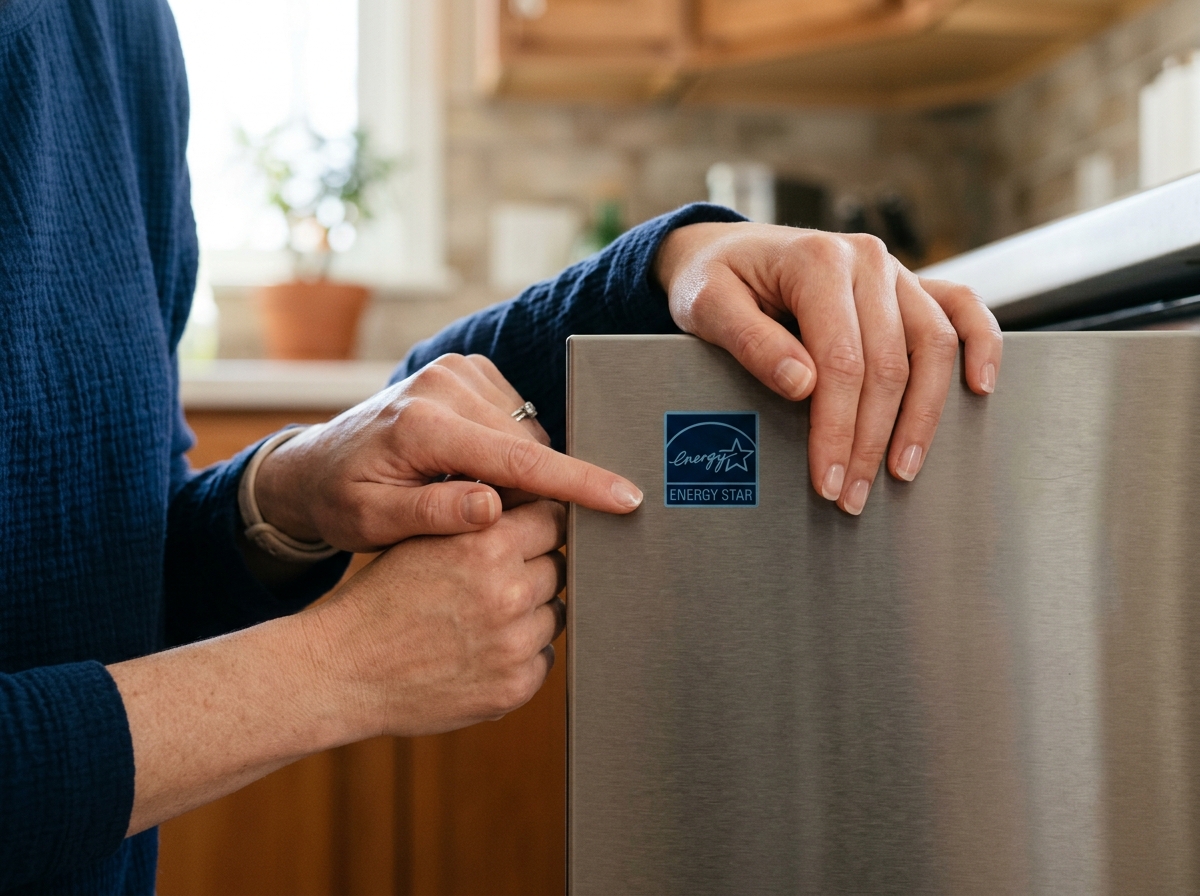
The ENERGY STAR label is a federal certification program run jointly by the EPA and the Department of Energy. It’s been around since the early 1990s. For air conditioners, it means the unit has passed lab testing showing it uses meaningfully less energy than a standard model doing the same job. Manufacturers submit equipment for testing, and independent verification confirms the numbers before that blue label ever shows up on a spec sheet.
Certified central air conditioners typically need a SEER2 rating well above the federal minimum, often 15.2 or higher depending on region, along with efficient compressor and coil designs. You can browse the full ENERGY STAR Certified Central Air Conditioners list to compare specific models before you buy. A standard-efficiency unit might cool your home just fine on paper. But it’ll pull noticeably more electricity to do it, month after month.
That gap adds up. Over a 15-year lifespan, the difference between a baseline unit and a certified one can mean thousands of dollars in electricity costs. Still, the label only measures what happens in a lab, not what happens in your actual living room.
Why Efficiency Ratings Don’t Guarantee Lower Bills Alone
Here’s the catch nobody puts on the sticker: a certified air conditioner is only as good as the house it’s cooling. If your attic is under-insulated or your ductwork is leaking cooled air into a crawl space, that efficient equipment is working overtime to make up for losses it can’t control. Homes routinely lose 20 to 30 percent of conditioned air through duct leaks alone, no matter what’s written on the unit outside.
Air sealing and insulation aren’t glamorous. But they’re the difference between paying for cooling you actually feel and paying for cooling that leaks into your attic. A professional walkthrough, like the ones covered in a typical energy assessments visit, can pinpoint exactly where a home is bleeding energy before or after a new AC goes in. Skipping that step is a bit like buying a fuel-efficient car and then driving with the windows down.
Bottom line: the label tells you what the equipment can do, not what your house will let it do. For deeper reading on how these two pieces fit together, the blog has more articles on home efficiency. A leaky, poorly insulated home will quietly cancel out even the best-rated equipment, leaving you with high bills and a very confused thermostat.
Comparing Central, Ductless, and Room Air Conditioner Options
Central and Ductless Systems
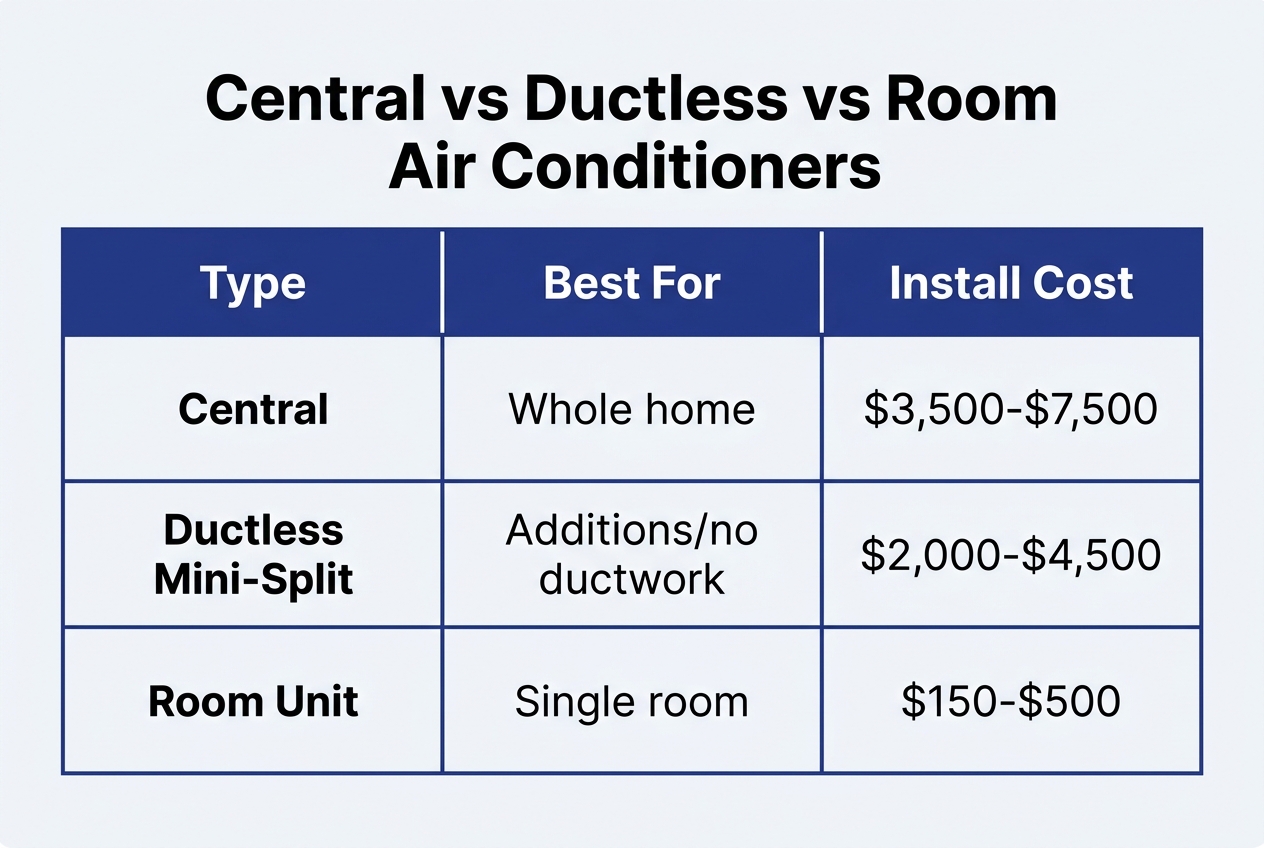
Not every home needs the same cooling setup. Picking the wrong category is a common, expensive mistake. Central split systems still make sense for whole-home cooling with existing ductwork, while ductless mini-splits have become the go-to for additions, garages, or older homes that never had ducts installed. SEER2 is the rating to watch here, since it reflects real-world duct static pressure better than the old SEER scale did.
| System Type | Typical SEER2/CEER | Best-Fit Scenario | Rough Cost Range |
|---|---|---|---|
| Central split system | 15.2–20+ SEER2 | Whole-home cooling, existing ductwork | $4,500–$9,500 installed |
| Ductless mini-split (single-zone) | 17–24 SEER2 | Additions, garages, historic homes without ducts | $3,000–$6,000 per zone |
| Ductless mini-split (multi-zone) | 16–22 SEER2 | Apartments, multi-room retrofits | $7,000–$14,000 installed |
| Window unit | 11.5–15.5 CEER | Single rooms, rentals, seasonal use | $200–$600 unit only |
| Portable room unit | 7.5–11 CEER | Apartments without exterior wall access | $300–$700 unit only |
Installation complexity climbs fast as you move from window units to central systems. A window unit is a same-day job. A multi-zone mini-split means line sets, mounting brackets, and often an electrician for dedicated circuits.
Window and Room Units
Window and portable units use CEER (Combined Energy Efficiency Ratio) instead of SEER2. It’s a fair way to compare models if you’re renting or cooling one problem room. They’re cheap, they’re fast to install, and they’re honestly the right call for a lot of situations landlords or budget-conscious homeowners face. Just don’t expect one to fix comfort problems in a whole apartment.
Before buying anything, it helps to browse current ENERGY STAR Certified Air Conditioners to see which models lead their category in efficiency this year. Cost matters too, and given the cost of electricity in Louisiana, an inefficient unit running all summer can quietly wreck a budget. Pairing any cooling unit with better window coverings also helps; learning about energy efficient window coverings can trim solar heat gain enough to shorten the AC’s daily runtime. If you’re unsure which category fits your home, a load calculation from a licensed HVAC contractor can clarify the sizing and system type before you spend a dollar.
How to Properly Size a Room Air Conditioner
Getting the right size unit isn’t guesswork. It’s math, then a few common-sense adjustments. Start with Step 1: grab a tape measure and calculate the room’s square footage by multiplying length by width. That single number drives everything else.
Sizing Chart Basics
Step 2 is matching that square footage to the correct BTU cooling capacity. Manufacturers, including Energy Star Certified GE Room Air Conditioners, publish sizing charts you can use as a starting reference point. Here’s a simplified version most pros still rely on.
| Room Size (sq ft) | Recommended BTUs | Typical Room Type |
|---|---|---|
| 150–250 | 6,000 | Bedroom, home office |
| 250–350 | 8,000 | Living room, den |
| 350–450 | 10,000 | Large living area |
| 450–600 | 12,000 | Open-concept space |
| 600–1,000 | 18,000 | Combined living/kitchen area |
That’s just the baseline. Step 3 means adjusting for ceiling height above 8 feet, heavy sun exposure, kitchen use, and occupant count — add 10% for sunny rooms, 4,000 BTUs for a kitchen, and 600 BTUs per person beyond two.
When to Size Up or Down
Bigger isn’t better here. Oversizing causes short-cycling — the unit blasts cold air, shuts off fast, and never runs long enough to pull humidity out of the room. You end up with a chilly, damp space that still feels sticky. Undersizing is its own headache: the unit runs constantly, struggles to reach the thermostat setting, and drives up bills without delivering comfort. Homes with duct or envelope leakage make both problems worse, which is one reason a proper air sealing assessment is worth pairing with any sizing decision. Get the number right, and the unit basically runs itself.

Smart Features and Technology Worth Considering
Variable-Speed and Smart-Connected Units
Not every certified unit runs the same way behind the scenes. The compressor type and control system make a bigger comfort difference than most shoppers expect. It’s worth knowing what you’re paying for before you buy.
- A variable-speed compressor ramps up and down instead of just switching on and off, holding your set temperature within a degree or two and avoiding the hot-then-cold swing older single-stage units produce.
- That steadier operation also means lower energy use, since the compressor isn’t constantly restarting at full power, which is one of the biggest draws on a unit’s electrical load.
- Wi-Fi connected controls let you build a weekly schedule, so the house isn’t cooling an empty home at 2 p.m. on a workday.
- Geofencing takes it a step further, using your phone’s location to nudge the temperature down automatically as you head home, no manual adjustment needed.
- U-shaped and saddle-style window units sit differently in the sill, pushing the noisy compressor outside the frame for quieter operation and a slimmer profile that’s harder to pry open from outside.
- The ENERGY STAR Most Efficient designation flags the top-performing models each year, a useful shortcut if you don’t want to comb through spec sheets comparing SEER2 and CEER numbers yourself.
Smart features are nice, but they’re not magic. A geofencing thermostat won’t fix a leaky attic, and an app schedule can’t compensate for ducts dumping cool air into a crawlspace. If you’re weighing whether the extra cost buys real comfort, reviewing What Is ENERGY STAR criteria helps separate genuine efficiency gains from marketing gloss. Pair smart controls with a well-sealed home, and the payoff shows up on your bill, not just in an app.
Rebates and Utility Incentives Available in 2026
Federal Tax Credits Have Ended
The Energy Efficient Home Improvement Tax Credit used to cover up to 30% of the cost of a qualifying central air conditioner, capped at $600. According to the IRS, that credit ended for equipment placed in service after December 31, 2025, so an air conditioner installed in 2026 does not qualify. Utility rebates are now where the savings are.
Regional Utility Rebate Programs
Most Gulf South utilities run their own rebate programs, and the details vary quite a bit by provider. Before buying anything, it helps to see how a few stack up side by side.
| Utility Provider | Program Focus | Typical Incentive |
|---|---|---|
| Entergy | Home energy assessments, sealing, and AC upgrades | Partial to full project cost coverage |
| CLECO | Weatherization and cooling equipment rebates | Fixed rebate per qualifying measure |
| Mississippi Power | Income-eligible efficiency upgrades | No-cost service for qualifying homes |
| Atmos Energy | Combustion safety and envelope sealing | Rebate paperwork assistance included |
| Energy Smart | Comprehensive home performance programs | Tiered rebates based on measured savings |
Confirming eligibility before you buy is worth the extra ten minutes. Manufacturer spec sheets and ENERGY STAR’s own product finder will tell you if a specific model qualifies, and reviewing detailed Energy Star HVAC requirements can save you from buying equipment that misses the cutoff by a hair. If your current bills already feel out of control, understanding why your electricity bill too high situation exists can point you toward the right combination of upgrades. Here’s the blunt truth: paperwork, not equipment cost, is where most homeowners leave money on the table. Programs exist. Filing deadlines and documentation requirements trip people up constantly. Questions about which incentives apply to your specific address are best sorted out directly through the contacts page of a program provider before you sign any purchase agreement.
Why a Certified Air Conditioner Underperforms Without a Sealed, Insulated Home
Where Homes Lose Cooling Efficiency
A brand-new, top-rated unit can’t fix a leaky house. Cool air slips out through wall gaps, attic hatches, rim joists, and recessed light housings all day long, while hot, humid air pushes right back in. Most homeowners never see this happening. They just notice the AC running constantly and the house still feeling sticky by afternoon.
Ductwork is often the bigger culprit. On average, a large share of conditioned air never reaches the rooms it’s meant for, lost through loose connections, disconnected boots, and cracked flex duct hiding in attics and crawl spaces. Duct leakage alone can push your cooling costs up dramatically, even with a properly sized system installed. Learning more about duct sealing helps explain why some homes stay uneven no matter how good the equipment is.
Attic insulation matters just as much. An attic sitting well below recommended R-value acts like an open window above your ceiling, letting cooled air rise and escape while summer heat radiates down. That’s a lot of wasted electricity for a system that’s technically doing its job.
Diagnostics That Reveal the Problem
You can’t fix what you can’t measure. A blower door test depressurizes the home and quantifies exactly how much air is escaping, giving you a real number instead of a guess. Duct blaster tests do the same for the duct system, isolating it to measure leakage before and after repairs. Thermal imaging then shows where the losses are physically happening, spotting missing insulation, gaps around fixtures, and cold or hot spots invisible to the naked eye.
These three tools together build a full picture of a home’s real performance. Anyone shopping for equipment should also understand how sizing standards apply to smaller systems; the guidance on Room Air Conditioners is a useful reference point for comparing efficiency claims against actual room needs. Without this data, you’re just guessing at fixes.
One more step matters once sealing tightens the envelope: combustion-safety checks. Tightening a home reduces natural airflow, and that can affect how water heaters or furnaces draft exhaust safely. Skipping this step is how a well-meaning efficiency upgrade turns into a health risk. Verified testing, not assumptions, is what keeps a tighter home both efficient and safe.
Building a Complete Home Cooling Efficiency Plan
A new air conditioner is not a fix for a leaky house. It’s one piece of a bigger puzzle, and it only works as well as the shell around it. Buying equipment first is like buying a nicer bucket for a leaky boat. Get the sequence right, and every dollar spent works harder.
Step-by-Step Approach to Maximizing Savings
The smartest homeowners treat cooling upgrades as a process, not a purchase. Skipping steps usually means paying twice: once for equipment, again for the losses nobody fixed. Here’s the order that actually saves money:
- Start with a professional energy assessment, including a blower door test and thermal imaging, so you know exactly where air is escaping before spending a dime on new equipment;
- Prioritize air sealing and duct sealing first, since gaps at rim joists, top plates, and duct joints are usually the biggest source of wasted conditioned air;
- Add blown-in cellulose insulation to bring attics and wall cavities up to recommended R-38 or higher, closing the gap left by decades of under-insulated construction, a step covered in detail under attic insulation upgrades;
- Pair those improvements with a properly sized, certified air conditioner, since an oversized or undersized unit will short-cycle or run constantly regardless of how tight the house is, a distinction well explained on retailer pages listing Energy Star rated models;
- Schedule combustion-safety checks after sealing work, so tightening the house doesn’t create backdrafting problems for furnaces or water heaters.
Confirming Results With Verified Testing
Don’t take anyone’s word for it, including your own gut feeling. A credible provider will retest with a blower door and duct blaster after the work’s done, comparing numbers to the baseline. That’s how you know leakage actually dropped, not just how it feels. Many local businesses also handle utility paperwork, since programs through providers like Entergy or CLECO often cover most or all costs for qualifying homes.
A new ENERGY STAR certified air conditioner works best alongside a well-sealed, properly insulated home, and that’s where Big Star Conservation, Inc. can help. Their BPI-certified team, based at 1500 Edwards Ave Suite J in Elmwood, LA, uses blower door tests and duct sealing to make sure the cool air you’re paying for actually stays inside. Give them a call at +1 (504) 305-3276 or book an assessment today, most appointments take less than five minutes to schedule.
