


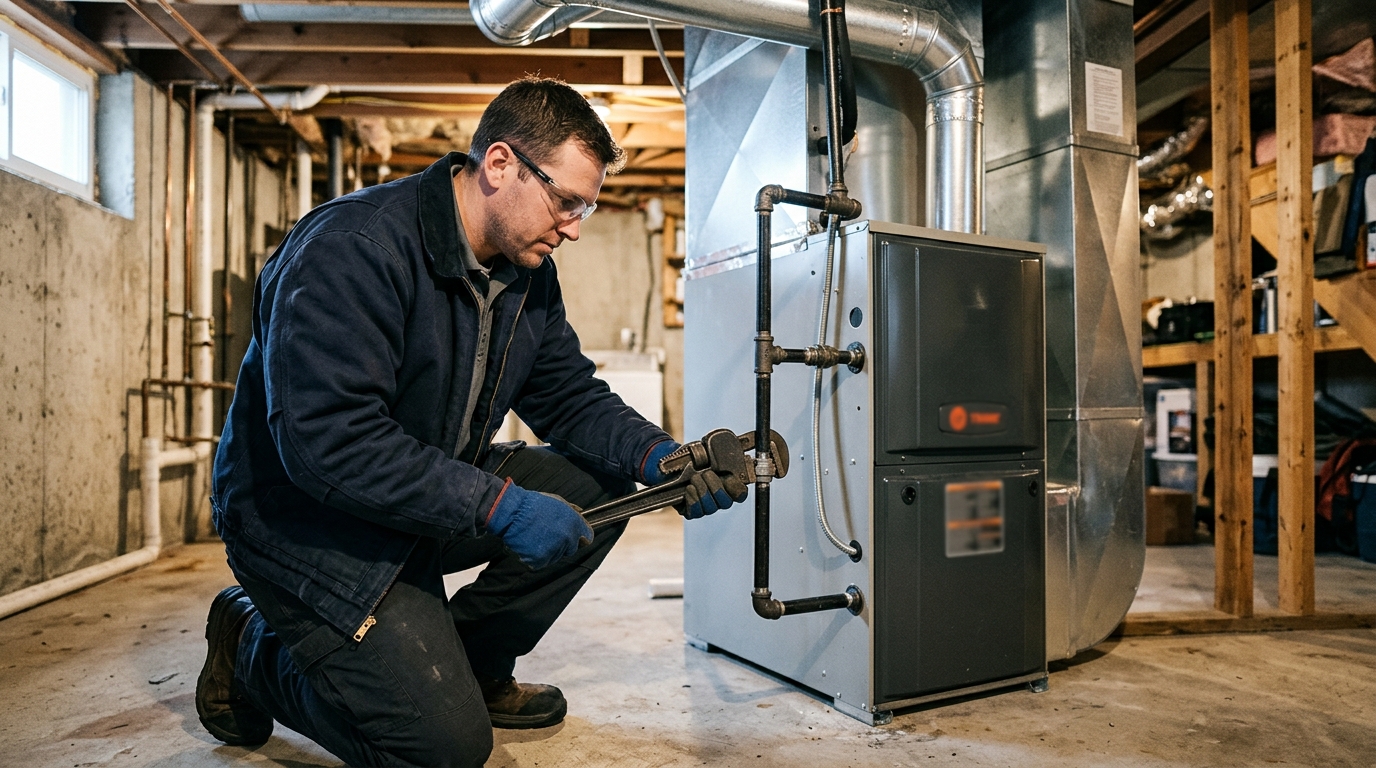
When your furnace and air conditioner are both nearing the end of their lifespan, the timing can feel like a costly coincidence you never saw coming. Homeowners searching for a straight answer on furnace and AC replacement cost usually run into vague estimates, confusing quotes, and sales pressure instead of real numbers. This guide breaks down what you should actually expect to pay in 2026, what pushes those costs up or down, and how to land on a system that keeps your energy bills lower for years to come.
Furnace and AC Replacement Cost: What to Expect in 2026
Average Cost Ranges by System Combination
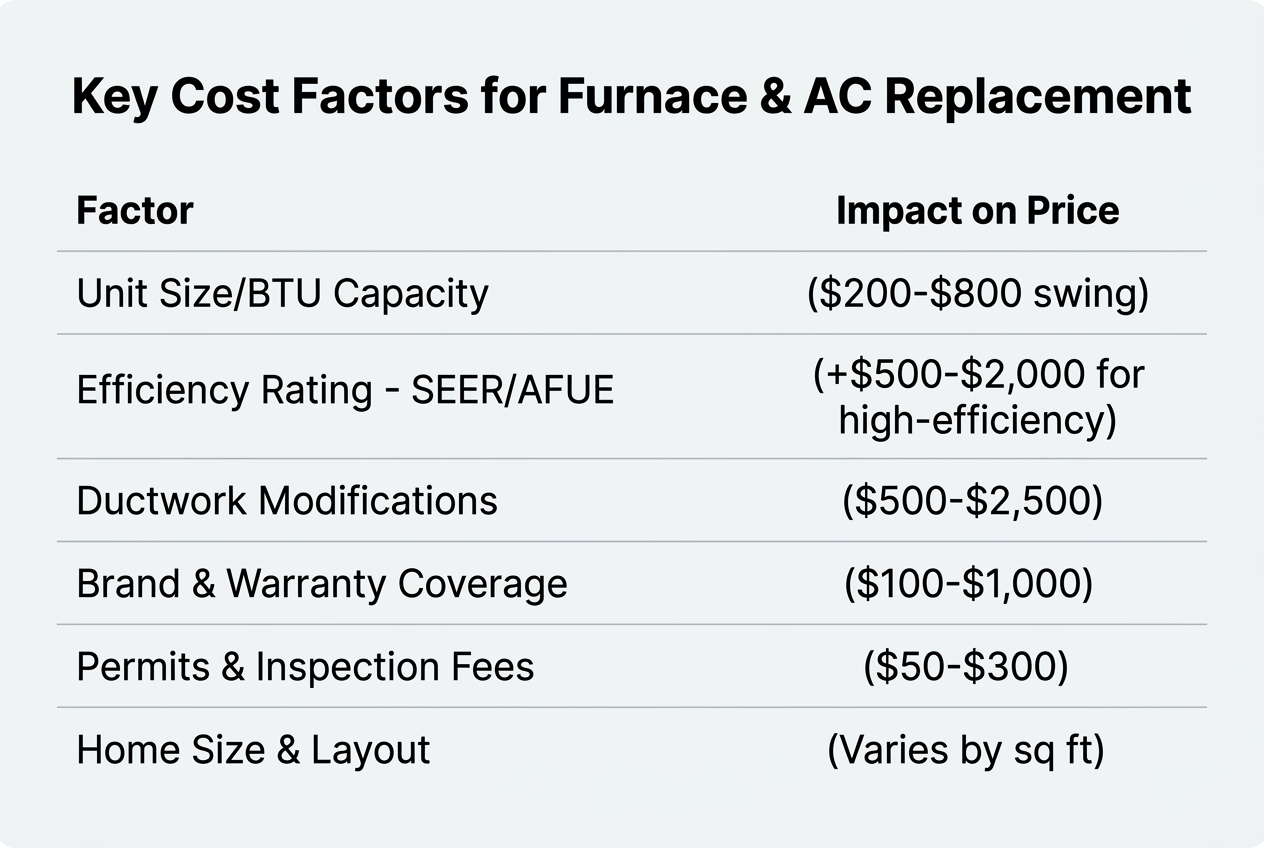
Homeowners across the country pay $8,000 to $16,000 for a combined furnace and AC swap in 2026. Costs shift based on equipment tier, home size, and ductwork condition. The table below shows typical ranges for common project types.
| Project Type | Typical Cost Range | Average Install Time |
|---|---|---|
| Furnace only | $3,800 – $7,500 | 1 day |
| AC only | $4,200 – $8,000 | 1 day |
| Combined furnace + AC | $8,000 – $16,000 | 1-2 days |
| Combined with ductwork repair | $10,500 – $19,000 | 2-3 days |
Furnace-Only vs AC-Only vs Combined Replacement
Replacing both units together often costs less than running two separate jobs. Contractors charge one labor fee instead of two. They also reuse the same electrical connections, refrigerant lines, and permits. Many local businesses report savings of 10% to 20% when bundling installs.
Several factors shape the final invoice. Equipment tier, house square footage, and existing duct condition all matter. Rising energy prices push more homeowners toward efficient systems, too. Reviewing the cost of electricity in louisiana helps explain why efficiency ratings affect long-term value. Sealing gaps through proper air sealing also reduces strain on new equipment, which lowers monthly bills after install.
Key Factors That Drive Your Installation Price
Efficiency Ratings (SEER2, HSPF2, AFUE) Explained
Every furnace and AC unit carries an efficiency score. SEER2 measures cooling efficiency, HSPF2 applies to heat pumps, and AFUE rates furnace fuel efficiency. Higher numbers mean better performance. They also mean higher upfront equipment costs. A furnace rated at 96% AFUE costs more than one rated at 80%, though it burns less fuel over time.
These ratings affect price directly. Manufacturers use better compressors, thicker insulation, and variable-speed motors to hit top-tier numbers, and that added engineering shows up on the invoice. Homeowners in hot, humid climates often see faster payback on high-SEER2 systems because units run longer each year.
System Size and Home Load Calculations
An installer should calculate your home’s heating and cooling load before quoting a price. This calculation, often called a Manual J, factors in square footage, window count, insulation levels, and local climate. Skipping this step leads to oversized or undersized systems, and those cost more to run and wear out faster.
A properly sized system often costs less than an oversized one, since smaller equipment carries a lower price tag. Homes with poor insulation need larger systems to compensate. Improving insulation first can shrink the required system size and lower your quote. Reviewing the benefits of insulating your attic before replacement helps many homeowners right-size their new equipment.
Ductwork Condition and Access
Old, leaky, or undersized ducts add labor hours and material costs to any installation. Crawlspace or attic access also changes pricing, since tight spaces slow down crews and require extra equipment.
Sealing or replacing ducts before installing new attic insulation often prevents future efficiency losses. Investing in quality attic insulation can reduce duct strain and lower long-term energy bills.
Labor, Timing, and Regional Price Differences
What Makes Installation Labor-Intensive
Swapping a furnace or AC unit is not a quick plug-and-play job. Technicians must disconnect old wiring, refrigerant lines, and ductwork before setting the new equipment in place. Labor hours add up fast when crawl spaces, tight closets, or rooftop units complicate access.
Electrical upgrades often add more time. Older homes may need new breakers, updated thermostats, or additional venting to meet current codes. A straightforward swap might take four hours. A complex retrofit with ductwork changes can stretch into a two-day project, raising the total labor bill significantly.
Seasonal Demand and Contractor Availability
Timing changes your price more than most homeowners expect. Summer heat waves and winter cold snaps push demand higher, and contractors often charge premium rates during peak season. Scheduling replacement in spring or fall usually means shorter wait times and better pricing.
An emergency breakdown during extreme weather also limits your options. You may end up accepting the first available crew instead of comparing quotes. Planning ahead, especially if your electricity bill too high already signals an aging system, gives you room to negotiate and avoid rushed decisions.
How Location Affects Your Quote
Local permitting rules, inspection fees, and climate zones all shape final pricing. Coastal counties may require hurricane-rated equipment mounts, which adds cost. Reviewing a resource like HVAC Replacement Cost | System Pricing & Installation … helps set realistic regional expectations.
Louisiana and Mississippi’s heavy humidity demands careful sizing. Oversized units cool too fast without removing moisture, leaving homes clammy. Proper sizing balances tonnage with dehumidification needs common across the Gulf South.
Furnace vs Heat Pump vs Central AC: Comparing Your Options
Furnace and Heat Pump Cost Comparison
Choosing between a furnace and a heat pump depends on your climate, budget, and how your home is currently set up. The table below breaks down typical equipment costs and where each system performs best.
| System Type | Typical Cost Range | Best For | Lifespan |
|---|---|---|---|
| Gas Furnace | $3,500–$7,500 | Cold snaps, existing gas line | 15–20 years |
| Heat Pump | $5,000–$12,000 | Mild winters, year-round efficiency | 12–15 years |
| Central AC | $4,000–$9,000 | Whole-home cooling with ductwork | 15–20 years |
| Ductless Mini-Split | $3,000–$10,000 | No ducts, room-by-room control | 15–20 years |
Central AC vs Ductless Mini-Split Pricing
Central AC works well when ductwork is already in good shape. Mini-splits cost more per zone but avoid duct losses entirely, a real advantage in older homes with leaky ducts.
Which System Fits Your Climate
In humid Gulf South climates, heat pumps and mini-splits often outperform furnaces on moisture control. Before deciding, read our about us page to understand how assessments guide these recommendations. Homeowners comparing real-world pricing sometimes ask, “How much did you pay for a full HVAC replacement?”—a useful reality check.
Why Brand and Equipment Tier Change the Bottom Line
Premium Tier Brands and Features
Premium brands cost more because they pack in extra technology. Think variable-speed compressors, smart thermostats, and longer warranties. These systems run quieter and hold steady temperatures better. Brands like Carrier, Trane, and Lennox lead this category. Homeowners pay extra for smoother performance and fewer repairs over time.
Mid-Tier and Budget Tier Options
Mid-tier brands, such as Goodman or Rheem, balance price and quality. They use simpler single-stage or two-stage technology. Budget models cut costs further by skipping smart features. They still heat and cool a home well, but with less finesse. Many homeowners choose this tier for rental properties or tight budgets.
Sample Cost Examples by Brand and Home Size
Pricing changes quickly once you factor in brand tier and square footage. The table below shows typical installed costs for a furnace and AC combo.
| Home Size | Budget Tier | Mid Tier | Premium Tier |
|---|---|---|---|
| 1,200 sq ft | $6,500 | $8,200 | $11,000 |
| 1,800 sq ft | $7,800 | $9,900 | $13,200 |
| 2,400 sq ft | $9,200 | $11,600 | $15,500 |
| 3,000 sq ft | $10,500 | $13,400 | $18,000 |
For a deeper breakdown, the HVAC Replacement Cost Calculator: Prices by Brand and Size lets homeowners compare exact models. You can also read more pricing tips on the blog before making a final decision.
Getting System Size and Ductwown and Ductwork Right
Proper Sizing for AC and Heat Pumps
A correctly sized system is one of the most overlooked parts of a replacement project. Many contractors size units by rough guesswork or by matching the old equipment. That often leads to problems, since old systems were sometimes wrong from the start.
An oversized air conditioner cools a room fast, then shuts off before it removes humidity. This leaves rooms feeling clammy. An undersized unit runs nonstop, straining parts and raising bills. Heat pumps face the same risk, especially in Gulf Coast humidity. A proper load calculation checks square footage, insulation, windows, and orientation before choosing tonnage.
Furnace Sizing Basics
Furnace sizing follows similar rules. A furnace rated too high for the home will short-cycle, turning on and off quickly. This wastes energy and wears out the blower motor faster than normal. A furnace sized too small struggles during cold snaps, running long hours without reaching the thermostat setting.
Homeowners should ask for a written load calculation, not just a quote based on the home’s age. Reviewing HVAC replacement cost by home size can help set realistic expectations before committing to a specific BTU rating.
Ductwork Repair vs Full Replacement Costs
Ductwork condition changes the entire budget. Leaky, crushed, or undersized ducts can waste 20 to 30 percent of conditioned air. Sealing minor leaks may cost a few hundred dollars. Full duct replacement, though, can add several thousand dollars to a project.
Older homes often need duct resizing to match new equipment. Skipping this step causes uneven airflow and higher bills. Reviewing our services can help homeowners understand what a full duct inspection involves before installation day arrives.
Ways to Lower Your Replacement Costs
Best Times of Year to Schedule Replacement
Contractors get slammed in peak summer and the coldest winter weeks. Scheduling during shoulder seasons, like spring or fall, often means faster service and softer pricing. Crews have more open slots, and some companies offer off-season discounts to keep work steady.
Bundling Furnace and AC Work for Discounts
Replacing both systems together usually costs less than doing them separately. Shared labor, one service call, and combined permit fees can trim the total bill. Many installers also offer a bundle discount for full system replacements, since it reduces their scheduling and travel costs too.
Comparing Multiple Contractor Quotes
Never accept the first bid. Getting several quotes reveals fair market pricing and highlights outliers. Reviewing an outside resource like this HVAC Replacement Cost Guide can help you judge whether a quote looks reasonable.
- Request at least three written estimates that break down equipment, labor, and permit costs separately.
- Ask each contractor about available financing plans, including 0% interest options for qualified buyers.
- Confirm whether the quote includes a manual load calculation, not just a rough size guess.
- Check licensing, insurance, and manufacturer certifications before signing anything.
- Review the company’s privacy policy if submitting personal or financial details online.
Rebates and Free Weatherization Assistance
Federal Tax Credits Have Ended
Through 2025, the federal Energy Efficient Home Improvement Credit offered up to $2,000 a year for qualifying heat pumps and up to $600 per item for other qualifying equipment such as central air conditioners and furnaces. According to the IRS, that credit ended for equipment placed in service after December 31, 2025, so a furnace and AC installed in 2026 do not qualify. Utility rebates and weatherization programs are now the main ways to lower the cost.
Utility Rebate Programs in Louisiana and Mississippi
Many local utility companies offer rebates for high-efficiency equipment. These programs vary by provider, and they can lower your out-of-pocket cost significantly.
How a Free Energy Assessment Can Lower Your Overall Costs
A free energy assessment can spot problems before you spend money on a full system replacement. Sealing leaks or adding insulation sometimes solves comfort issues without new equipment at all. For a broader look at combined project pricing, this guide on How Much Would It Cost to Replace My Furnace and AC at the same time offers helpful context. If you’re ready to explore your options, reach out through the contacts page to schedule an assessment.
Is It Worth Replacing an Aging System?
The $5,000 Rule for Repair vs Replacement
Contractors often use a simple test. Multiply the repair cost by the age of your unit. If that number tops $5,000, replacement usually makes more sense than another repair. A $600 repair on a 10-year-old furnace equals 6,000. That signals it’s time to consider a new system.
This rule catches the hidden cost of “just one more fix.” Older units often need repeat repairs within a year or two. Each repair bill adds up, and you’re still stuck with outdated, inefficient equipment. You can check your own numbers against a New HVAC System Cost Calculator before deciding.
Homeowners who skip this math often overspend. They patch a dying system for years, spending more than a full replacement would have cost upfront.
Signs Your 15-20 Year Old System Needs Replacing
Age alone is a warning sign. Most furnaces and AC units last 15 to 20 years. Past that mark, breakdowns become frequent and parts get harder to find.
Watch for rising utility bills, uneven temperatures, and strange noises. These point to a failing system losing efficiency year over year. Older equipment can waste 20 to 30 percent more energy than new models.
An outdated system can also hurt resale value. Buyers ask about HVAC age during inspections. A recent upgrade, similar to work shown in this portfolio of completed projects, gives sellers a real bargaining edge.
Frequently Asked Questions About Furnace and AC Replacement Cost
How Long Does Installation Take?
Most furnace or AC swaps take one full day. A combined system replacement, with both furnace and AC, often needs two days. Several factors can extend the timeline. Consider these common delays:
- The crew discovers damaged or undersized ductwork that needs rework before new equipment connects properly.
- Old electrical wiring doesn’t meet current code and requires an upgrade before installation continues.
- The equipment ordered isn’t in stock locally, adding several days to the wait.
- Permit inspections get scheduled, which can add a day or two depending on your city’s process.
- Poor attic or crawlspace access slows down the physical work of running new lines.
Can I Replace Only the Outdoor Unit?
Technically, yes. Practically, it’s rarely a good idea. Mismatched indoor and outdoor units often run less efficiently. Many manufacturers won’t honor warranties on mixed-brand systems either. Most technicians recommend replacing both halves together for reliable performance.
Does a New System Increase Home Value?
A new furnace or AC system can boost resale value and speed up a sale. Buyers see it as one less big expense waiting for them. Pairing new equipment with improvements like duct sealing often adds even more appeal, since it signals the whole system was addressed, not just the visible parts.
If you’re weighing the true cost of a furnace and AC replacement, it’s worth finding out whether you qualify for savings before you spend a dime. Big Star Conservation Inc. offers expert energy assessments and weatherization services to homeowners and multi-family property owners across Louisiana and Mississippi at little to no cost, thanks to partnerships with regional utility companies. Reach out to book your assessment and see how much you can save before making your next heating and cooling decision.
