


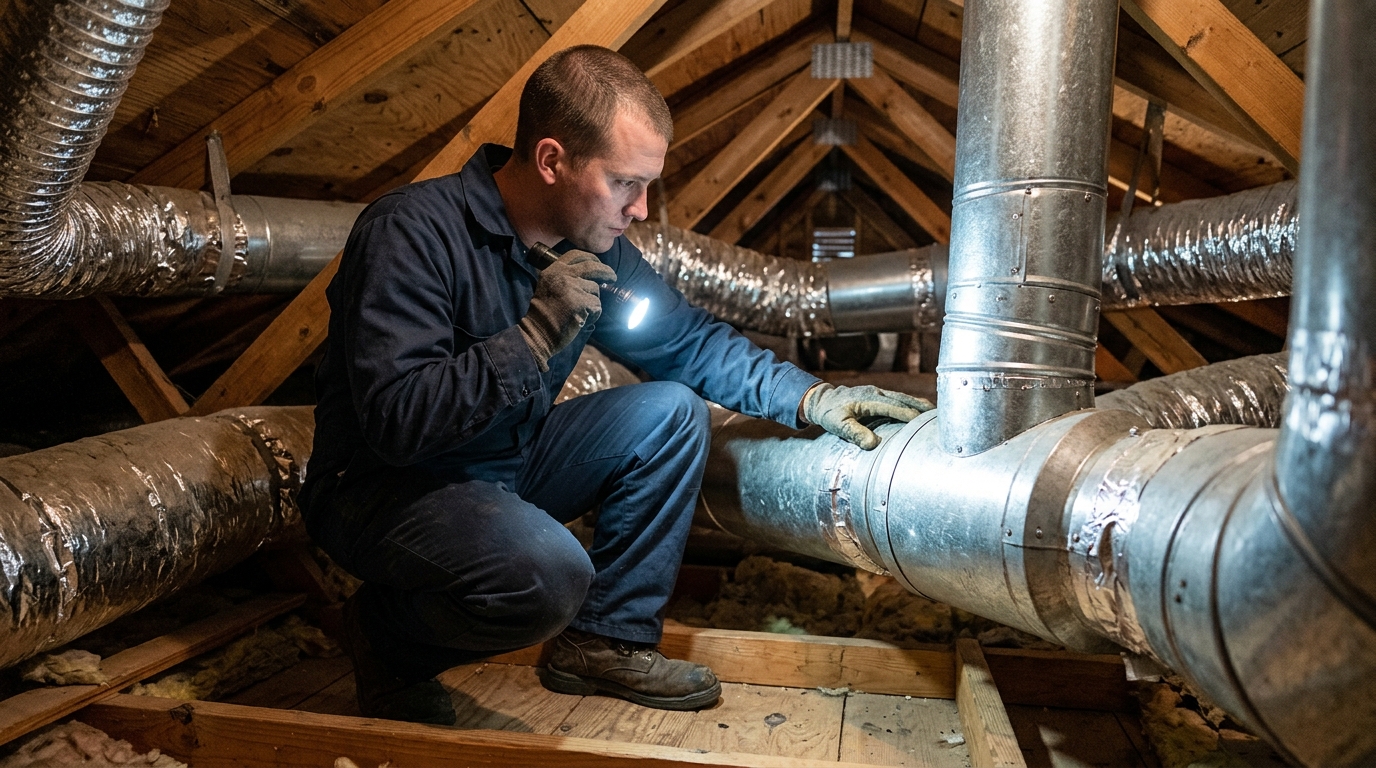
Rising energy bills, uneven room temperatures, and musty air blowing through your vents usually point to something bigger hiding behind your walls and in your attic. Before you assume your HVAC unit is the culprit, consider this: outdated, leaky, or damaged ducts could be quietly draining both your comfort and your wallet. Big Star Conservation INC. seals and repairs existing ducts, and leaky ductwork can take a real toll on a home’s efficiency, indoor air quality, and long-term utility costs. This guide covers what homeowners need to know in 2026 — warning signs, real pricing, and the energy savings that make the investment pay off.
Signs Your Home Needs Ductwork Replacement
Uneven Heating and Cooling Between Rooms
One clear warning sign: a house that never feels comfortable everywhere at once. A bedroom stays warm while the living room turns cold, even with the thermostat set right. This usually points to duct leaks or blockages keeping air from reaching certain rooms.
Older homes often have ducts that have shifted, disconnected, or partially collapsed over time. When a duct collapses, airflow drops sharply in the rooms it feeds. You might notice weak airflow from vents, or rooms that take forever to reach the set temperature. These problems don’t fix themselves. They tend to get worse each season.
Rising Energy Bills Without a Clear Cause
A sudden jump in monthly utility costs, with no change in weather or habits, often traces back to failing ductwork. Leaky seams and cracked joints can waste 20% to 30% of conditioned air before it ever reaches a room. That forces your system to run longer just to hit the same comfort level.
Many homeowners start with duct sealing, which can restore lost efficiency in ducts that are still structurally sound. But if ducts are old, crushed, or rusted through, sealing alone won’t cut it. At that point, rising bills signal it’s time to think about full replacement.
Dust, Mold, or Poor Indoor Air Quality
Ducts that leak or trap moisture can pull in dust, insulation particles, and even mold spores from crawl spaces or attics. You might notice more dust on furniture, musty odors when the system runs, or allergies getting worse indoors.
These issues usually mean ducts have gaps, torn insulation, or damage letting unfiltered air slip into the system. Browsing a portfolio of past duct projects can help you spot similar damage in your own home. Poor air quality is rarely minor and deserves quick attention.
Understanding Ductwork Replacement: What the Process Involves
Initial Inspection and Duct Assessment
Every project starts with a walkthrough. A technician inspects the attic, crawlspace, and basement to map your existing duct system. They check for leaks, crushed sections, disconnected joints, and rusted metal. This step usually takes one to two hours, depending on home size.
The inspector also tests airflow at each vent and measures duct sizing against your HVAC system’s output. Undersized or poorly routed ducts often explain why rooms feel uneven. This assessment becomes the blueprint for the entire replacement plan, so accuracy matters here.
Expect photos, measurements, and a written report. Many providers also check for related issues, like gaps that call for air sealing around duct penetrations. Catching these problems early prevents surprises once work begins.
Removing and Disposing of Old Ductwork
Once the plan is set, crews start demolition. Old ducts get cut into sections and pulled from attics, walls, or crawlspaces. This phase creates noise and dust, so cover furniture and clear access points beforehand.
Removal typically takes half a day to a full day for an average home. Materials like old fiberglass duct board or asbestos-era wrap need careful handling and proper disposal under local rules. Crews haul debris offsite rather than leaving it behind.
Expect some foot traffic through closets, attics, or basements during this stage. Disruption is usually limited to one or two rooms at a time, not the whole house.
Installing and Sealing New Ductwork
Installation follows removal, often the same day or the next. Crews route new metal or flexible ducting according to the assessment plan, securing joints with mastic sealant or foil tape rather than ordinary duct tape, which degrades fast.
Every seam gets checked for airtightness. Leaky joints waste conditioned air and drive up bills, so sealing quality matters as much as the ducts themselves. Many crews also inspect nearby attic insulation while working overhead, since gaps there undercut duct performance.
A typical whole-home replacement takes two to four days. You can usually stay in the house throughout, though HVAC service may pause briefly during final connections and testing.
Common Types of Air Ducts and Materials
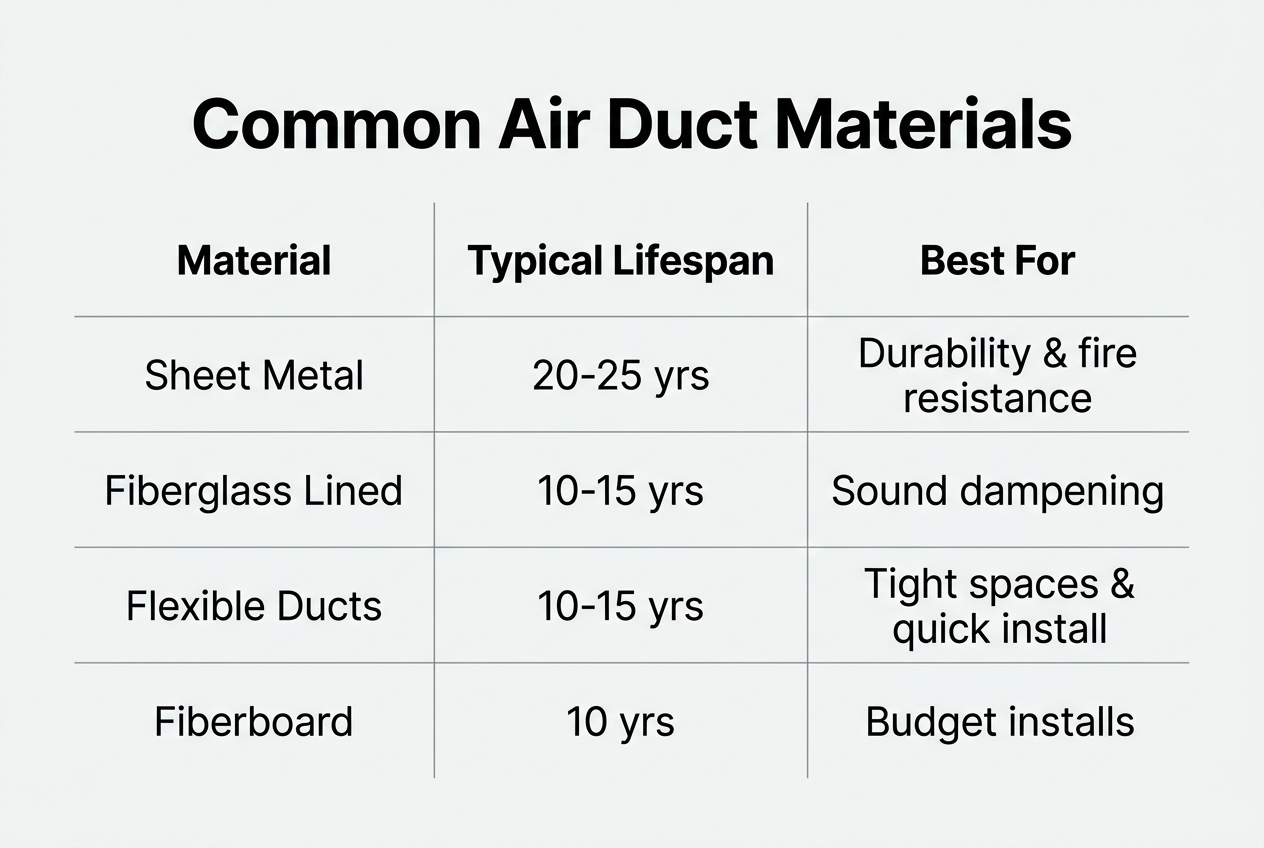
Most homes in the South use one of three duct types. Each material brings different strengths for durability, airflow, and cost. Picking the right one affects comfort and the cost of electricity in louisiana homes pay every month. The table below breaks down the basics.
| Material | Typical Lifespan | Cost Range | Best Use |
|---|---|---|---|
| Sheet Metal | 25–30 years | $$$ | Main trunk lines, attics, crawlspaces |
| Flexible Duct | 10–15 years | $ | Tight spaces, branch runs |
| Fiberglass Duct Board | 15–20 years | $$ | Insulated runs, noise reduction |
Sheet Metal Ducts
Sheet metal is the toughest option. It resists mold, pests, and crushing. Galvanized steel or aluminum ducts hold their shape for decades. They cost more upfront but need fewer repairs down the road.
Flexible Ducts
Flexible duct uses a coiled wire frame wrapped in plastic and insulation. It bends easily around tight corners, so installation is fast and cheap. But kinks and sags block airflow, cutting system efficiency.
Fiberglass and Duct Board
Fiberglass duct board comes with built-in insulation, which helps with noise and temperature loss. But it can trap moisture and wear out faster in humid climates. For a full pricing breakdown by material, see How Much Does Air Duct Replacement Cost? (2026 Pricing).

What Factors Affect Air Duct Replacement Cost
Home Size and Amount of Ductwork Needed
Square footage drives the biggest chunk of cost. A small ranch home needs far less duct run than a sprawling two-story house. Most projects run $1,500 to $5,000, but larger homes with multiple zones can push past $10,000. Total duct length matters more than the home’s price tag.
Homes with two HVAC systems, or separate units for upstairs and downstairs, need double the materials and labor. If your electricity bill too high compared to neighbors has caught your attention, leaky or undersized ducts spread across a large footprint may be why.
Duct Placement and Accessibility
Where your ducts sit changes labor costs a lot. Ducts running through an open, walkable attic are easy to reach. Crawlspaces, finished ceilings, and tight basements demand more time and specialized tools.
Some homes need drywall cut open or flooring lifted to reach old ductwork. That adds repair costs beyond the ducts themselves. Tight access points can add several hundred dollars in extra labor, even on an average-sized home.
Complexity of Your HVAC System
A simple single-zone system with straight duct runs costs less to replace than a multi-zone setup with dampers, returns, and branching supply lines. Complex systems need more precise sizing and balancing.
Material choice matters too. Flexible duct costs less than rigid sheet metal, though rigid options last longer. If you’re comparing options, browse Ducting & Venting products to get a feel for typical price differences before requesting quotes.
Additional Costs Beyond the Ducts Themselves
Many homeowners budget only for new ductwork and forget the work around it. These hidden costs explain why How Is the Air Duct Replacement Cost Calculated? comes up so often. Quotes vary widely because every home has different access points, insulation levels, and hidden damage.
Wall, Ceiling, and Insulation Repairs
Crews often cut into drywall or ceilings to reach old ducts. Patching and repainting adds cost. Damaged attic insulation needs replacing too, and understanding the benefits of insulating your attic helps homeowners see this as a smart investment, not just extra expense.
Old Duct Removal and Disposal Fees
Hauling away old metal or flexible ducting isn’t free. Many companies charge separate disposal or dump fees.
Asbestos Testing and Abatement
Homes built before the 1980s may need testing before any demolition begins.
Keep these often-overlooked expenses in mind when planning your budget:
- Drywall or plaster patching after ducts are removed from walls or ceilings can add several hundred dollars.
- Repainting repaired sections to match existing wall color is frequently left out of initial estimates.
- Replacing crushed or missing attic insulation around new ductwork raises material and labor totals.
- Disposal fees for old metal, fiberglass, or asbestos-wrapped ducting vary by local waste regulations.
- Asbestos testing, required in many older homes, can cost $200 to $800 before abatement even begins.
- Permit fees and post-installation inspections are sometimes required by local building codes.
These extras cause estimates to shift a lot between contractors and homes.
DIY vs. Professional Ductwork Replacement
Why DIY Duct Work Is Riskier Than It Looks
Cutting and taping duct sections looks simple online. In real attics and crawlspaces, it rarely is. A poorly sealed joint can leak 20% or more of your conditioned air. Bad connections also strain your HVAC system, shorten its life, and raise bills instead of lowering them. You can get the general idea by watching How to Replace your HVAC Flex Duct, but a video can’t replace hands-on training.
Tools, Permits, and Skills Required
Professionals bring specialized tools, code knowledge, and testing equipment most homeowners don’t own. The table below compares what each side typically needs.
| Requirement | DIY Homeowner | Licensed Contractor |
|---|---|---|
| Tools | Basic shears, tape | Duct crimpers, manometers, blower door |
| Permits | Often skipped, risky | Pulled and inspected |
| Sizing knowledge | Guesswork | Manual D load calculations |
| Sealing method | Cloth tape (fails fast) | Mastic sealant, code-approved |
| Warranty | None | Labor and material coverage |
When Hiring a Professional Is Worth the Cost
Complex layouts, tricky attic access, or whole-home replacement call for expert hands. A trained technician catches issues homeowners miss, like undersized returns or crushed flex duct. Want to check qualifications before hiring? Review a company’s about us page for licensing and experience. The upfront cost often pays for itself through fewer repairs and lower energy bills.
How to Reduce Your Ductwork Replacement Cost
Get Multiple Quotes and Compare Materials
Price shopping is the fastest way to save money. Contact at least three licensed contractors before choosing one. Ask each for a written estimate listing materials, labor, and timeline. Comparing quotes often reveals price gaps of 20% or more for the same job.
Time Your Project During Off-Peak Seasons
Contractors stay busiest in early summer and mid-winter. Scheduling work during spring or fall often means lower labor rates. Off-peak timing can also speed things up, since crews have more open slots and fewer rush jobs competing for attention.
Bundle Replacement With Other HVAC or Weatherization Upgrades
Pairing new ductwork with insulation, air sealing, or a furnace tune-up can lower your overall cost per project. Many homeowners qualify for programs that make this easier. Consider these options before booking work:
- Ask about utility rebates that offset ductwork and insulation costs when done together.
- Request a free or low-cost energy assessment to identify which upgrades qualify for savings.
- Combine duct sealing with attic insulation to reduce total labor trips and material waste.
- Check if your utility offers seasonal promotions tied to HVAC efficiency upgrades.
- Review financing options that spread bundled project costs over several months.
Before considering a do-it-yourself route, read Can You Replace Ductwork Yourself? to understand the risks and code requirements involved.
Repair or Replace: Making the Right Decision
When Minor Repairs Still Make Sense
Small problems rarely call for a full overhaul. A loose joint, a torn section of flex duct, or a disconnected elbow can often get fixed in a single visit. If leaks stay limited to one or two spots and the rest of the system tests tight, targeted repair is usually the smarter, cheaper choice.
Sealing with mastic, replacing a short run, or adding insulation to an exposed section can restore performance without touching the whole network. An energy assessment through our services can confirm whether damage is truly isolated before you spend money on repairs alone.
When Full Replacement Is the Smarter Investment
Widespread leaks, crushed sections, or moldy insulation usually mean it’s time to replace rather than patch. If more than 20-30% of the system shows damage, repairs become a temporary fix at best. Full replacement solves the problem once, instead of over and over.
Homes with undersized or poorly designed ducts also do better starting fresh, since patches can’t fix airflow problems baked into the layout.
How Duct Age Affects the Decision
Ducts older than 15-20 years often have brittle seals, sagging insulation, and outdated sizing. Age combined with damage tips the scale toward replacement. A professional, like a Ductwork Installation and Design Company in Houston, can weigh both factors together before recommending a path forward.
Planning and Budgeting Your Ductwork Replacement Project
Getting a Professional Energy Assessment First
Before you call a contractor, start with a home energy assessment. A trained technician checks airflow, leaks, and insulation levels. This gives you real numbers instead of guesswork.
An assessment often uncovers problems you can’t see, like torn flex duct hidden in a crawlspace. It also confirms whether you need full replacement or just repairs. This step protects your budget from unnecessary spending.
Many assessments come with a written report. Save it. Contractors use it to build accurate, targeted estimates rather than rough guesses.
Requesting and Comparing Contractor Estimates
Get at least three written estimates before choosing a contractor. Each quote should list duct material, length, labor hours, and disposal fees. Comparing line by line helps you spot hidden costs.
Ask each contractor about timelines and warranty terms. A homeowner researching options nationwide, such as through guides on Ductwork Replacement in Columbia & Lexington SC, will notice pricing varies by region and home size. Use these ranges as a sanity check, not a final answer.
Before signing any contract, review how the company handles your personal data. Reputable providers post a clear privacy policy explaining how your information is stored and used.
Exploring Utility Rebates and Weatherization Assistance
Many utility companies offer rebates for duct sealing and replacement. These programs can lower your out-of-pocket cost by hundreds of dollars. Ask your assessor about current offers in your area.
Weatherization assistance programs also help qualifying households cover project costs. Combining rebates with financing options makes replacement more affordable for many families.
Frequently Asked Questions About Ductwork Replacement
How Often Should Ductwork Be Replaced?
Most ductwork lasts 15 to 20 years before performance drops off. Homes in hot, humid climates may see wear sooner due to condensation and pest damage. If your system is older than 20 years, schedule an inspection to check for leaks and insulation loss.
Can Ductwork Be Replaced Without Removing Drywall?
Yes, in many cases. Ducts running through attics, crawl spaces, or basements are usually accessible without cutting walls. Homes with ducts buried inside floors or ceilings may need limited drywall removal. A trained technician can confirm access points before work begins, avoiding surprise costs.
Are There Alternatives to Full Ductwork Replacement?
Full replacement isn’t always necessary. Several options can extend the life of your existing system and improve efficiency:
- Sealing leaky joints with mastic or metal tape to stop conditioned air from escaping into attics or crawl spaces.
- Adding or upgrading duct insulation to reduce heat gain in summer and heat loss in winter.
- Cleaning ducts professionally to remove dust, debris, and mold that restrict airflow.
- Replacing only the damaged sections instead of the entire duct run, which lowers labor and material costs.
- Installing dampers to balance airflow between rooms without touching the main duct structure.
A home energy assessment can identify which fix fits your situation best. For guidance on next steps, reach out through contacts to schedule an evaluation.
If you’re weighing ductwork replacement, it helps to know how much of the problem is leakage first. Big Star Conservation Inc. doesn’t replace ductwork, but it does test and seal existing ducts for homeowners and multi-family property owners across Louisiana and Mississippi, often at little to no cost thanks to partnerships with regional utility companies. Pre- and post-test leakage numbers show how much sealing can recover before you commit to new ducts.
