


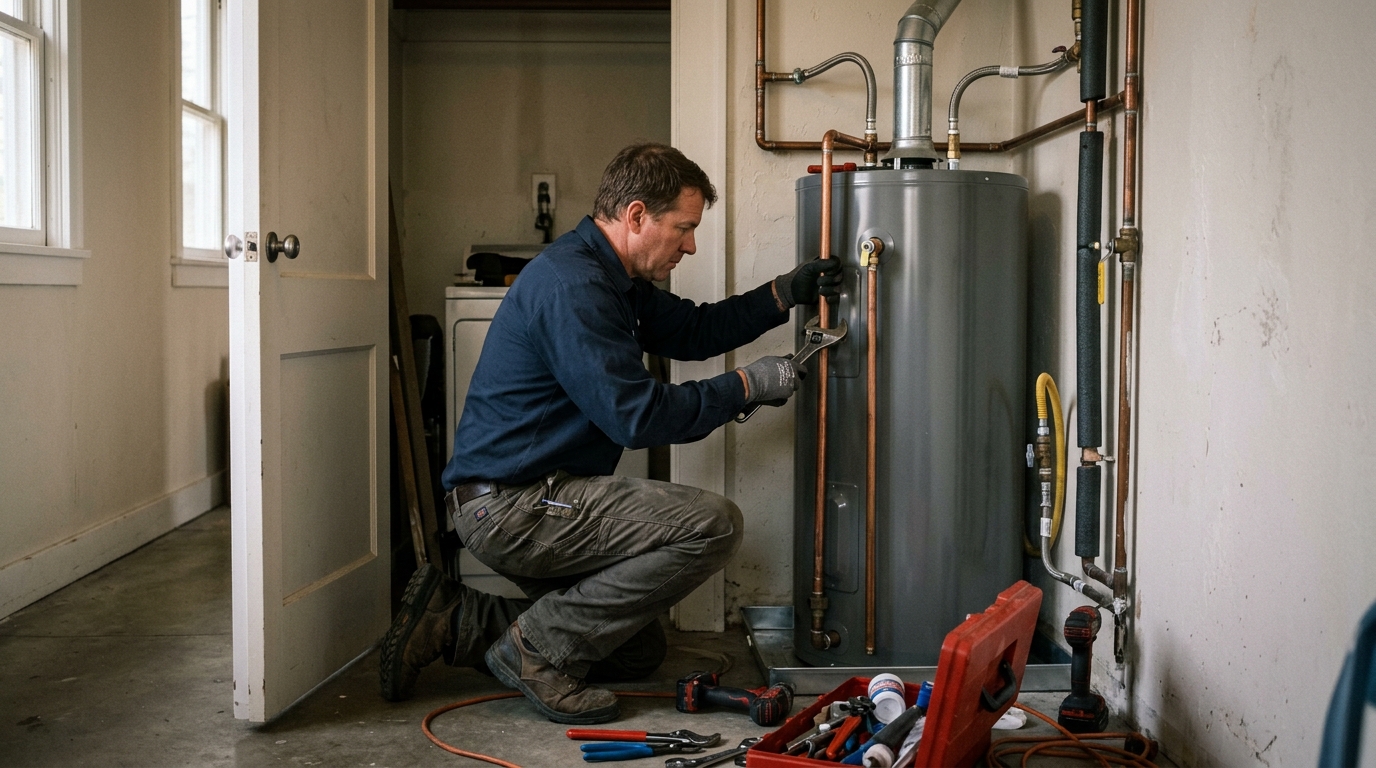
When your 50-gallon water heater starts leaking or can’t keep up with your family’s hot water needs, replacement often becomes an urgent, unplanned expense instead of a carefully budgeted decision. Knowing the true water heater replacement cost 50 gallon homeowners can expect in 2026—unit prices, installation labor, hidden fees and all—helps you avoid overpaying when you’re already stressed. This guide breaks down current pricing across gas, electric, and tankless options, and points out energy efficiency upgrades and rebate programs that can cut your total bill.
Water Heater Replacement Cost 50 Gallon: What to Expect in 2026
Average Price Range by Fuel Type
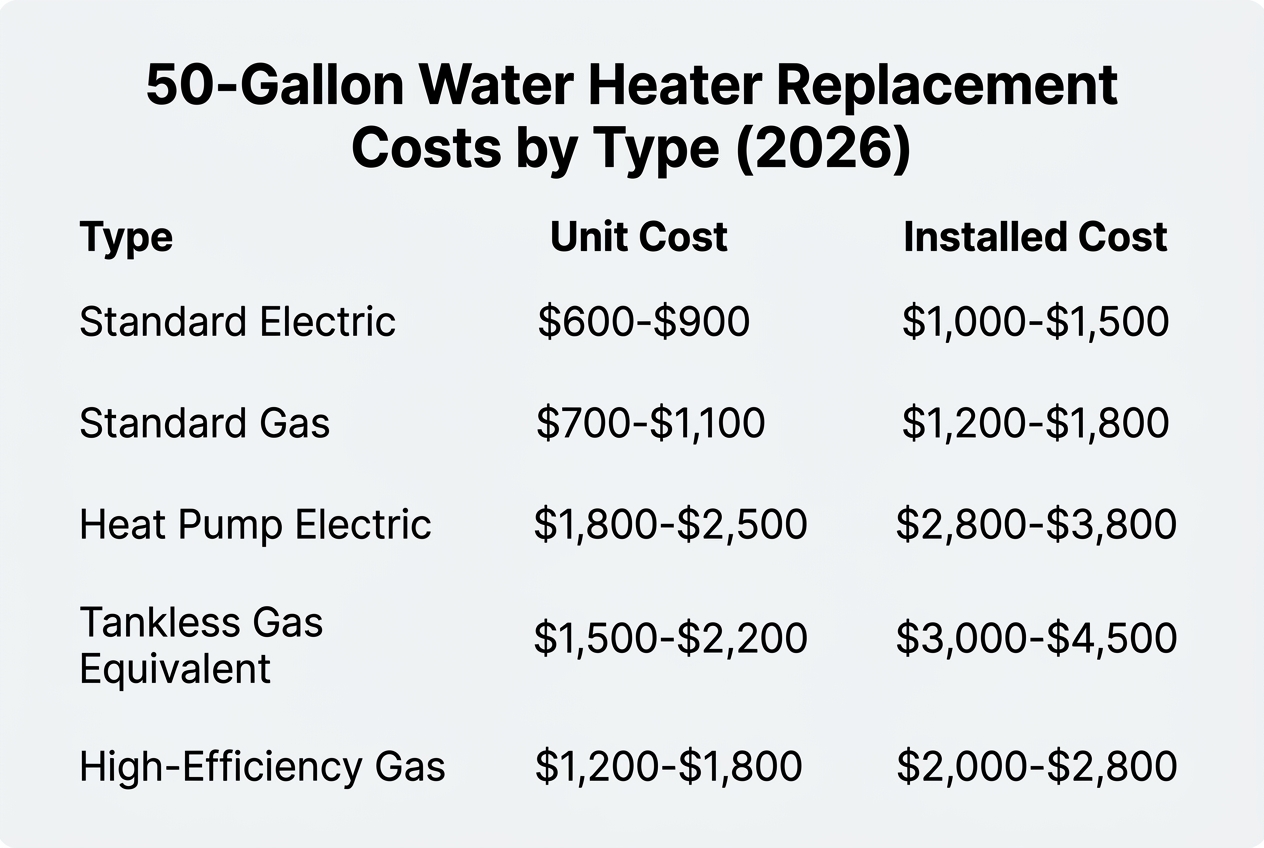
Most homeowners pay between $1,200 and $3,500 for a fully installed 50-gallon unit in 2026. The final number depends heavily on fuel type and equipment quality. Gas models often cost more upfront than electric ones but run cheaper monthly in many areas. Real-world numbers vary widely, as shown in this Cost to replace a 50 gallon water heater : r/askaplumber discussion from homeowners comparing quotes.
| Fuel Type | Unit Cost | Labor Cost | Total Installed |
|---|---|---|---|
| Electric Tank | $600–$1,100 | $300–$600 | $900–$1,700 |
| Natural Gas Tank | $800–$1,400 | $400–$700 | $1,200–$2,100 |
| Tankless (Gas) | $1,200–$2,500 | $700–$1,500 | $1,900–$4,000 |
What’s Included in a Typical Quote
A complete quote should list the unit, permits, disposal of the old tank, and labor. Electric models cost less to install, but ongoing operation ties directly to the cost of electricity in louisiana, which affects your long-term savings. Tankless upgrades push totals higher because of venting and gas line work.
Signs Your Water Heater Needs Replacing
Common Warning Signs
A failing water heater usually warns you before it quits completely. Watch for these red flags:
- The tank is over 10 years old and has never been flushed or serviced regularly.
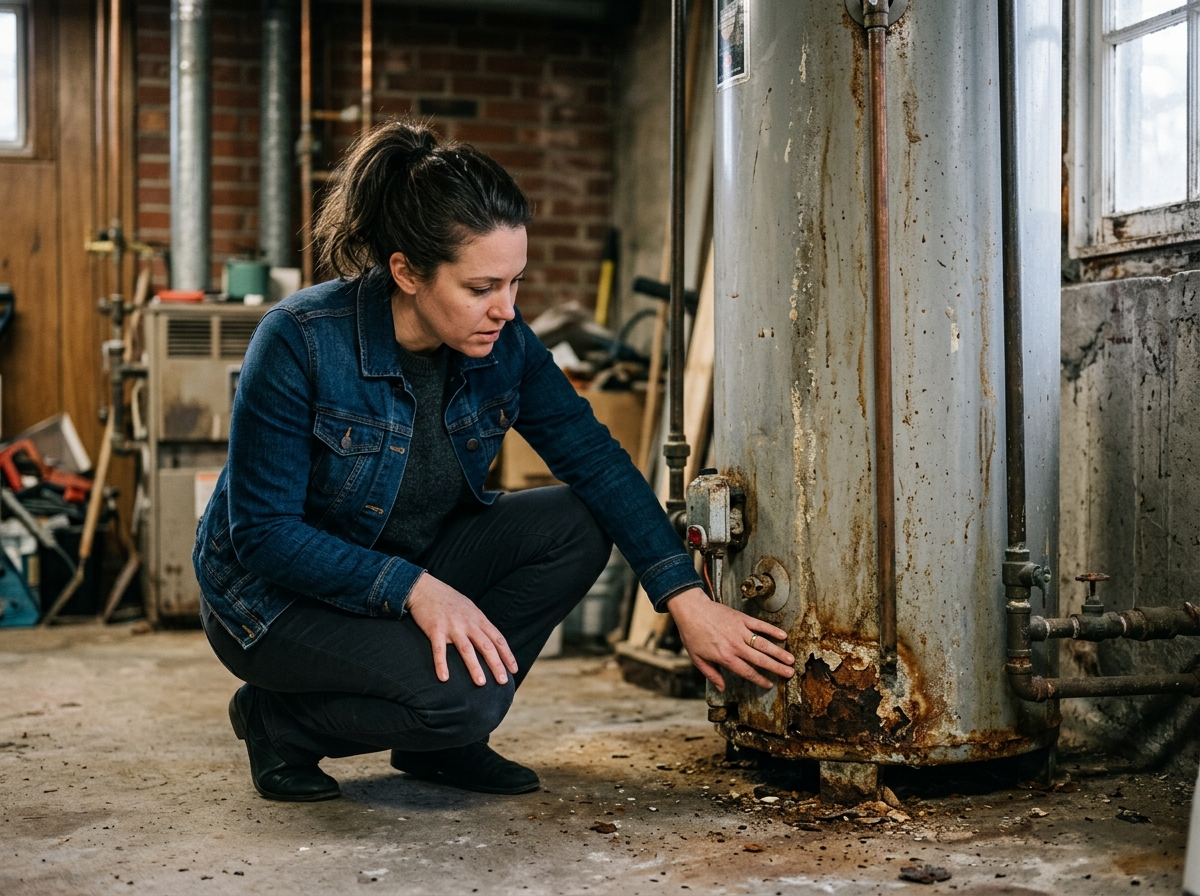
- Rust-colored water comes from hot water taps, which often signals internal tank corrosion.
- Visible moisture, puddles, or dampness around the base of the unit points to a slow leak.
- Hot water runs out faster than it used to or temperatures swing unpredictably during a shower.
- You hear rumbling, popping, or banging noises caused by sediment buildup inside the tank.
Any single sign deserves attention. Multiple signs together mean replacement is likely overdue.
Repair vs Replace Decision Points
Repair costs add up fast. If a repair bill runs close to half the price of a new unit, replacement usually makes better financial sense. Reviewing the typical Cost to Replace a Water Heater helps homeowners compare that number honestly.
Efficiency matters too. Older tanks lose heat faster, especially in poorly insulated homes. Pairing a new unit with improvements like the benefits of insulating your attic can cut energy waste even further and lower monthly bills.
Types of Water Heaters and How They Affect Price
The type you choose affects both the upfront price and your long-term savings. A 50-gallon capacity can come from a traditional tank, a tankless system, or a heat pump unit, and each one demands different installation work. Combi systems, which heat water and provide space heating, are rarely built for standalone 50-gallon replacement, so most homeowners compare the three core options below.
| Type | Typical Unit Cost | Lifespan | Best For |
|---|---|---|---|
| Tank (Gas/Electric) | $800–$1,800 | 10–15 years | Budget-conscious households |
| Tankless | $1,800–$3,500 | 15–20 years | Endless hot water, small spaces |
| Heat Pump | $2,000–$4,000 | 10–15 years | Lower energy bills long-term |
Tank Water Heaters
Tank models are the most familiar choice. They cost less upfront and install fast, but they lose heat while water sits stored, wasting energy. This standby heat loss is one reason some families see their electricity bill too high each month.
Tankless Water Heaters
Tankless units heat water only when needed. They take up less space and last longer, but swapping a 50-gallon tank for tankless often means new gas lines or electrical upgrades, which raises installation costs.
Heat Pump Water Heaters
Heat pump models pull heat from the surrounding air instead of generating it directly. They cost more upfront but cut energy use a lot. Homeowners researching real prices often check community discussions like Cost of replacing a 50 gallon water heater? for honest, local comparisons.
How Long a 50-Gallon Water Heater Should Last
Average Lifespan by Type
A standard 50-gallon conventional tank lasts 8 to 12 years. Glass-lined steel tanks corrode over time as the protective anode rod wears down. Once that rod is gone, rust attacks the tank walls. Gas models run slightly hotter and harder, which trims a year or two off compared to electric units. Electric tanks tend to last a bit longer since they skip the combustion chamber that stresses metal fittings.
Higher-end models, like stainless steel or heavy-gauge tanks, can push past 15 years with good care. For a broader look at upfront and lifetime costs across styles, this guide on How Much Does a Water Heater Cost to Replace? breaks down pricing by type. Tankless units, though not the focus here, typically last 20 years, since there’s no large tank to corrode.
Factors That Shorten Lifespan
Hard water is the biggest culprit in Louisiana and Mississippi homes. Mineral buildup coats heating elements and settles as sediment at the tank bottom. This layer forces the unit to work harder, raising energy bills and speeding up wear. Homes with well water or high mineral content often see tanks fail years earlier than expected.
Skipped maintenance makes things worse. Anode rods should be checked every 2 to 3 years and replaced once depleted. Annual flushing removes sediment and stretches tank life. Ignoring small leaks, popping noises, or rusty water often signals early failure. Our blog covers simple maintenance habits that add years to any water heater’s service life.
What Drives the Total Cost of Replacement
The final bill depends on more than just the tank itself. Labor, permits, and code upgrades often shift the price as much as the unit price does. Understanding each piece helps homeowners dodge surprise charges on installation day.
Labor and Installation Fees
Plumbers typically charge for removing the old tank, hauling it off, and setting the new one. Straightforward swaps run faster than jobs needing new piping or relocation. A licensed installer’s quote should list labor separately from equipment cost, so compare estimates carefully. For a detailed breakdown of typical charges, see this guide on Water Heater Replacement Cost & Service.
Permits and Inspection Costs
Most municipalities require a permit for water heater replacement. Inspection fees confirm the installation meets local safety codes. Skipping this step can void a warranty or cause problems during a home sale.
Extra Materials and Code Upgrades
Older homes often need updates to meet current standards. These add-ons raise total cost but improve safety and performance:
- New venting materials, required when the old flue no longer meets code for the replacement unit.
- Gas line adjustments, needed if the new heater has different fuel demands than the old one.
- Electrical panel work, necessary for electric or hybrid models drawing more power.
- Expansion tank installation, often mandated by local plumbing codes for closed systems.
- New shutoff valves or drain pans, added to prevent leaks and water damage.
Ask for written quotes from licensed installers that spell out any of these upgrades your property needs before scheduling work.
Choosing the Right Size and Efficiency Rating
Matching Capacity to Household Needs
Picking the right tank size starts with counting people and habits, not guessing. A household of two or three with average showers and laundry loads often does fine with 40 gallons. Add a fourth person, a dishwasher running daily, or teenagers who love long showers, and demand climbs fast. That’s where a 50-gallon tank becomes the practical middle ground for most families.
Larger households, or homes with soaking tubs and multiple bathrooms used at once, may need 75 gallons to avoid running cold mid-shower. Think about peak usage times, like mornings when everyone showers back-to-back, since that’s when undersized tanks fail most noticeably.
If you’re unsure which size fits your situation, reading real homeowner experiences can help; this discussion on What is a reasonable price to get a 50-gallon water heate… offers useful context on sizing and cost expectations together.
Energy Efficiency Ratings Explained
Every water heater carries a Uniform Energy Factor (UEF) rating, which replaced the older Energy Factor system. Higher UEF numbers mean better efficiency and lower monthly operating costs. A tank rated 0.93 UEF costs noticeably less to run yearly than one rated 0.58, even at the same 50-gallon capacity.
Compare UEF numbers before comparing sticker prices, since a slightly pricier unit often pays for itself through energy savings. Before finalizing any purchase or online quote request, it’s worth checking a retailer’s privacy policy to see how your personal details get handled.
Preparing for a Smooth Installation Day
Assessing Your Current Setup
Before your installer arrives, take a close look at your existing setup. Note the age of your tank, where the shutoff valves sit, and whether your current unit runs on gas or electric. This helps you spot potential complications early, like corroded pipes or an undersized gas line. A quick read of How Much to Replace a 50 Gallon Water Heater in 2026 can help you compare notes on what typical setups look like.
Check your venting system too, especially if you’re switching fuel types. Older homes often have vent pipes sized for smaller units, which may need upgrading during the swap.
Preparing the Space for Installation
Clear a wide path around the water heater. Installers need at least two to three feet of working room on all sides. Remove boxes, tools, or stored items from nearby shelves. Leave shutting off the water, electricity, and gas to the installer, who will do it as the first step of the job.
Ask your installer key questions beforehand: Will they haul away the old unit? What warranty covers labor versus parts? How long will hot water be unavailable? Confirm timelines and cleanup expectations in writing. Many local businesses ask for these details during the initial quote, so don’t hesitate to ask for specifics before the appointment. You can also learn more about us and how assessments are handled from start to finish.
The Replacement Process Step by Step
Removing the Old Unit
A qualified installer starts by shutting off power or gas to the tank. Next, they close the cold water valve. A hose connects to the drain valve so the tank can empty into a floor drain or outside. A full 50-gallon tank holds heavy sediment, so draining can take 20 to 30 minutes. Once empty, the old unit gets disconnected and hauled away.
Installing the New Water Heater
The table below shows the typical order of installation tasks. Each step matters for safety and long-term performance.
| Step | Task | Approx. Time |
|---|---|---|
| 1 | Position new tank and level it | 10 minutes |
| 2 | Connect water lines and shutoff valves | 20 minutes |
| 3 | Attach gas line or electrical wiring | 20 minutes |
| 4 | Install venting or exhaust connection | 15 minutes |
| 5 | Fill tank before powering on | 15 minutes |
Skipping the fill step can damage heating elements. This is a common mistake among untrained installers.
Post-Installation Testing
After power is restored, the installer checks every connection for leaks. They test water temperature at a nearby faucet, aiming for 120°F. Pressure relief valves get tested too. If anything seems off, ask the installer to check it before they leave.
Maintaining Your New Water Heater
Routine Maintenance Tasks
Regular upkeep protects your investment and keeps energy costs low. A few simple tasks each year can add years to your unit’s life.
- Flush the tank twice a year to remove sediment buildup that reduces heating efficiency.
- Inspect the anode rod every two to three years, replacing it once it’s worn down to a thin core.
- Test the pressure relief valve at least once a year: make sure the discharge pipe is connected and runs to a safe drain, keep hands and feet clear of the hot water, and lift the lever to confirm water flows. If no water flows, turn the heater off and call a plumber.
- Check the temperature setting to keep it at a safe 120 degrees Fahrenheit.
- Look for rust, corrosion, or leaks around fittings and the tank base each season.
Troubleshooting Minor Issues
Not every question needs a technician. If water runs lukewarm, check the thermostat setting first. Strange noises often mean sediment has built up in the tank. A pilot light that won’t stay lit is different: the fault is usually in the thermocouple or gas control, which is work for a licensed plumber, not a do-it-yourself fix. If you smell gas (a rotten-egg odor), do not try to find the leak, and do not use a phone or anything else that could make a spark nearby. Leave the home right away, then call 911 and your gas utility’s emergency line from a safe distance outside.
Environmental Impact and Energy Savings
Recycling Your Old Water Heater
An old 50-gallon tank contains steel, copper, and insulation that can be recycled. Most scrap metal facilities accept water heaters, and many plumbers will haul the old unit away as part of installation. Responsible recycling keeps hundreds of pounds of metal out of landfills each year.
Ask your installer where the old tank will go. Some cities offer free pickup for large appliances, while others charge a small disposal fee. Either way, recycling is usually cheaper than dumping fees at a regular landfill, and it keeps leftover water and sediment from leaking into the soil.
Energy-Saving Habits and Upgrades
Choosing a high-efficiency model lowers monthly utility bills significantly. A heat pump water heater, for example, can cut water heating costs by half compared to a standard electric tank. Efficiency ratings matter as much as size when planning a replacement.
Small habits add up too. Lowering the thermostat to 120 degrees, insulating hot water pipes, and fixing leaky faucets all cut waste. Combining these steps with home upgrades like duct sealing boosts overall energy performance, not just water heating.
Many local businesses now offer energy assessments that spot these opportunities. A thorough assessment often reveals savings homeowners never expected, turning the new water heater into part of a larger efficiency plan.
Rebates, Incentives, and Financing Options
Rebates and Utility Incentives
Many utility companies across Louisiana and Mississippi offer rebate programs for homeowners who upgrade to high-efficiency water heaters. These programs often cover $50 to $300 of the upfront cost, depending on the unit’s efficiency rating. Some utilities also provide free or low-cost energy assessments that flag other savings opportunities, including air sealing improvements that cut overall energy waste in the home.
According to the IRS, the federal Energy Efficient Home Improvement Credit ended for equipment placed in service after December 31, 2025, so a water heater installed in 2026 no longer qualifies for it. State and utility rebate programs are now the main incentives to check, and they can still make a 50-gallon high-efficiency unit more affordable than the sticker price suggests. Checking eligibility before purchase helps homeowners avoid missing these savings windows.
Financing Options for Homeowners
Homeowners facing a large upfront bill can explore financing plans offered through many local businesses, manufacturers, and lenders. Options include zero-interest promotional periods, monthly payment plans, and on-bill financing through utility partnerships. These plans spread the cost of a $1,800 to $3,500 replacement over 12 to 60 months, keeping monthly payments manageable while still upgrading to a more efficient model.
Frequently Asked Questions
Cost Questions Answered
For a standard 50-gallon installation, most homeowners in Louisiana and Mississippi should budget between $1,400 and $2,800. This range covers a conventional gas or electric tank, basic haul-away, and standard labor. Costs climb toward $3,500 or higher when the job needs new venting, updated electrical work, or code upgrades like an expansion tank.
A 40-gallon installation typically runs a bit cheaper, often landing between $1,100 and $2,300. The smaller tank costs less upfront, and labor stays similar since installation steps barely change with size. Households with lower hot water demand, like a two-person home, often pick this size to save on both equipment and monthly operating costs.
Homeowners can also cut long-term utility bills by pairing a new tank with better home performance upgrades, such as adding attic insulation to reduce heat loss throughout the house.
Installation and Labor Questions
Labor for a gas water heater replacement usually costs between $300 and $700. This covers disconnecting the old unit, setting the new tank, connecting gas lines, and testing for leaks. Jobs involving vent pipe replacement or moving the unit to a new location push labor costs higher.
Permit fees add another $50 to $150 in many areas, depending on local code requirements. A licensed plumber typically finishes a standard swap in three to five hours. Complex jobs, like converting from electric to gas, may take a full day and require an electrician alongside the plumbing crew.
If you’ve tightened up your home this year, it’s worth making sure your water heater and furnace still draft the way they should — that’s exactly what a combustion safety check is for. The team at Big Star Conservation, Inc. in Elmwood, LA handles this as part of their weatherization work, with BPI-certified Building Analyst Professionals leading every project, and they’ll take care of the utility rebate paperwork so you’re not chasing submissions on your own. Give them a call at (504) 305-3276 to book a combustion safety check and put that question to rest.
