


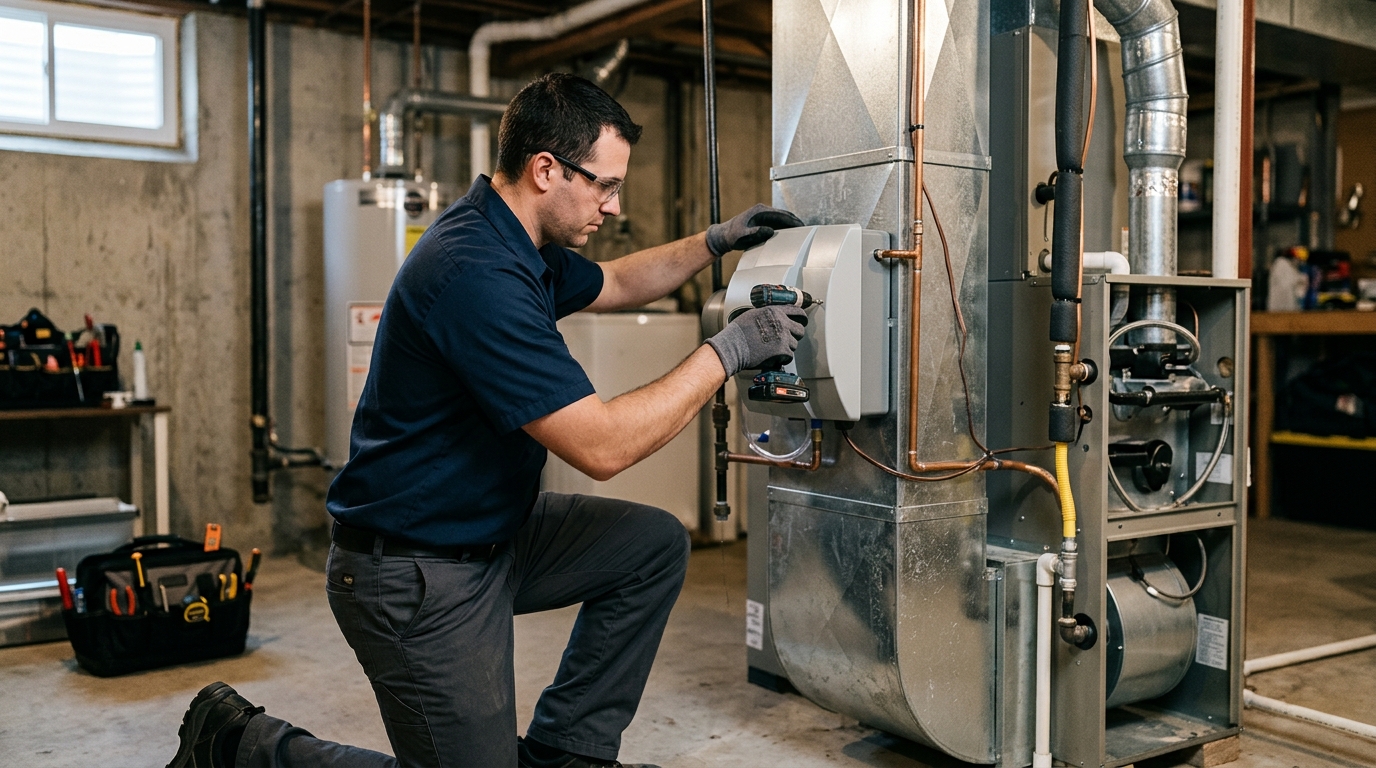
Dry winter air can leave your family battling cracked skin, nagging static shocks, and worsening respiratory irritation, while your wood floors and furniture quietly suffer from the shifting humidity levels inside your home. Portable units offer only a temporary, room-by-room fix that struggles to keep pace with whole-house dryness. That’s why so many homeowners turn to a more permanent solution instead. Big Star Conservation INC. brings you this complete 2026 guide to whole home humidifier installation, covering everything from system selection and upfront costs to the professional installation process and long-term energy efficiency benefits.
Why Indoor Humidity Matters for Your Home and Health
Signs Your Home’s Air Is Too Dry
Louisiana and Mississippi feel humid outside most of the year. But indoors, winter heating can dry the air fast. Furnaces and heat pumps strip moisture as they warm your home, leaving indoor air far drier than most people expect. This creates a strange mismatch between the swampy outdoor climate and the parched indoor climate.
Dry skin, chapped lips, and itchy eyes are common early signs. Static shocks from doorknobs or blankets are another clue. You might also notice a scratchy throat when you wake up.
Wood floors and furniture react too. Cracked wood, gaps in flooring boards, and squeaky joints often point to low humidity. If these signs sound familiar, your home’s air likely needs more moisture during cooler months.
How Humidity Affects Energy Efficiency
Humidity and energy use are closely linked. Dry air feels colder than it actually is, so homeowners often raise the thermostat to compensate. That habit drives up heating bills. Balanced moisture levels let your home feel warm at lower temperatures, easing strain on your HVAC system.
This matters even more given the cost of electricity in louisiana, where higher usage during peak seasons can add up quickly. Proper humidity control supports efficient heating performance and helps equipment run smoothly instead of overworking to compensate for air that feels uncomfortably dry.
Ideal Humidity Ranges for Comfort and Health
Most experts recommend keeping indoor humidity between 30% and 50%. Levels below this range dry out skin, sinuses, and wood surfaces. Levels above it invite mold, dust mites, and musty odors, which are already common concerns in humid Gulf Coast climates.
Staying within the ideal range protects furniture, flooring, and paint from warping or cracking. It also helps HVAC systems run more efficiently year-round. For more seasonal tips on managing indoor air, many homeowners check the blog for practical guidance.
Types of Whole Home Humidifiers Explained
Bypass vs Fan-Powered vs Steam Models
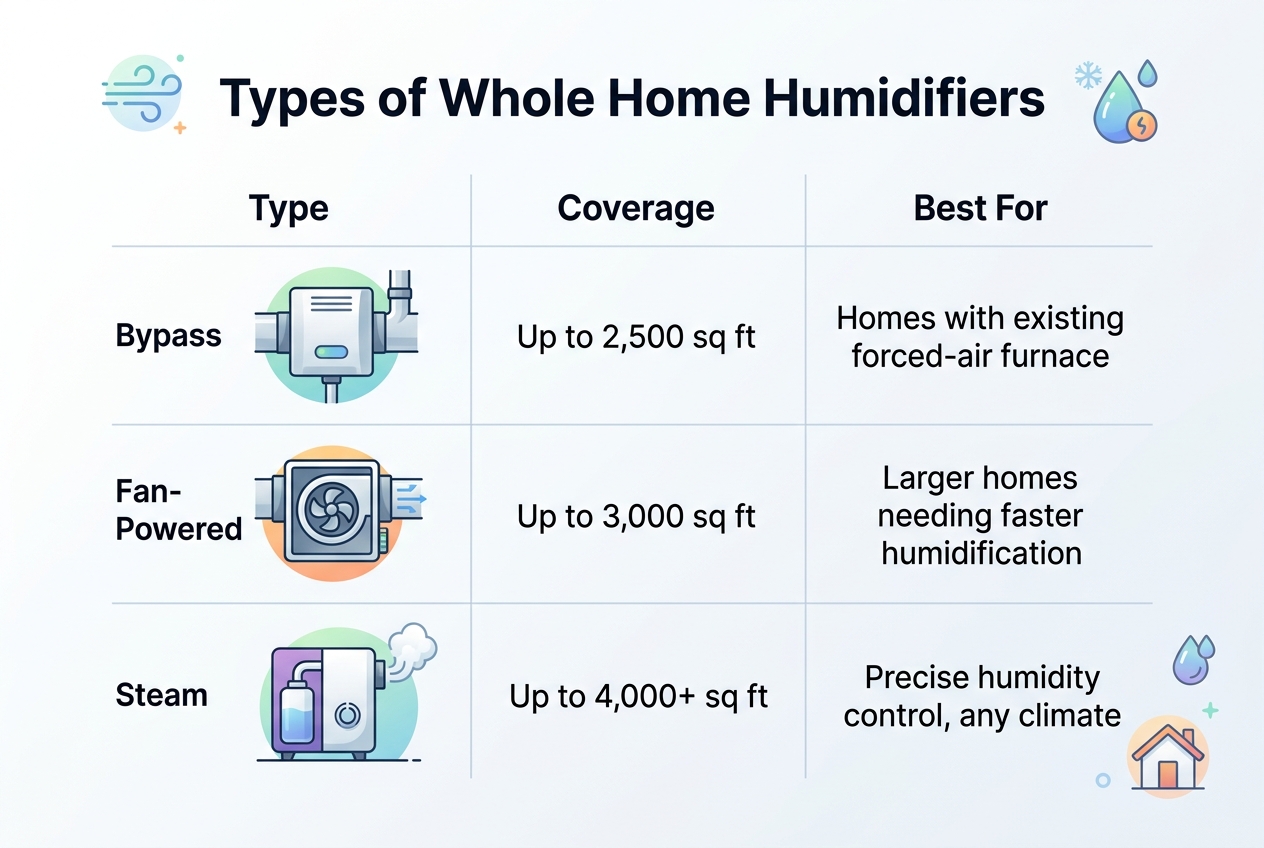
Three main humidifier types serve homes today. A bypass humidifier uses your furnace blower to push air through a water panel. A fan-powered humidifier has its own motor, so it works even when the furnace fan is off. A steam humidifier heats water into vapor and injects it directly into ductwork, offering the highest output.
Each type fits different needs. Larger homes with older heating setups, including a home needing mobile home furnace replacement, often benefit from fan-powered or steam units instead of basic bypass models.
Choosing the Right Capacity for Your Square Footage
Capacity ratings, measured in gallons per day, determine how much square footage a unit can cover. Undersized units run constantly and waste energy.
| Humidifier Type | Typical Capacity (GPD) | Best Home Size | Furnace Fan Required |
|---|---|---|---|
| Bypass | 9–12 | Up to 2,000 sq ft | Yes |
| Fan-Powered | 12–18 | 2,000–3,000 sq ft | No |
| Steam | 18–100+ | 3,000+ sq ft | No |
Compatibility With Existing HVAC Systems
Not every furnace supports every humidifier type. Older systems may lack the airflow bypass units need, while steam models require dedicated electrical circuits. A mismatched system can strain equipment and raise costs, so ask an installer to confirm compatibility before buying. This step also matters if your electricity bill too high already concerns you.
Whole Home Humidifier Installation: What the Process Involves
Pre-Installation Home Assessment
A qualified technician starts with a walkthrough of the HVAC system. They check duct size, furnace type, and existing water access near the unit. This step also involves checking the home’s square footage to size the equipment correctly. Related repairs, like a water heater element replacement, are also best left to a licensed pro.
Step-by-Step Installation Process
The installation process follows a predictable order. Below is a general timeline for a standard bypass or fan-powered unit.
| Step | Task | Typical Time |
|---|---|---|
| 1 | Mount unit and cut duct opening | 30-45 minutes |
| 2 | Connect supply and return ductwork tie-in | 30 minutes |
| 3 | Run water line connection from nearby plumbing | 20-30 minutes |
| 4 | Install drain line and saddle valve | 20 minutes |
| 5 | Wire humidistat controls to furnace board | 30-40 minutes |
Most jobs finish in two to three hours. Homeowners researching options often find helpful firsthand accounts, like this Installing A Whole House Humidifier : r/HomeImprovement thread, before booking a technician.
Testing and Calibrating the System
After install, the technician runs the furnace fan and checks water flow. They set the humidistat to a target range, often 35-45 percent. Final calibration ensures no leaks and steady humidity readings before wrapping up.
What Drives the Cost of Installation
Equipment and Unit Type Costs
The type of unit you choose sets the baseline price. A basic flow-through humidifier costs less upfront than a steam or fan-powered model. Steam units cost more because they use electric elements to boil water and produce moisture faster, which suits larger homes.
Fan-powered models sit in the middle. They cost more than flow-through units but work well for medium-sized homes with average humidity needs. Brand and build quality also matter. For a broader breakdown of unit pricing tiers, this guide on Whole House Humidifier Cost: Installation, Pricing, and V… offers helpful context.
Labor and Installation Complexity
Home size directly affects labor time. Larger homes need bigger units and longer duct runs, which adds hours to the job. Multi-story houses often take longer too, since technicians must access ductwork on separate levels.
Ductwork condition matters just as much. Older duct systems may need modification before a humidifier can connect properly. Tight crawl spaces or attics slow down the work, raising labor costs even when the equipment itself is affordable.
Additional Costs for Retrofits or Older Homes
Older homes often need extra electrical or plumbing work. Some units require a dedicated water line or a nearby power source. If wiring is outdated, technicians may need to upgrade connections before installation can move forward safely.
Retrofits sometimes reveal other issues, like an aging control system. Homeowners updating their setup should also review thermostat replacement cost, since a new humidifier often pairs with upgraded controls for better whole-home performance.
DIY vs Professional Installation: Which Makes Sense
Risks and Limitations of DIY Installs
Some homeowners try to save money by tackling this project alone. But a DIY install carries real risks. Sizing mistakes are common, since matching a unit to square footage and duct layout takes careful calculation. One detailed homeowner account, Adding a Whole House Humidifier to 2800sf Home, shows how many small decisions go into a proper setup.
- Incorrect sizing can leave rooms too dry or too damp, straining comfort and equipment.
- Improper water line connections often lead to leaks and hidden water damage over time.
- Skipping electrical or plumbing permits can create code violations discovered later during inspections.
- Mistakes near the furnace can affect other systems, similar to issues seen after a poor water heater thermostat replacement.
- Voided manufacturer warranties are common when installation instructions aren’t followed exactly.
Benefits of Hiring a Licensed HVAC Professional
A licensed installer ensures code compliance and protects your warranty. They test water pressure, seal ducts correctly, and calibrate humidistats for accurate readings. Many local businesses rely on trained technicians because small errors can shorten equipment life significantly.
When a Professional Assessment Is Non-Negotiable
Complex ductwork, older homes, or existing moisture problems call for a professional assessment. Upfront savings from DIY work are often erased by future repair bills, sometimes costing more than the original installation.
Ongoing Costs and Maintenance Requirements
Routine Maintenance Tasks and Frequency
Annual maintenance keeps your unit running efficiently and prevents costly breakdowns. Most tasks are simple, but they matter. Skipping them can lead to mold, mineral buildup, or poor humidity output.
- Inspect and clean the water panel or pad at the start of each heating season to remove mineral deposits.
- Check the water supply line and solenoid valve for leaks or clogs that reduce performance.
- Wipe down the humidifier cabinet and drain pan to prevent bacteria or mold growth.
- Test the humidistat control to confirm it’s reading and adjusting humidity levels accurately.
- Replace filters or pads according to the manufacturer’s recommended schedule, discussed below.
Estimated Annual Operating Costs
Filter and pad replacement schedules vary by type. Bypass and fan-powered units typically need new pads once per heating season, costing $10 to $30 each. Steam humidifiers use canisters that may need replacing two to three times per year, running $20 to $40 per canister. For deeper background on how installation choices affect long-term upkeep, the Whole House Humidifier Installation Guide & Tips offers helpful comparisons.
Energy impact is minimal compared to comfort benefits. Most units add only $5 to $15 to monthly utility bills during peak season, since they use far less power than furnaces or air conditioners.
Troubleshooting Common Humidifier Issues
Common problems include weak mist output, unusual odors, or water pooling near the unit. Often these stem from clogged pads, faulty valves, or improper humidistat settings. Pairing your system with strong home insulation also helps. Learn more about the benefits of insulating your attic to reduce moisture loss and improve efficiency year-round.

Weighing the Value: Is a Whole Home Humidifier Worth It
Comfort and Health Benefits Over Time
A whole home system runs quietly in the background, keeping humidity steady all winter long. That consistency matters more than a one-time boost from a portable unit. Balanced indoor air means fewer dry noses, less static, and softer skin for everyone in the house.
Over months and years, many people find the air in their home feels less drying and more comfortable. If anyone in the home has asthma or allergies, keep humidity from climbing too high, since damp air helps dust mites and mold grow. The EPA recommends keeping indoor humidity below 60 percent, ideally between 30 and 50 percent. These are gradual, cumulative gains, not overnight fixes, but they add real quality of life across an entire heating season.
Property Protection and Resale Value
Dry winter air pulls moisture out of wood floors, trim, and furniture, causing cracks and gaps. Musical instruments like pianos and guitars are especially sensitive; low humidity can warp soundboards and throw them out of tune. Stable moisture levels protect these investments for decades.
Homes with documented comfort upgrades, including humidity control, can appeal to buyers who value move-in-ready systems. Pairing humidity control with air sealing helps the whole house hold conditioned, properly humidified air instead of losing it through gaps and drafts.
Cost vs Value Compared to Other Home Upgrades
Upfront cost is the biggest hesitation for most homeowners. Compared to a new furnace or window replacement, though, a humidifier is a modest investment with a fast comfort payoff. Properly humidified air also feels warmer, letting many households lower their thermostat two or three degrees without losing comfort, which trims heating bills.
Before deciding, it helps to weigh both sides honestly. This detailed discussion, What are the pros and cons of a whole house humidifier?, outlines tradeoffs worth considering alongside your specific climate and home construction.
How Whole Home Humidifiers Fit Into a Bigger Energy Efficiency Plan
Connecting Humidity Control to Weatherization
A humidifier cannot fix a leaky house. Gaps around windows, doors, and attic penetrations let moist air escape and dry outside air rush in. That forces the system to work overtime. Proper insulation and air sealing keep humidity levels stable once the system reaches its target range.
Homes with drafty attics or crawlspaces often lose humidity as fast as they gain it. Sealing those gaps, such as air sealing around plumbing chases and rim joists, helps the humidifier maintain consistent moisture instead of chasing constant losses.
Available Energy Efficiency Assessments and Rebates
A professional energy audit looks at more than heating and cooling costs. It identifies rooms where air and moisture escape together, often near ductwork, attic hatches, and older window frames. These findings guide smarter upgrade decisions.
Many utility companies across Louisiana and Mississippi offer rebate programs for weatherization and equipment upgrades. Homeowners researching options sometimes browse retail listings like Whole House – Humidifiers to compare unit types before scheduling an assessment. A dedicated provider can confirm which rebates apply to your specific home.
Building a Whole-Home Comfort Strategy
Comfort improves most when moisture control, insulation, and air sealing work together. A humidifier addresses dry air, while sealing and insulation lock in the results. Combining these steps reduces strain on HVAC equipment and lowers monthly utility bills.
Many local businesses now bundle these services into a single efficiency plan. Starting with an audit helps homeowners prioritize the upgrades that deliver the biggest comfort and savings gains first.
Choosing a Qualified Installer
Questions to Ask Before Hiring
Not every contractor who sells humidifiers knows how to install them correctly. A licensed and insured HVAC or weatherization specialist protects your home and your investment. Before signing anything, ask a few direct questions to confirm they know the job inside and out.
- Are you licensed in your state, and can you show proof of insurance coverage?
- How many whole home humidifier systems have you installed in the past year?
- Will you evaluate my ductwork and furnace compatibility before recommending a model?
- What warranty do you offer on labor, separate from the manufacturer’s equipment warranty?
- Who do I call if the unit malfunctions six months after installation?
Red Flags to Avoid When Comparing Quotes
Some warning signs point to trouble down the road. Watch for installers who pressure you into same-day decisions, refuse to provide references, or offer prices far below every competitor. A homeowner asking about Whole house humidifier installation recommendations? in a local community group often uncovers these patterns from real experiences.
What a Trustworthy Installer Includes in Their Estimate
A solid estimate spells out equipment, labor, permits, and warranty terms in writing. Get at least three quotes so you can compare scope, not just price. Many local businesses vary widely on what’s included, so read carefully. You can learn more about us and how our assessments approach these comparisons for homeowners.
Frequently Asked Questions About Whole Home Humidifier Installation
How Much Does Installation Typically Cost
Most homeowners pay between $400 and $1,200 for a whole-home unit, depending on the type and complexity of the job. Bypass humidifiers sit at the lower end, while steam models cost more due to extra wiring and plumbing work. Sizing matters most — a unit that’s too small won’t keep up with a large home, and one that’s too big wastes energy.
If your ductwork or blower motor needs updates first, expect added expense. It helps to review general hvac system replacement cost guidance before budgeting, since humidifier work often ties into broader furnace or air handler condition. A trained technician can confirm your square footage, climate zone, and duct layout before quoting a final price.
Does a Humidifier Increase My Electric Bill
The impact is usually small. Bypass humidifiers use almost no electricity because they rely on your furnace’s blower. Fan-powered and steam models draw a bit more current, but the increase is typically just a few dollars monthly. The bigger savings often show up elsewhere — properly humidified air feels warmer, so many households lower their thermostat slightly without losing comfort.
Water usage may rise slightly too, though it’s minor compared to heating costs. Pairing the unit with air sealing and insulating window coverings can further reduce overall energy use during winter months.
How Long Does Installation Take
Most jobs take two to four hours for a straightforward bypass or fan-powered unit. Steam humidifiers take longer, often four to six hours, since they need electrical and drain connections. Older HVAC systems sometimes require minor upgrades first, which can add time.
Technicians typically test the system, calibrate the humidistat, and walk homeowners through basic upkeep before finishing. Scheduling ahead of the heating season avoids delays during the busiest months.
If dry air has become a real problem in your home this season, it might be worth having your overall home efficiency looked at too. Big Star Conservation Inc. offers expert energy assessments and weatherization services to homeowners and multi-family property owners across Louisiana and Mississippi, often at little to no cost through their partnerships with regional utility companies. Reach out today to book an assessment and see how a properly balanced, well-insulated home can make whole home humidifier installation even more effective.
