



Your heating bill spikes every winter. Cranking the thermostat only makes it worse. There’s a smarter fix. Choosing the right energy efficient space heater lets you warm the rooms you actually use, without paying to heat empty hallways and closets. We’ll show you exactly how to pick one that cuts costs instead of adding to them.
Why an Energy Efficient Space Heater Alone Won’t Fix High Winter Bills
Signs a Room’s Heat Loss Problem Is Bigger Than the Heater
A space heater is meant to supplement your main heating system. It’s not there to replace it, and it can’t patch a room that’s fundamentally broken. If you’re running one for hours every night just to make a bedroom or den tolerable, that’s not a heater problem. It’s a house problem. The heater’s working fine. It’s the room that’s failing it.
Here’s what actually happens in a leaky room: warm air rises and slips straight out through attic bypasses, gaps around recessed lighting, and rim joists, while cold air seeps in through under-insulated walls and leaky ductwork. Consulting an Space Heaters of 2026, Lab review helps you pick an efficient unit. But no unit, however efficient, can out-heat a room that’s constantly bleeding warm air. Louisiana and Mississippi homes are especially prone to this. Older housing stock, humid-climate construction shortcuts, and ductwork run through blistering-hot or freezing-cold attics routinely lose 40% or more of conditioned air before it ever reaches a vent.
So what are the warning signs? A room that never quite reaches the thermostat setting, no matter how long the heater runs. Cold drafts near baseboards or window frames. One side of the house that’s always colder than the other. A floor that feels icy even with carpet down. These aren’t quirks of an old house — they’re symptoms of air and duct leakage, and a heater simply can’t out-muscle them. Reading up on blog posts about home performance is a good starting point, but the real diagnosis comes from testing. That’s where a proper home energy assessment earns its keep: blower door tests and thermal imaging pinpoint exactly where the heat is escaping, so you’re not guessing — and not just buying a bigger heater to fight a losing battle.

How to Choose an Energy Efficient Space Heater
Picking the right heater comes down to matching output to the room, not just grabbing whatever’s on sale. Buy too small and it runs constantly, chewing through electricity without ever getting you comfortable. Buy too big and you’re paying for heat that overshoots the room and gets wasted. Before you shop, it helps to compare Most Energy Efficient Space Heater 2025 style guides that break down models by wattage class, so you know what’s realistic before you fall for marketing copy.
Wattage and Room Size Chart
As a rough rule, budget 10 watts per square foot for a room with average ceiling height and normal insulation. Older homes or drafty rooms need more. The table below matches common room sizes to wattage ranges and the heater types that tend to perform best in each.
| Room Size (sq ft) | Recommended Wattage | Best-Suited Type | Notes |
|---|---|---|---|
| 100–150 | 1,000–1,500W | Ceramic | Fast warm-up, good for bedrooms |
| 150–250 | 1,500–2,000W | Micathermic | Steady, quiet heat for offices |
| 250–350 | 2,000–2,500W | Oil-filled | Slow to heat, holds warmth long after shutoff |
| Open or drafty areas | 1,500W (targeted) | Infrared/radiant | Heats people and objects, not air |
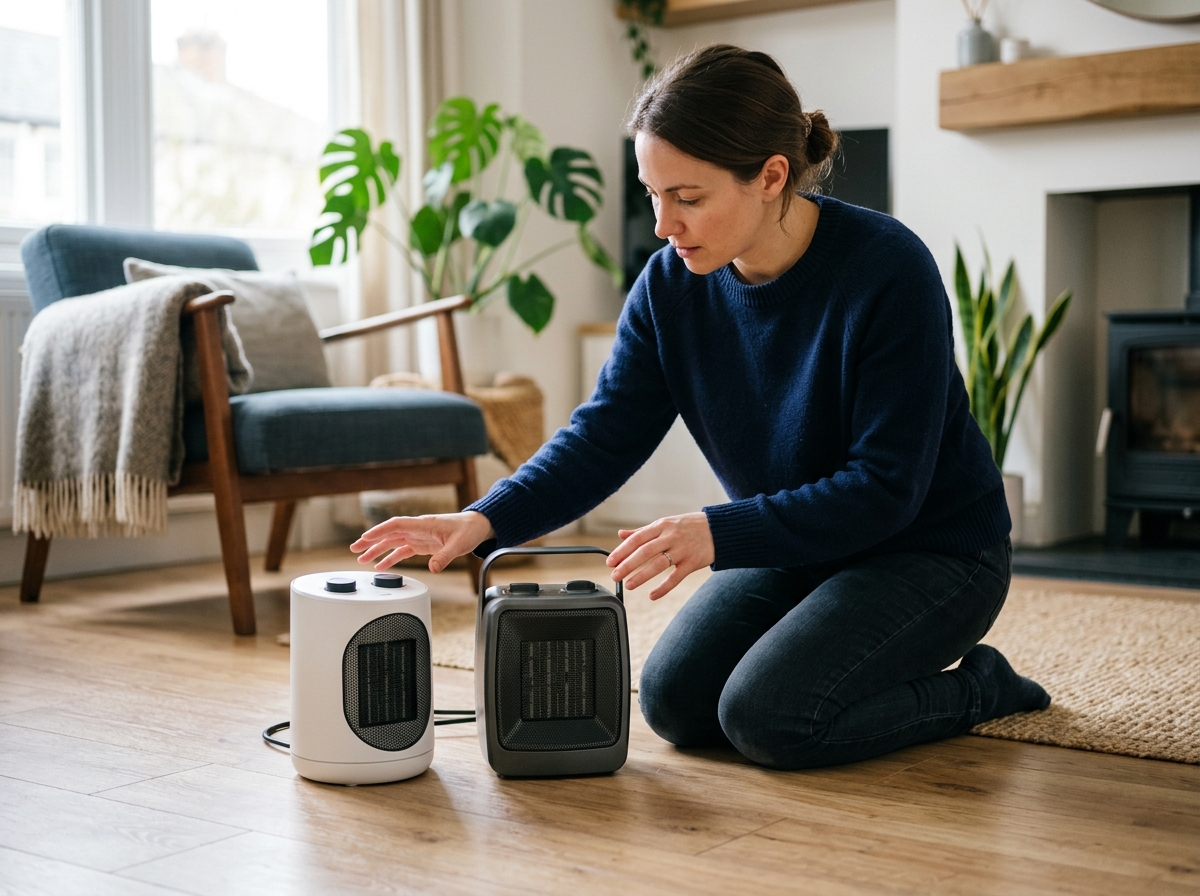
Ceramic units heat up fast and suit small, closed rooms. Infrared or radiant heaters warm bodies and surfaces directly, which works well in garages or drafty spots where heating the whole air volume is a losing battle. Oil-filled radiators take longer to warm a room but keep radiating heat after they cycle off, saving some runtime. Micathermic models split the difference, offering quiet, even heat with a low profile.
Safety Features Worth Paying For
A cheap heater without safety features isn’t a bargain. It’s a liability sitting in your living room. Look for automatic shut-off if the unit tips over, cool-touch housing that lowers the burn risk for kids and pets, and overheat protection that cuts power before internal parts fail. A programmable thermostat with a timer also matters more than people think, since it stops the unit from running full blast in an empty room. Pair that awareness with what you already know about benefits of insulating your attic, because a heater’s efficiency rating means little if the heat it makes leaks straight out through the ceiling. Finally, check the wattage-to-heat-output ratio listed on the box or spec sheet; two heaters can draw the same power yet deliver noticeably different comfort.
Comparing Space Heater Types by Performance and Cost
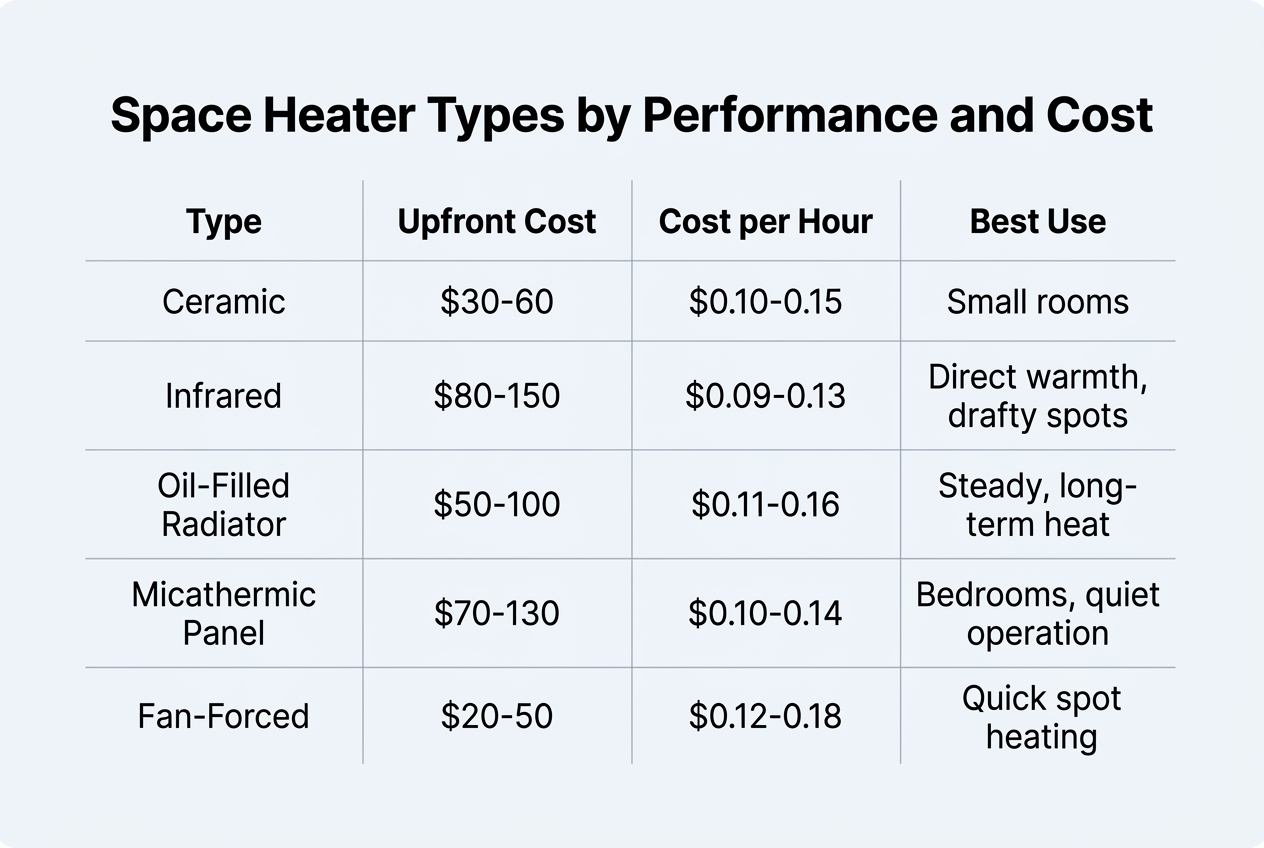
Not all space heaters warm a room the same way, and picking the wrong type for the wrong space is how bills creep up. Some throw heat fast but lose it just as quick. Others take forever to warm up, then hold that heat like a champ. Here’s how the four common types stack up, with rough running costs based on the cost of electricity in louisiana and neighboring Mississippi markets.
| Heater Type | Heat-Up Speed | Best For | Est. Cost/Hour | Noise Level |
|---|---|---|---|---|
| Ceramic | Fast (1-2 min) | Small rooms, offices | $0.12-$0.18 | Low hum, fan-driven |
| Infrared/Radiant | Instant on contact | Warming a person, not a room | $0.10-$0.15 | Silent |
| Oil-Filled Radiator | Slow (15-20 min) | Bedrooms, overnight use | $0.13-$0.19 | Nearly silent |
| Micathermic Panel | Moderate | Living rooms, even coverage | $0.12-$0.17 | Silent |
Ceramic heaters earn their popularity honestly. They heat a small room in minutes, which makes them a solid pick for a home office or other small room. Infrared units skip heating the air entirely, warming your skin directly, so they’re efficient for one person at a desk but useless for the room as a whole. Oil-filled radiators are the tortoise of the group: slow to start, but they’ll hold warmth for an hour after you switch them off, and they’re whisper-quiet. Micathermic panels split the difference, mounting flat against a wall for even heat without taking up floor space. One design writer’s breakdown of My Quest to Find a Well-Designed, Efficient Electric Heater makes a fair point: the “best” heater is really the one matched to your room size and habits, not the one with the flashiest specs.
Smart Ways to Use a Space Heater Without Spiking Your Electric Bill
A space heater only saves you money if you use it right. Buy the most efficient model on the market and you can still torch your budget with bad habits. The whole point is zone heating: warm the room you’re actually in, not the empty hallway or the guest room nobody’s touched since July. If you’re still comparing units before you settle on a routine, browsing options for Energy Efficient Heaters can help you see what wattage and features fit your space before you commit.
Once you’ve got the right heater, how you run it matters just as much. A few habits make the difference between real savings and a bigger bill than you started with:
- Set your central system’s programmable thermostat a few degrees lower during the hours you’re camped out with the space heater, so the two systems aren’t fighting each other.
- Shut the door to the room you’re heating and slide a draft stopper under it, since even a half-inch gap lets warm air wander off and cold air creep in.
- Plug the heater straight into a wall outlet rather than an extension cord or power strip, which can overheat and become a genuine fire hazard.
- Keep the heater at least three feet from drapes, furniture, bedding, and anything else that can burn, and turn it off when you go to sleep, as the U.S. Consumer Product Safety Commission advises.
- Pick a dedicated outlet not shared with other high-draw appliances, so you’re not overloading a circuit or tripping breakers mid-evening.
- Turn the heater off anytime you leave the room, even for five minutes, because that’s the easiest waste to eliminate and it costs you nothing to fix.
None of this is complicated. It’s mostly just discipline. But if your bill still climbs even after diligent zone heating, don’t shrug it off. Understanding why your electricity bill too high keeps happening usually points to leaks the heater alone can never fix.
When a Space Heater Signals a Bigger Home Energy Problem
If you’re hauling a space heater into the same room every night, that’s not a quirk of your house. That’s a symptom. Cold floors, drafty baseboards, and a thermostat that never seems to satisfy one bedroom usually mean air is leaking in or heat is leaking out somewhere nearby, often through gaps around windows, rim joists, or an attic hatch that’s never been sealed properly.
Uneven temperatures between rooms tell a different but related story. When one end of the house stays warm and the other feels like a walk-in cooler, look at the ductwork before you look at the furnace. Leaky supply and return ducts throw airflow balance off, starving far-off rooms while closer ones overheat. It’s a classic duct leakage pattern, and it’s one reason professional duct sealing shows up so often in energy audits of older homes.
Musty smells or dust clouds puffing out of a vent aren’t just annoying — they’re a clue. Leaky return ducts running through attics or crawl spaces pull in unconditioned, dusty, sometimes damp air and shove it right into your living space. Fixing that isn’t optional if you care about indoor air quality.
What a Professional Energy Assessment Actually Measures
A real home energy assessment doesn’t guess. A blower door test depressurizes the house and measures exactly how much air is leaking, in cubic feet per minute, giving you a hard number instead of a hunch. A duct blaster test does the same for your duct system, isolating leakage that’s wasting conditioned air before it ever reaches a register.
Thermal imaging adds the visual piece. An infrared camera scan can reveal insulation gaps behind drywall or thin spots in attic coverage that are invisible to the naked eye. Combine that with an attic R-value check, and you get a clear picture of whether you’re at the recommended R-38 or sitting closer to R-11, which is common in homes built before the 1990s.
Watching a demonstration of Most Energy Efficient Space Heaters For Low Cost Heating can help you pick a better unit, but it won’t fix a leaky attic. Only testing does that. If you’re ready to find out what’s really driving your bill, reaching out through the contacts page is the logical next step before another winter of chasing cold rooms.
Fixing the Root Cause: Air Sealing, Duct Sealing, and Insulation
A space heater warms one room for a few hours. It can’t touch the leaks that are draining heat out of your whole house, day and night. That’s a job for a proper weatherization sequence, and it follows a pretty predictable order from start to finish.
Steps in a Typical Air Sealing and Insulation Project
Most projects move through the same core stages, though the details shift depending on your attic, ductwork, and how your home was built. Sealing gaps at top-plates, rim joists, and recessed lights usually comes first, since it stops the biggest, easiest-to-fix leaks before any insulation goes in. Here’s the general sequence:
| Step | What Happens | Why It Matters |
|---|---|---|
| Air sealing | Foam, caulk, or gasketing at top-plates, attic penetrations, and rim joists | Blocks the drafts feeding cold air straight into living spaces |
| Duct sealing | Brush-on mastic or aerosolized sealant applied to duct joints and connections | Stops conditioned air from leaking out before it reaches the vents |
| Insulation upgrade | Blown-in cellulose brings attics to R-38, sometimes up to R-60 | Slows heat loss through the ceiling plane year-round |
| Combustion safety check | Draft testing on water heaters and furnaces after sealing work | Confirms exhaust gases still vent safely in a tighter house |
| Verification testing | Blower-door and duct blaster retests compared against baseline numbers | Proves how much leakage was actually eliminated |
Combustion safety is the step people forget about. Tighten a house without checking it, and you risk trapping carbon monoxide indoors instead of venting it out. That’s not a small detail. A qualified provider tests draft performance on gas appliances before and after sealing, since sealing changes how air moves through the whole structure. Skipping this step is how a well-meaning insulation job turns into a safety complaint. If you’re weighing options before committing to a contractor, threads like Can anyone recommend a good, energy efficient setup show how often homeowners chase heater upgrades before tackling leaks that undo the savings. Verification testing closes the loop, giving you actual numbers instead of a guess about whether the work paid off.
Covering the Cost: Utility Programs and Rebates for Home Energy Upgrades
Before you spend another dollar on space heaters, look into what your utility already covers. Programs run through Entergy, CLECO, Mississippi Power, Atmos Energy, and Energy Smart often fund most or all of the cost of weatherization work, including air sealing and duct sealing that stop the leaks driving up your bill in the first place. Some homeowners pay nothing out of pocket. Others cover a small fraction. It depends on your utility, your income, and the scope of the project.
Questions to Ask Before Starting a Weatherization Project
A little homework upfront saves headaches later. Before you sign anything or schedule work, ask these questions:
- Does your utility offer a weatherization or efficiency program, and what portion of the project cost does it actually cover?
- Do you qualify for income-eligible status, which in many cases means the entire assessment and upgrade come at no cost to you?
- Who is filing the rebate paperwork, since incentive forms are notoriously confusing and easy to fill out wrong?
- Is the provider BPI-certified, meaning the work is held to ENERGY STAR and ACCA Manual D standards rather than guesswork?
- What diagnostic testing happens before and after the job, so you have proof the leakage actually dropped?
- How soon can you book a home energy assessment, since that’s the required first step toward qualifying for covered upgrades?
Here’s the blunt truth: skipping the paperwork question is how people leave free money on the table. Rebate forms are tedious, deadlines are strict, and one missing signature can bounce a claim back for weeks. A dedicated provider that handles submissions for you removes that entire headache. It’s also worth comparing notes with neighbors or property managers, since many local businesses have already gone through the process and can tell you which programs move fast and which ones drag their feet.
Before you plug in another space heater, it might be worth finding out why certain rooms never warm up in the first place—often the real culprit is hidden air leaks rather than a lack of heat. The BPI-certified team at Big Star Conservation, Inc. in Elmwood, LA can run a full home energy assessment, complete with blower door testing, to pinpoint exactly where warmth is escaping and fix it for good. Stop by their office at 1500 Edwards Ave Suite J or call +1 (504) 305-3276 to book an appointment, usually in under five minutes, and start heating your home more efficiently this season.
